
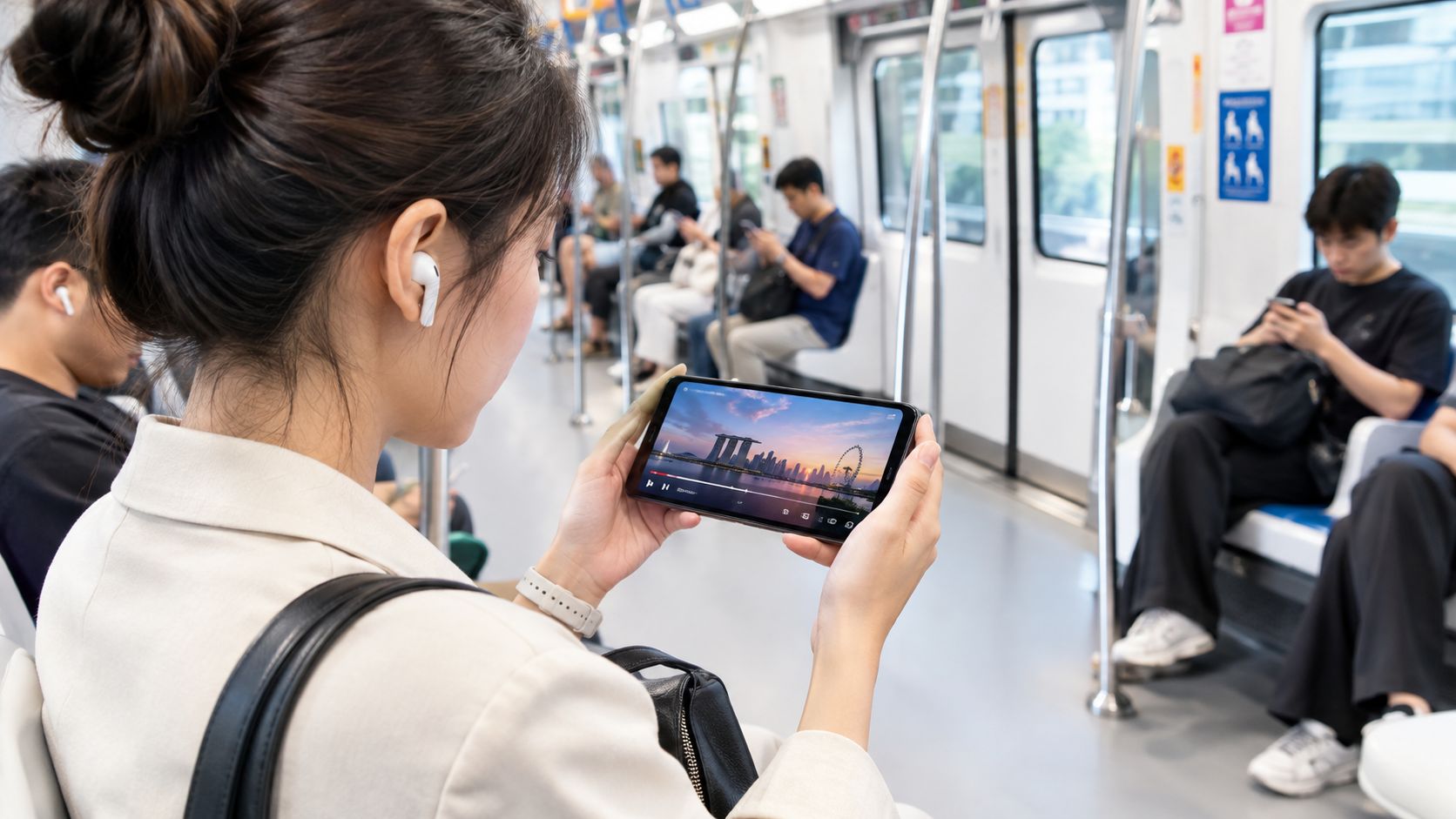
You know the feeling. You're on the MRT, one hand on a rail, the other hand trying to read a map, answer a message, or watch a clip without squinting. That's where large screen phones earn their place in daily life, they turn one device into a tiny transport hub for work, entertainment, and navigation.
In Singapore, that shift happened early and fast. Large-screen imports surged in the 2010s, and by 2013, Singapore imported 646,000 smartphones with screens measuring 5.5 to 7 inches, which made up 19% of the country's smartphone market that year historical Singapore smartphone import data. The same report also noted that tablet imports dropped to 255,000 units in the first quarter of 2014, a 25% decline from the year before, which tells a simple story, people were already letting bigger phones handle jobs that used to belong to tablets.
That matters because the phone in your pocket is no longer a casual gadget. It's how many of us read documents, join calls, check routes, pay for things, and unwind after a long commute. When a device becomes that central, its size, comfort, battery life, and repairability stop being side issues. They become part of how well the phone fits your life, and how much waste it creates when it eventually wears out.
Table of Contents
- The Big Screen Life in Singapore
- Why We Love and Struggle with Large Screens
- From E-Clutter to Zero E-Waste
- How to Choose the Right Large-Screen Device
- Repair, Resale, and Responsible Disposal
- Making Your Screen Last Longer
The Big Screen Life in Singapore
A big-screen phone makes sense in a city where the phone does so much work. In Singapore, IMDA reported that 96% of resident households used an internet-enabled mobile phone to access the internet at home in 2014, and by 2016 that figure had risen to 97%, while computer use stood at 94% Singapore Digital Society Report 2023. That means the handset is not just a backup screen, it is often the main screen.
Why the bigger display felt like an upgrade
A larger display gives you more breathing room for text, maps, split-screen tasks, and video controls. On a crowded train or a short walk between stops, that extra space reduces the feeling of wrestling with a tiny interface.
The phablet era made that change easy to spot. The 5.5-inch threshold became a clear dividing line because it marked the point where a phone could start acting more like a pocketable media device while still handling calls and messaging as a phone does.
Age groups show the same pattern of broad use. IMDA reported that in 2016, roughly nine in ten residents aged 50 to 59 and more than half of those aged 60 and above had used a smartphone in the previous three months, while use among residents aged 15 to 34 reached 91% to 92% Singapore Digital Society Report 2023. Bigger screens are not just for gadget fans, they serve a wide range of people who need clearer text and less cramped controls.
Practical rule: if a phone has to handle reading, navigation, and messaging in the same day, screen size should be judged together with comfort and battery life.
That history also changes how we judge older devices. A large-screen phone from that transition period may still be useful, but age can bring battery wear, display damage, and weaker software support. The core question is not only how large the screen is. It is how long the device can keep doing useful work before it becomes e-waste.
Why We Love and Struggle with Large Screens
A large screen feels great in the moments that matter most. Reading articles is easier, maps are less cramped, and split-screen tasks stop feeling like a balancing act. For users who rely on bigger text or clearer controls, the extra space can feel like a small accessibility upgrade built into everyday use.
That same size brings trade-offs you notice once the phone is in your hand. More width and weight can make one-handed use awkward on a crowded commute, and the larger surface area gives your grip less forgiveness. Bright panels and fast refresh rates can also draw more power, so battery health matters sooner than many buyers expect.
What the numbers behind usage tell us
Singapore users are not just checking their phones once in a while. A Deloitte Southeast Asia survey found that 46% of Singapore respondents looked at their screens more than 50 times daily, and a small university-student study with 53 participants measured smartphone use at about 57 hours per week, or 8.2 hours per day Deloitte Southeast Asia survey. When use is that frequent, comfort is no longer a bonus. It becomes part of how well the device fits daily life.
| Large-Screen Pros | Large-Screen Cons |
|---|---|
| Easier reading for text, maps, and documents | Can feel bulky in a pocket or small hand |
| Better for video, split-screen, and browsing | Harder to use with one hand |
| Often more comfortable for users who need larger on-screen elements | Battery drain can be more noticeable with heavy use |
| Helpful for long viewing sessions | Weight and grip can cause fatigue over time |
A bigger screen can also change how you spend attention. If clips and feeds start stretching into longer sessions, the device may be helping you consume more than you planned. Pairing the phone with science-backed focus methods can help keep that habit in check without forcing you to give up the bigger display.
The point is simple. Large screens improve reading, viewing, and accessibility, but they also ask more from your hand, your battery, and your attention. If a phone feels pleasant for the first ten minutes and tiring after thirty, the screen size may be solving one problem while creating another.
From E-Clutter to Zero E-Waste
A large-screen phone can feel like a useful upgrade today, then turn into clutter later if you do not plan for its full life cycle. Singapore generates roughly 60,000 tonnes of e-waste annually, and NEA notes that this is equivalent to about 11 kg, or about 73 mobile phones, per person NEA e-waste study. That makes every purchase feel more tangible, because one device is never just a screen, it is also a future disposal decision.
The good news is simple. A phone that feels old does not have to become waste right away. Government guidance says electronics can often be repaired, refurbished, or recycled instead of discarded, and that matters most when the display still works well and the battery is holding up. Keeping a large-screen phone in use a little longer can be the smarter choice for your wallet and for the environment.
The disposal path matters as much as the purchase
A separate NEA-commissioned study found that 60% of Singapore residents did not know, or were unsure, how to recycle e-waste. It also found that people were more likely to trade in or sell higher-value items such as mobile phones. That pattern is encouraging, because phones are one of the few devices many people are already willing to pass on once the process feels clear.
Keeping one phone in service longer often beats buying a new one for small gains in screen size.
Singapore's e-waste programme was introduced in 2021 under the Resource Sustainability Act, and the NEA lists mobile phones and tablets as accepted ICT equipment under its extended producer responsibility system NEA EPR system-system-for-e-waste-management-system). The collection process still matters, because devices must fit through a 500 mm by 250 mm slot.
If you are sorting through old devices, this guide on recycling companies in Singapore is a practical place to start when you want to compare disposal options without making the job feel complicated.
How to Choose the Right Large-Screen Device
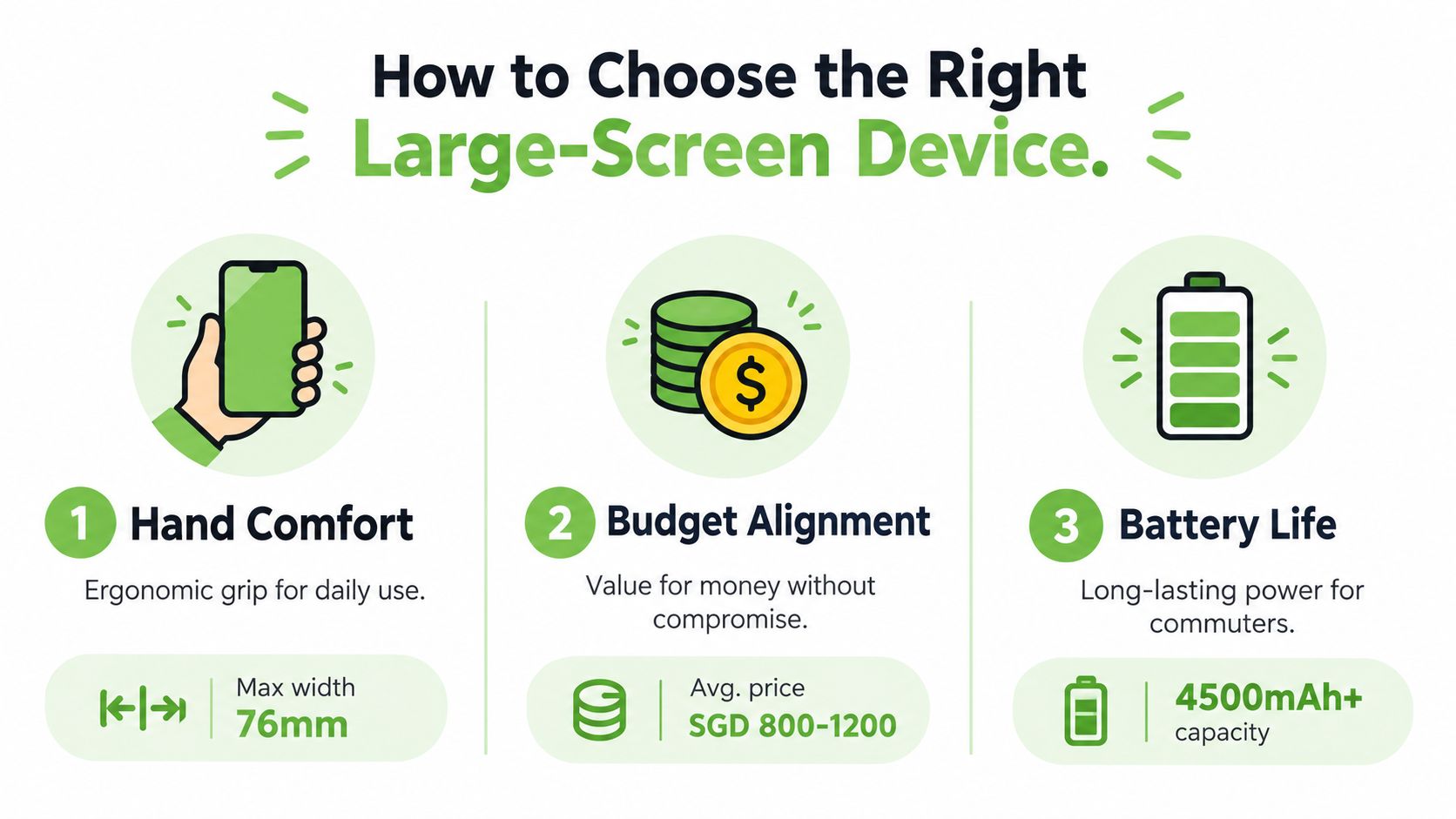
A large-screen phone works best when it fits your hand, your habits, and how long you plan to keep it. The biggest model on the shelf can still be awkward if it feels too wide, gets warm under pressure, or needs charging before the day is over.
Match the Phone to Your Habits
If you read a lot, answer emails, or use maps often, focus on text clarity, screen brightness, and stable battery life. If you commute, pay attention to how the phone feels while you are standing, holding a bag, or using one hand. If you are choosing for an older family member, font size, accessibility settings, and touch accuracy may matter more than camera features.
A simple filter keeps the choice grounded:
- Hand comfort first: hold the phone in one hand for a full minute, then try typing and swiping.
- Display quality second: check panel condition, touch response, brightness, and any burn-in.
- Battery health third: ask how long the phone lasts under normal use, not just ideal conditions.
- Software support next: newer models are often easier to keep secure and compatible over time.
- Real-world fit last: consider weight, width, and whether you can use it comfortably during travel.
Refurbished devices often fit this logic well, especially when the screen and battery have already been checked. For a local comparison point, this refurbished phone guide for Singapore helps you judge whether extra screen size is worth paying for.
Why the display isn't the whole story
Good buying rule: judge a large phone by how it serves your hands and eyes, not by diagonal size alone.
A wider screen can make reading easier and support accessibility, but it can also strain your grip and make the phone harder to pocket during a long commute. That tradeoff matters in daily life, not just on a spec sheet.
For many buyers, the better choice is a slightly smaller phone with healthier battery performance and a cleaner panel. That can reduce frustration and delay replacement, which fits a lower-waste approach better than chasing size for its own sake.
Repair, Resale, and Responsible Disposal
Once a large-screen phone starts to age, the smartest path is often not replacement. It's choosing the right next step based on condition. A phone with a damaged battery but a healthy display may deserve repair, while one with a good panel and strong battery can still hold real resale value.
Compare the paths before you decide
| Path | Best for | Main benefit |
|---|---|---|
| Repair | Phones with one clear fault | Extends use without replacing the whole device |
| Resale or trade-in | Phones that still work well | Recovers value and keeps the device in circulation |
| Responsible recycling | Devices that no longer perform reliably | Keeps materials out of general waste |
Certified refurbished phones can also be a sensible middle ground. You get a device that has been checked, graded, and put back into use, which usually makes more sense than buying new just to chase a slightly bigger screen. For people who care about keeping their desk, drawer, and digital life uncluttered, that approach often feels better too.
Secure data handling matters at every step. Before any resale, trade-in, or recycling decision, the device should be wiped properly so photos, messages, and app logins don't follow it into the next owner's hands. That's not just a privacy issue, it's part of responsible device lifecycle management.
If you want to think beyond the phone itself, even accessories reflect the same mindset. Durable add-ons such as top silicone smartwatch straps are a reminder that longer-lasting gear usually makes everyday tech calmer, simpler, and less wasteful.
Why the after-use route changes the cost
A phone that's easy to repair or resell usually gives you more room to upgrade wisely later. A phone that has no clear second life often becomes expensive twice, once at purchase and again at disposal. If you're deciding what to do with a device you no longer need, this Singapore guide to selling used electronics is a practical place to start.
Making Your Screen Last Longer
A large-screen phone can make reading, watching, and working easier, but it also asks more of your hands, your charger, and your care routine. The wear is not always dramatic. Tiny scuffs, battery fade, and a less responsive touch feel can change the experience long before the phone seems “broken.”
Small habits protect a big device
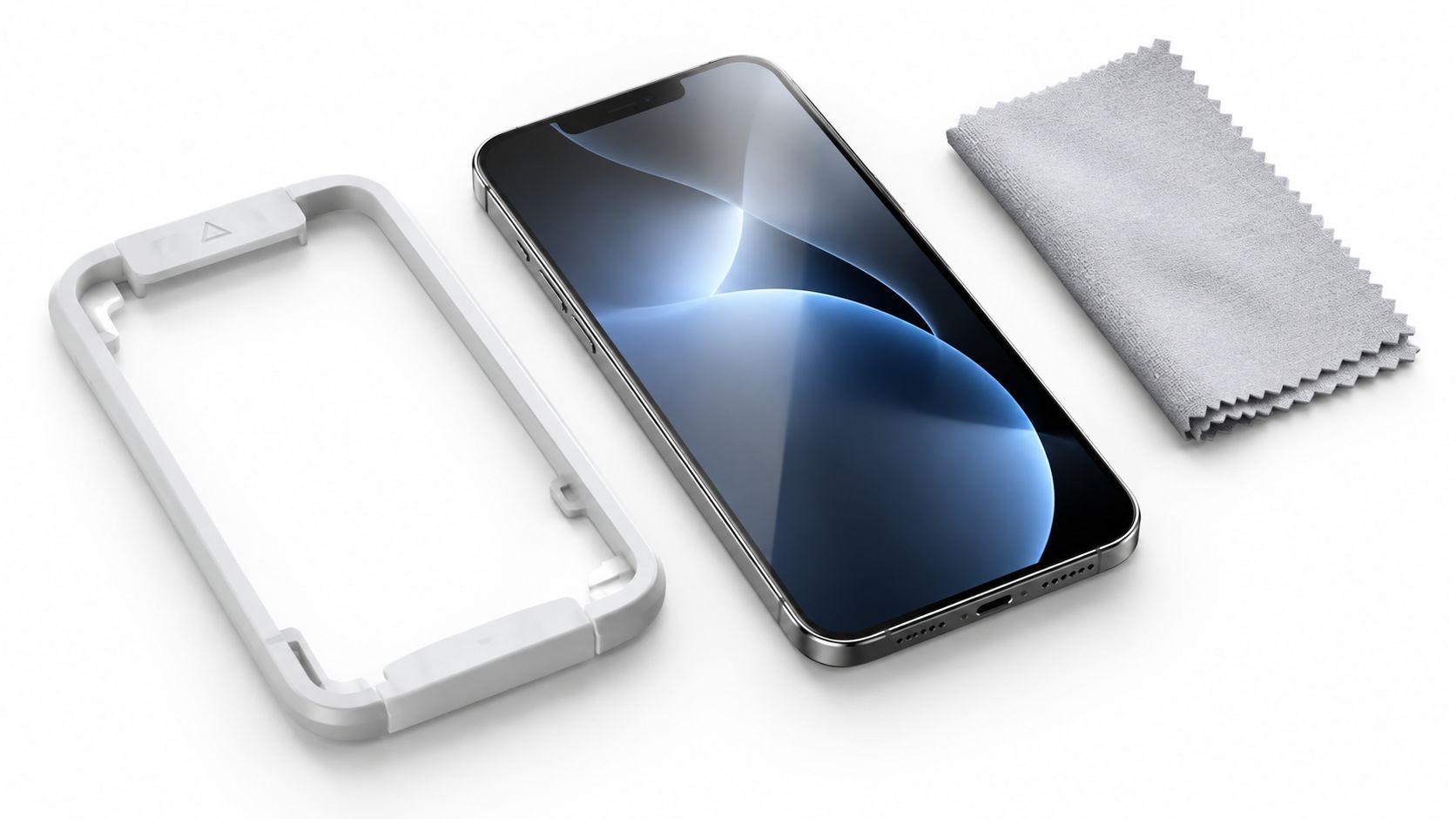
A screen protector and case are boring in the best possible way. They lower the chance that a drop or scratch turns a premium display into a repair bill, and they help preserve resale value if you pass the phone on later. For a step-by-step installation, this iPhone screen protector guide shows how to apply one without trapping dust. Cleaning the screen gently matters too, because fingerprints and grime make large displays harder to read and less pleasant to use.
Battery care deserves the same attention. If a phone starts charging unusually fast, dropping power quickly, or running warmer than usual, check the battery health instead of assuming the whole device is failing. That becomes even clearer on long commute days, when a weak battery shows itself quickly.
You can also ease the strain with better settings. Lower brightness when you can, use auto-brightness wisely, and trim unnecessary background activity so the battery works less hard. If you travel often, Samsung data saver for roaming is a useful reminder that smart settings can stretch both data and battery life.
Don't treat wear as normal forever
When a large-screen phone stops feeling easy to hold, read, or charge, that's a sign to inspect it, not to ignore it.
For hands that want a steadier grip, for eyes that need clearer text, and for budgets that should not be stretched by avoidable replacements, upkeep is part of the decision. If your phone still fits your life, protect it well. If it no longer does, let the next step be repair, resale, or responsible recycling instead of another drawer full of e-clutter.