
You've probably felt this before. Your phone battery drains too fast, your laptop fan sounds like it's begging for mercy, and you know an upgrade would make daily life easier. But paying the full amount in one go can feel heavy, especially when you're trying to be sensible with your budget.
That's where Purchase Now Pay Later can feel less like a finance term and more like a practical tool. If you want a device upgrade without the shock of one large upfront payment, this option can make the cost feel more manageable. It also fits naturally with a more sustainable way of buying tech, especially when you're choosing refurbished or ReLoved devices instead of sending demand straight to brand-new hardware.
For many people in Singapore, the main question isn't just “Can I afford a better device?” It's also “Can I do it in a smarter, lower-waste way?” That's a good question. A zero e-waste lifestyle should feel convenient, safe, and responsible, not confusing or stressful.
Table of Contents
- Your Guide to Smarter Tech Upgrades
- What Exactly Is Purchase Now Pay Later
- How BNPL Works in the Singapore Checkout
- Being Smart About BNPL Costs and Regulations
- Using BNPL for Your myhalo ReLoved Device
- Join the Movement for Smart Sustainable Tech
Your Guide to Smarter Tech Upgrades
A tech upgrade doesn't have to mean stretching your bank account to the limit. For plenty of shoppers, the goal is simple. Get a device that works well, avoid overpaying, and make a choice that feels responsible.
That's one reason Purchase Now Pay Later has become a familiar part of shopping in Singapore. The number of BNPL users in Singapore reached approximately 2.4 million people in 2023, which was nearly 500,000 more than the previous year, according to Singapore BNPL market coverage on Yahoo Finance. That kind of adoption tells you this isn't some fringe payment method anymore. It's part of everyday checkout behaviour.
For tech shoppers, the appeal is easy to understand. Phones, tablets, and laptops are useful purchases, but they're rarely tiny ones. Spreading payments over time can make a needed upgrade feel less disruptive to your monthly budget.
Why this matters for everyday buyers
Some people want the latest flagship model. Others just need a reliable replacement because their current device is failing. In both cases, affordability shapes the decision.
A practical upgrade path often looks like this:
- Check current prices first: A quick look at a Singapore mobile price list helps you compare what different devices typically cost.
- Decide what matters most: Battery life, storage, camera quality, screen size, or laptop performance.
- Choose the payment style carefully: Full payment may work for some buyers, while instalments may feel easier for others.
- Think beyond brand-new: Refurbished and ReLoved devices can support a lower-waste lifestyle while keeping costs more manageable.
Practical rule: If a device solves a real need and the payment schedule still leaves room for your regular bills, BNPL can be useful. If it only makes an impulse buy feel easier, pause first.
As a result, sustainable tech starts to feel more accessible. Instead of seeing affordability and environmental responsibility as separate goals, you can treat them as part of the same decision.
What Exactly Is Purchase Now Pay Later
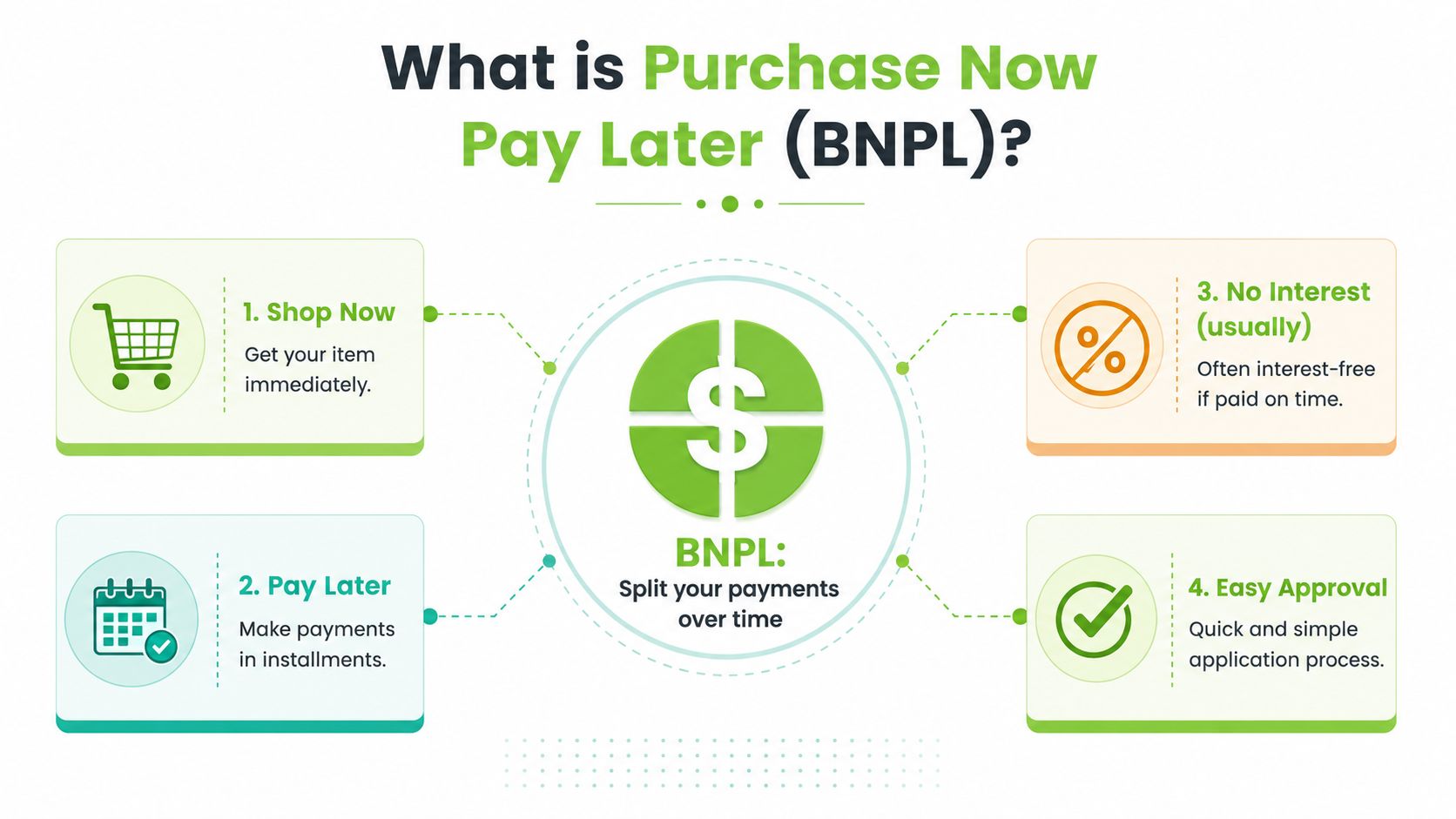
Purchase Now Pay Later, often shortened to BNPL, lets you get an item now and split the cost into smaller payments over time. It sounds formal, but the basic idea is simple. You bring the item home today, then complete the payment according to an agreed schedule.
A simple way to think about it
This approach involves splitting a bigger purchase into smaller planned chunks instead of paying everything at once. The product is yours to use right away, but the payment is spread across the next few weeks or months, depending on the provider's setup.
That's why many people find BNPL less intimidating than traditional borrowing. The structure is usually visible at checkout, so you can see what's due now and what's due later.
If you're curious about how this fits into longer-term device habits, this perspective on why tech adoption, not ownership, is the future is helpful. It reflects a shift many shoppers already feel. People want access to useful, reliable tech without always treating ownership as an all-or-nothing decision.
How it differs from a credit card
In Singapore, local BNPL providers such as Atome and hoolah commonly use a model that splits a purchase into three equal, interest-free monthly instalments, with the first payment due at checkout, as explained in The Business Times feature on BNPL structures in Singapore. That structure is one reason many shoppers feel it's more transparent than revolving credit card debt.
Here's a quick comparison:
| Payment option | How it usually feels to the shopper | What to watch |
|---|---|---|
| BNPL | Clear instalments linked to one purchase | Keep track of due dates |
| Credit card | Flexible, but can be less predictable if balances roll over | Interest can build if not cleared |
| Debit card | Straightforward full payment now | Bigger immediate impact on cash flow |
BNPL isn't automatically better than every other option. It is distinct. The strength is clarity. You often know the instalment amount upfront, and that can make decision-making easier for people who want structure.
A good payment method should help you stay organised, not tempt you to ignore the real cost of what you're buying.
If you're new to BNPL, that's the key mindset to keep. It's not free money. It's a timing tool.
How BNPL Works in the Singapore Checkout
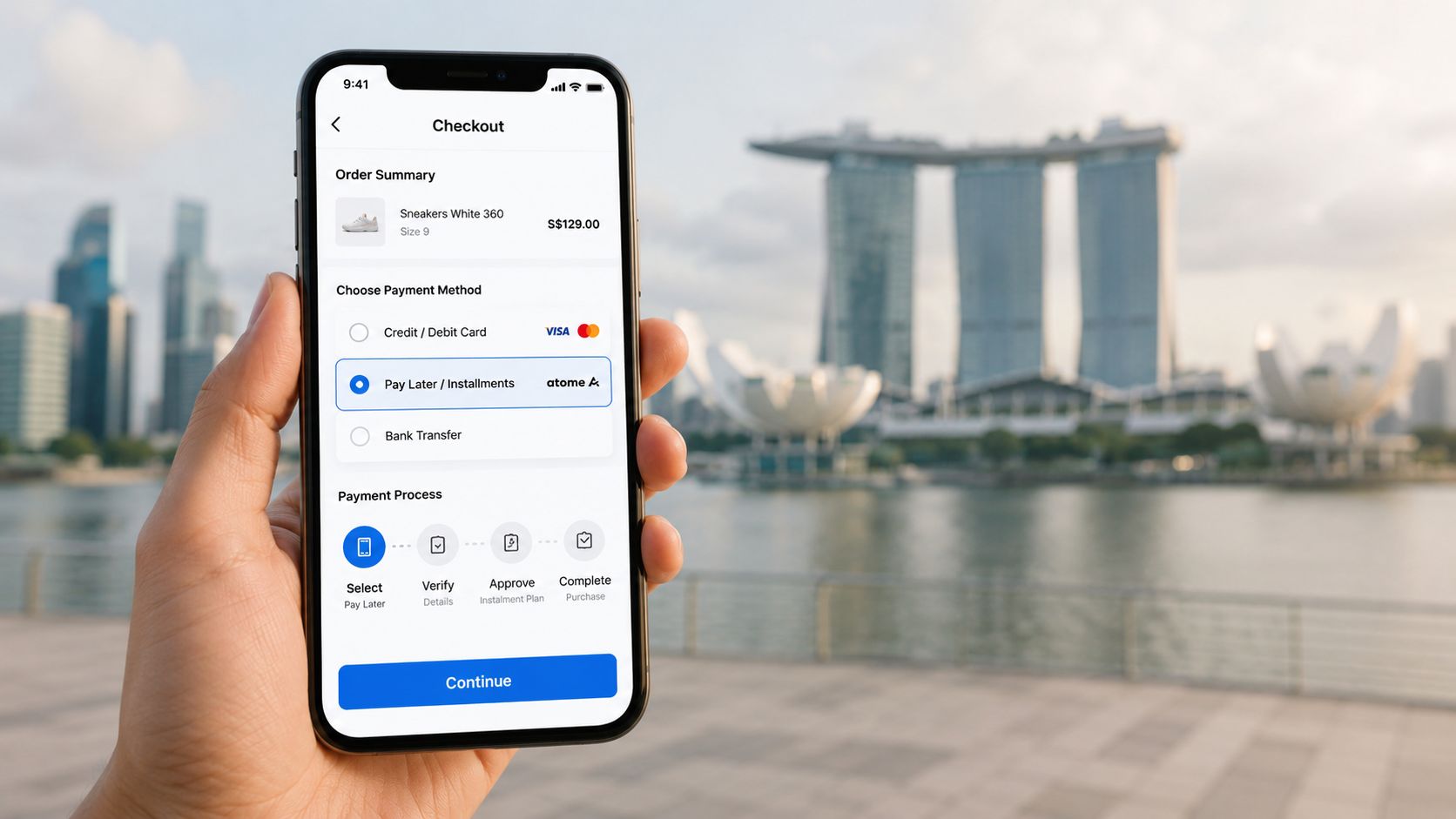
When people first hear about BNPL, they often assume it involves long forms, paperwork, or a bank-style approval process. In many cases, it's much simpler than that. At checkout, the option usually appears alongside other payment methods, and the steps are built into the shopping flow.
What you usually do at checkout
The process often feels like this:
Pick your device
You choose the phone, tablet, or laptop you want, just as you would with any online purchase.Go to payment options
At checkout, you may see providers such as Atome, Grab PayLater, or SPayLater, depending on the merchant.Choose the instalment option
The provider shows how your payments will be split. You review the schedule before confirming.Complete a quick verification step
This may involve logging into your account or providing basic details required by the provider.Pay the first portion if required
In the standard local model described earlier, the first instalment is due at checkout.
That's why BNPL feels smooth for so many shoppers. It isn't separate from the buying journey. It sits inside the checkout itself.
Why many shoppers like this option
In Singapore, BNPL use is especially strong among younger shoppers. More than 70% of Gen Z individuals had used BNPL services by 2024, and the main reasons were to maximise rewards at 67% and access promotions at 62%, according to The Straits Times report on BNPL use among youth in Singapore.
That tells us something important. Many people aren't only using BNPL because they lack funds at that moment. They're also using it strategically, as part of how they shop for value.
A short explainer can make the checkout flow easier to visualise:
A quick note before you tap confirm
The convenience is real, but so is the need for awareness. Before selecting BNPL, it helps to ask:
- Do I know the repayment dates?
- Will these instalments overlap with other bills?
- Am I choosing this because it fits my budget, or because it makes a tempting purchase feel easier?
That tiny pause can save a lot of stress later.
Being Smart About BNPL Costs and Regulations
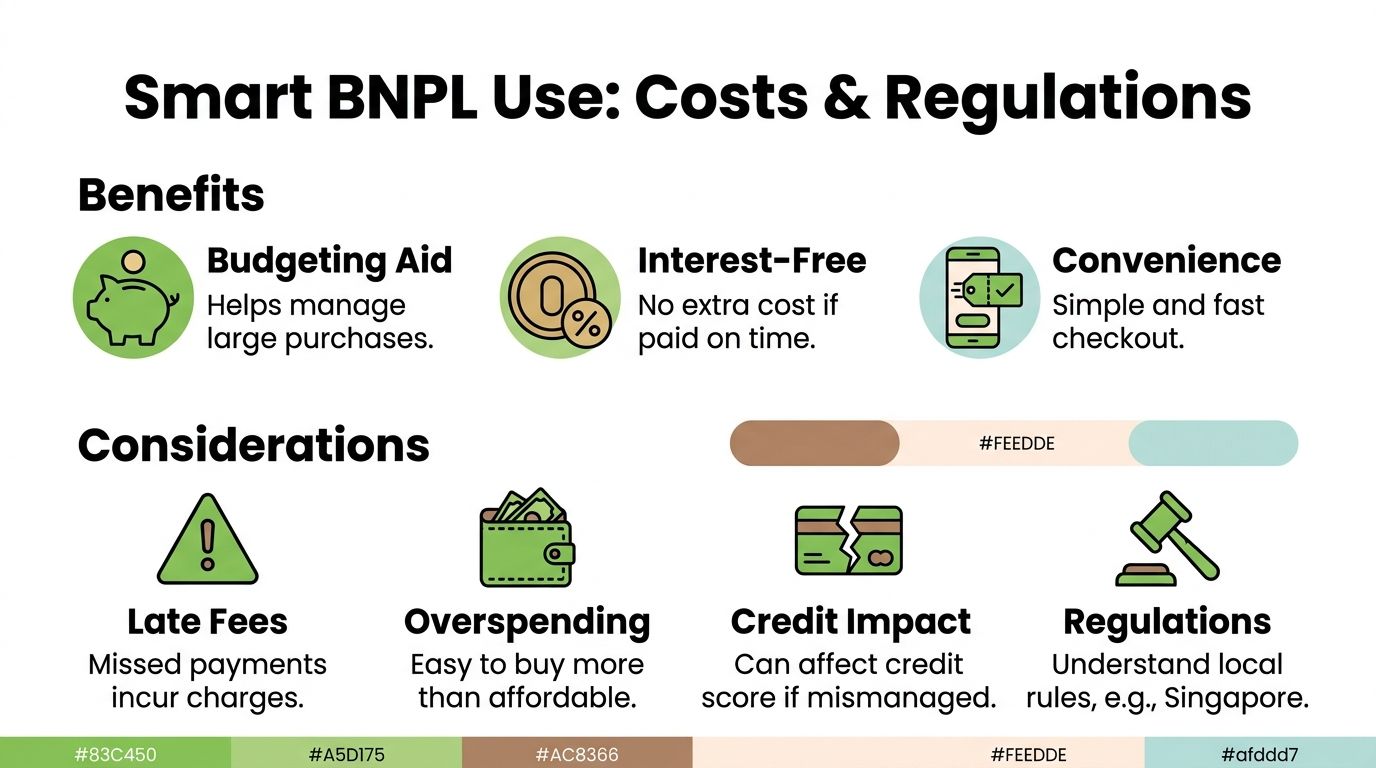
BNPL can be useful, but it works best when you treat it as a budgeting tool rather than a way to outrun your finances. The biggest risk isn't usually the checkout itself. It's forgetting that a smooth purchase still creates real payment obligations.
Why timing matters
If you pay on time, BNPL often feels neat and predictable. If you miss payments, things can become messy. Providers may apply late fees or account restrictions, depending on their rules.
That's why the smartest users keep BNPL boring. They don't rely on memory alone. They use calendar reminders, app alerts, and a quick budget check before buying.
A simple rhythm helps:
- Before purchase: Check whether the instalment dates collide with rent, utilities, or loan payments.
- Right after purchase: Save the schedule somewhere visible.
- During the repayment period: Track each deduction so nothing catches you off guard.
Helpful mindset: The easiest BNPL plan to manage is the one that still feels comfortable even if your month gets unexpectedly busy.
The Singapore rule worth knowing
Singapore introduced an important consumer safeguard for this space. Under the BNPL Code of Conduct, effective from 2025, users who haven't gone through an additional credit assessment face a cap of S$2,000 in outstanding payments per provider, as reported in Channel News Asia's coverage of the BNPL Code of Conduct.
That cap matters because it's designed to reduce the risk of people stacking too many unpaid instalments with a single platform. It doesn't remove personal responsibility, but it does create a clearer boundary.
For shoppers, the takeaway is straightforward. BNPL is meant to help with flexibility, not to encourage debt to spiral unnoticed in the background.
A simple self-check before any purchase
Before you use BNPL for tech, ask yourself these three questions:
| Question | Why it matters |
|---|---|
| Would I still buy this if instalments weren't offered? | It helps separate real need from impulse. |
| Can I cover every instalment from normal income? | BNPL should fit your budget without strain. |
| Do I already have other repayment commitments running? | Overlap is what usually creates pressure. |
You don't need to fear BNPL. You just need to stay honest with yourself about what you can comfortably handle.
Using BNPL for Your myhalo ReLoved Device
The most interesting BNPL question for sustainable tech buyers isn't “What is BNPL?” It's “Can I use it in a circular economy purchase and still feel secure about what I'm buying?” That's where things get more practical.
Many Singapore guides talk about BNPL for fashion, travel, or dining. Much less attention goes to refurbished devices, trade-ins, and repair-related spending. That leaves buyers unsure about how deferred payments fit into lower-waste tech choices.
Why refurbished tech fits BNPL so well
Refurbished and ReLoved devices already reduce the upfront burden compared with many brand-new models. BNPL can make that cost feel even easier to absorb because you're dividing a more accessible price point into scheduled payments.
This combination can work well for people who need a reliable replacement now, but don't want one purchase to wipe out their cash flow. It also supports a more circular pattern of consumption. Instead of always jumping to new production, you're extending the useful life of existing tech.
That matters because sustainable buying is often blocked by two worries:
- Budget worry: “I need a decent device, but I don't want one big payment.”
- Trust worry: “I'm open to refurbished, but I need confidence in quality and after-sales support.”
BNPL helps with the first. A clear product grading and warranty policy helps with the second.
How trade-ins can make the plan feel lighter
There's also a practical angle many shoppers overlook. If you have an older phone, tablet, or laptop sitting unused at home, a trade-in can reduce the overall cost of your next device before you even think about payment splitting.
If you want to understand that side better, this guide to trade-in options in Singapore is useful. It gives context for how older devices can move from drawer clutter into actual value.
That creates a smarter upgrade pattern:
Review your current device
Ask whether it still has trade-in value.Pick the replacement carefully
Focus on what you need. Storage, battery health, portability, or work-from-home performance.Apply the trade-in value first if available
This lowers the amount that needs to be paid.Use BNPL for the remaining balance if it suits your budget
The instalments may feel easier because the total has already been reduced.Keep the repayment schedule visible
A sustainable purchase should still feel financially calm after checkout.
Buying refurbished isn't just about spending less. It's also about keeping useful electronics in circulation for longer.
What gives buyers more peace of mind
A payment plan matters, but product confidence matters just as much. A refurbished device should not feel like a blind gamble.
Every ReLoved device comes with a 30-day warranty, while As-New condition devices come with a 6-month warranty. Both can be extended to a 1-year warranty plus accidental protection through myhalo Protect, which also includes a 14-day exchange window, according to the certified ReLoved devices page.
That kind of clarity helps answer a common concern: “If I'm financing a refurbished device, what happens if something goes wrong?” A published warranty policy doesn't remove all risk from any tech purchase, but it makes the experience more transparent.
There's another layer people often care about when replacing old devices. Data safety. According to the myhalo FAQ on data handling, the company follows ISO 27001 data security standards for ISO-aligned data handling and uses a two-stage erasure process, with on-site wiping for working devices being upcycled, followed by a second round of erasure at the warehouse after secure transport.
That matters if your upgrade includes letting go of an old device. Many people delay trade-ins or resale because they're nervous about personal data. A secure process makes it easier to move forward without that nagging worry.
A circular tech decision often brings together several small wins at once:
- You upgrade without one heavy upfront payment
- You keep a functional device in use for longer
- You may reduce clutter by trading in older tech
- You avoid treating broken or outdated gadgets as throwaway items
A zero e-waste lifestyle starts to feel realistic. Not perfect. Just practical enough to stick.
Join the Movement for Smart Sustainable Tech
Purchase Now Pay Later makes the most sense when it supports a good decision that you were already planning to make. For tech buyers, that often means replacing a device that no longer performs well enough for work, study, or daily life. When paired with refurbished or ReLoved devices, BNPL can make that step feel lighter on both your wallet and the environment.
It also changes the way many people think about upgrades. Instead of seeing sustainability as a premium choice or an inconvenient one, you can treat it as the sensible middle ground. Better use of existing devices. Less waste. More flexibility in how you pay.
If you're still comparing options, a closer look at refurbished phones in Singapore can help you weigh what matters most before you buy. That includes condition, support, and whether the device fits your actual routine.
The bigger picture is simple:
- Choose tech that solves a real need
- Use BNPL only if the repayment plan is comfortable
- Look for ways to extend device life through repair, reuse, and trade-in
- Protect your privacy when letting go of old gadgets
That's the heart of a zero e-waste lifestyle. It doesn't ask you to be perfect. It asks you to make better next choices, one device at a time.
A more thoughtful tech habit can clear your desk, reduce e-waste, and make upgrades feel less stressful. That's good for your budget, and it's good for the wider community too.
Ready to feel lighter and do good? Explore myhalo if you want a practical way to upgrade, trade in older devices, and support a zero e-waste lifestyle with convenient, safe, and responsible tech choices.