
You're probably here because your current phone is slowing down, your upgrade budget feels painful, or you've got an old device sitting in a drawer while you compare newer iPhones. You want something premium and reliable, but you don't want to overspend or add another perfectly usable phone to Singapore's e-waste stream.
A refurbished iPhone 12 can be a smart middle ground. You get a familiar Apple experience, 5G capability and strong everyday performance, while paying far less than you would for a newer model. The deal only works, though, if you check the battery, condition, security status, warranty and seller properly. Buying pre-loved isn't a compromise. It's a practical way to save money and keep a good device in circulation.
Table of Contents
- Why a Refurbished iPhone 12 Makes Sense Today
- Decoding Device Grading and Physical Condition
- Evaluating Battery Health for Daily Use
- Verifying Security and Activation Status
- Navigating Warranties and Price Benchmarks
- Choosing Certified Channels for Total Peace of Mind
Why a Refurbished iPhone 12 Makes Sense Today
The iPhone 12 first launched in 2020, so it has had enough time to become a mature refurbished product in Singapore. That matters because buyers aren't choosing from a handful of uncertain listings. Local sellers now offer the model across different storage options, condition grades, warranty terms and collection channels.
The phone still makes sense for everyday tasks such as messaging, web browsing, video calls, streaming, navigation and mobile payments. Its 5G support also means you don't have to give up faster mobile connectivity just because you're shopping for a lower-cost device. For many people, that's enough phone for work, school, travel and family life.
My honest recommendation: Buy a refurbished iPhone 12 if you want dependable daily use and value. Don't buy it expecting the newest camera system, the longest possible battery life or years of flagship headroom for demanding gaming.
The environmental case is just as practical as the financial one. Singapore generates about 60,000 tonnes of e-waste each year, a volume the national waste-reduction campaign equates to roughly 70 discarded mobile phones per person (Towards Zero Waste Singapore). Keeping an iPhone 12 in active use extends the value of the materials and labour already invested in that device.
You can also use this purchase as part of a wider decluttering habit. If an older phone is sitting unused at home, a proper trade-in, resale or upcycling route can return it to circulation instead of leaving it forgotten until it becomes harder to repair or sell. For more Singapore-specific buying and disposal ideas, browse this guide to refurbished phones in Singapore.
The catch is simple. Refurbished phones vary. Two devices with the same model name can feel very different if one has a tired battery, visible damage or unclear ownership history. Spend a few minutes checking the details before you pay, and this can be a joyful upgrade rather than a stressful gamble.
Decoding Device Grading and Physical Condition
Cosmetic grading describes how a phone looks, not whether it can perform basic functions. Sellers don't always use the same words, so read the actual description instead of assuming that “good”, “mint” or “pristine” means the same thing everywhere.
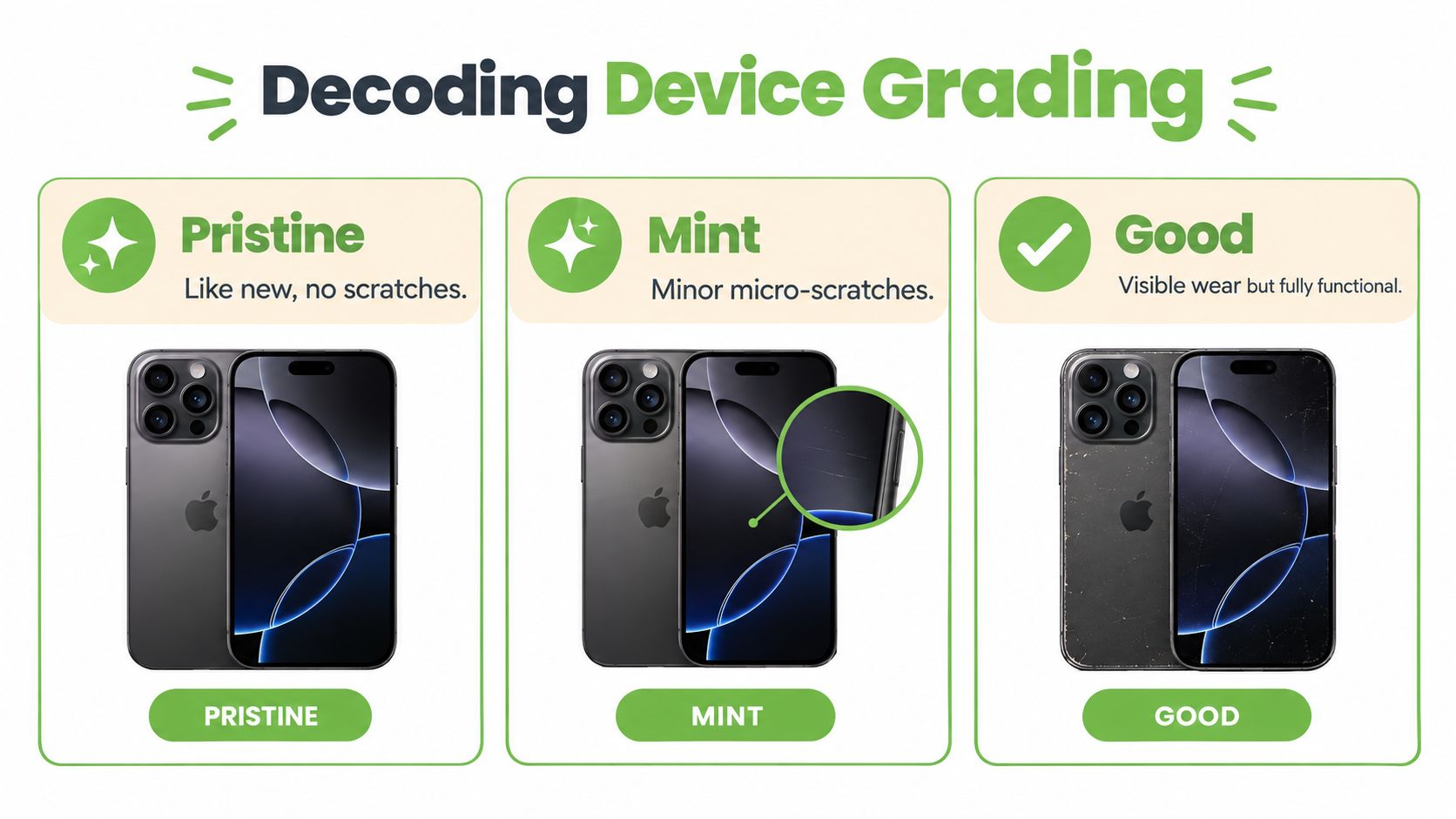
A Singapore retailer lists three grades, Pristine, Mint and Satisfactory, and includes a 30-day warranty with its refurbished iPhone 12 devices (Singapore refurbished Apple listings). Other sellers may use “Good” instead of “Satisfactory”. In plain English, the tiers usually work like this:
- Pristine: Choose this if you want an exterior that looks close to new and you're willing to pay more for a cleaner finish.
- Mint: Expect minor marks or micro-scratches that are difficult to notice during normal use.
- Good or Satisfactory: Visible scuffs and signs of use are acceptable, but the phone should remain fully functional when the listing is accurate.
What to inspect when it arrives
Take photos of the parcel and device as soon as you receive it. This gives you a clear record if the phone arrives with damage that wasn't shown in the listing.
Then inspect the areas that reveal careless handling:
- Display and frame: Look for deep scratches, cracks, lifting around the screen or dents along the aluminium edges.
- Camera lenses: Check each lens under bright light. A scratch over a lens can affect photos more than a mark on the back.
- Charging port: Look for packed debris, loose connection or a cable that only works at a particular angle.
- Buttons and switches: Test the volume controls, side button and mute switch.
- Speakers and microphone: Play audio and record a short voice memo. Tinny sound or intermittent recording deserves attention.
- Face ID and touch: Test Face ID, screen response and every corner of the display.
A harmless mark on the rear glass shouldn't bother you if it saves money and the phone will live in a case. A damaged camera lens, unreliable port or non-working biometric feature is different. Those faults affect daily use, so raise them immediately through the seller's return or warranty process.
A proper testing workflow should cover the display, battery, charging system, cameras, buttons, speakers, microphone and connectivity before grading. You can see how structured checks fit into a broader quality assurance testing process.
Evaluating Battery Health for Daily Use
Battery health is the part of a refurbished iPhone 12 purchase that deserves the most attention. A phone can look pristine and still leave you searching for a charger during a long MRT commute, especially if you use 5G, navigation, video streaming and hotspot features heavily.
Apple Singapore recommends battery service once capacity drops below 80% (Apple battery service guidance). Refurbished sellers often describe inventory around 70% to 80% as “good” and 90% or higher as “as-new”. Some sellers replace batteries that fall below their acceptance threshold before resale, but you should never assume every listing follows the same rule.
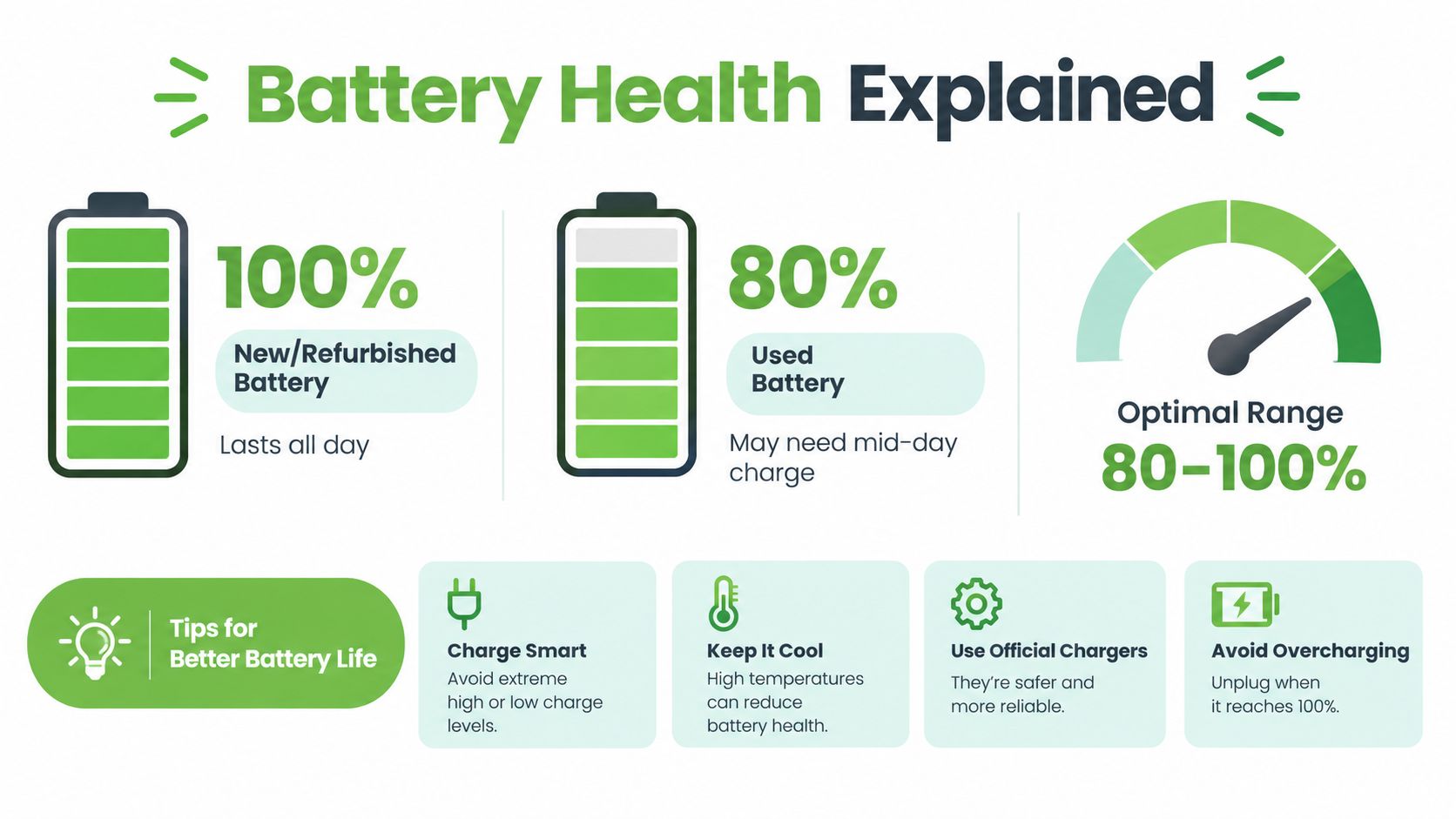
The hidden gap is between a battery that passes a seller's minimum threshold and a completely fresh battery. A standard unit above 80% may work perfectly well for light messaging and occasional browsing. Heavy 5G use, constant navigation, camera use and streaming place more demand on the battery, so a lower-capacity unit may need a top-up earlier in the day.
Match the battery to your routine
Choose a standard-battery unit when:
- You mostly use Wi-Fi at home or in the office.
- You carry a charger or power bank without much trouble.
- Your phone use is moderate, with messaging, calls and occasional browsing.
- You're happy to accept a lower upfront price in exchange for less battery headroom.
Pay more for a new battery variant when:
- You commute for long stretches and rely on maps or mobile data.
- You use 5G throughout the day for work, streaming or tethering.
- You want the best chance of getting through a full workday without charging.
- You plan to keep the phone as your main device rather than a backup.
Current Singapore listings show a premium of roughly S$40 to S$50 for “new battery” variants compared with standard units (Singapore refurbished iPhone 12 battery options). That difference can be worthwhile if it prevents daily charging anxiety. It may be unnecessary if your usage is light.
Read the battery guarantee carefully
A battery guarantee isn't automatically a promise of all-day performance. Ask whether it covers a minimum capacity, a battery fault, installation quality or only failure during the warranty period. One Singapore listing states capacity above 80% and provides a six-month battery guarantee, while another describes the battery as tested for reliable daily use without giving a specific threshold.
Also check whether normal degradation is excluded. A warranty may cover a defective battery but not the gradual loss of capacity that comes from ordinary use. For repair options and battery service information, review this iPhone battery service guide.
Verifying Security and Activation Status
A low price isn't a bargain if the phone is still tied to someone else's Apple Account. Before you complete a purchase, make sure the device is ready for a clean setup and that the seller can explain where it came from.
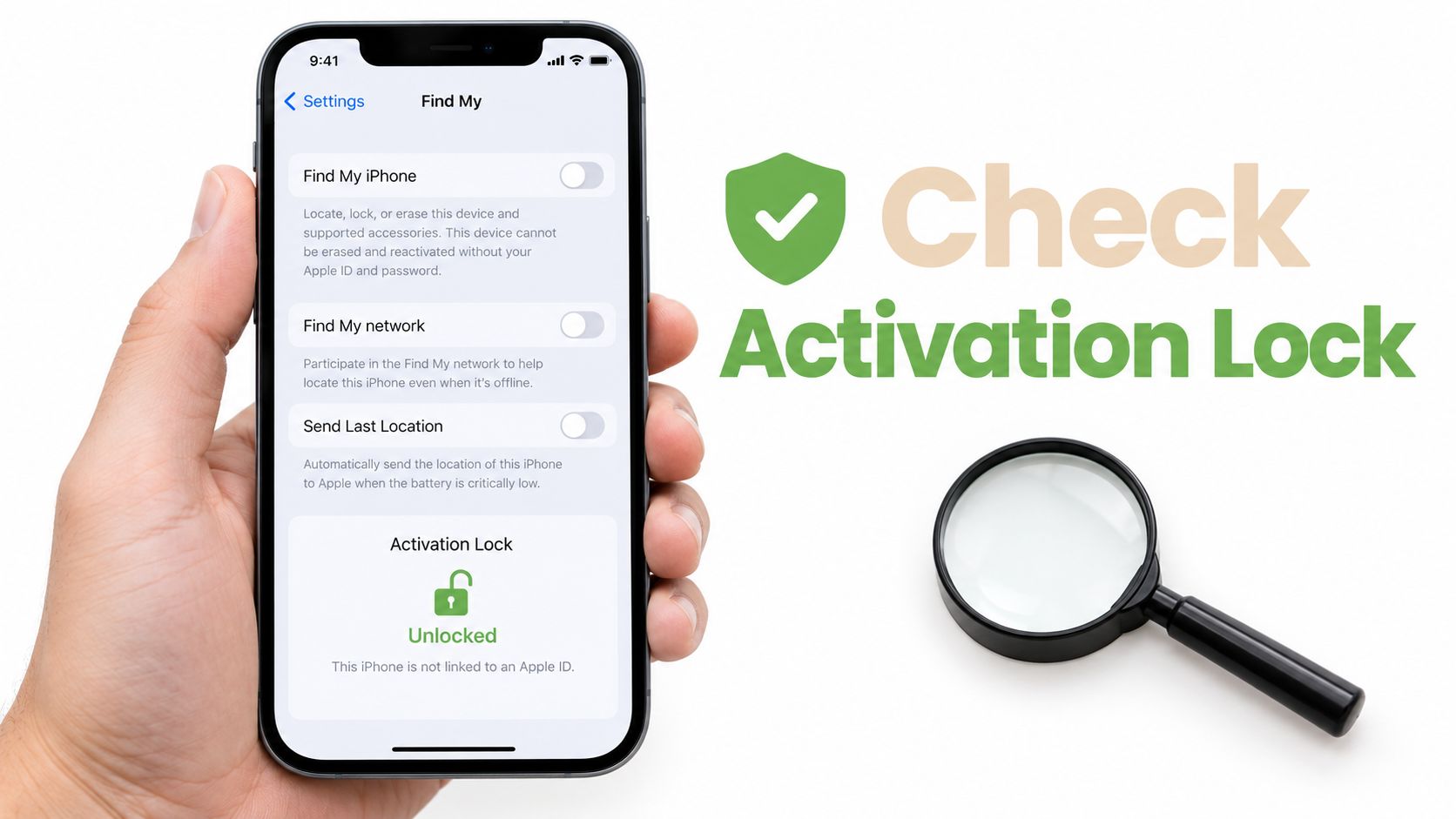
Check these details before accepting the phone
- Match the IMEI: Find the IMEI in the phone settings and compare it with the box, invoice or seller record where available. A mismatch needs an explanation before you use the device.
- Confirm Activation Lock is off: The phone should allow you to start setup with your own Apple Account. If it asks for the previous owner's credentials, stop.
- Check Find My: The former owner must disable Find My before the phone changes hands. You shouldn't rely on a promise that this can be fixed later.
- Test mobile connectivity: Insert your SIM or complete the eSIM setup and confirm that calls, mobile data and messages work.
- Look for management restrictions: A device previously used by a company or school may show supervision or management controls. Ask the seller to remove them before purchase.
- Keep your proof of purchase: Save the listing, invoice, condition description and warranty terms until you're satisfied with the phone.
The IMEI check matters because it helps you identify a phone that may be reported lost, stolen or restricted by a network. It isn't a substitute for buying from a transparent seller, but it adds an important layer of protection.
Secure erasure protects both sides of a resale. The previous owner needs confidence that photos, messages and work files are gone, while the new owner needs a phone that isn't still connected to another account. Ask how the seller handles data removal rather than assuming a factory reset tells the whole story. This secure data management guide explains why proper erasure deserves attention.
If you're checking the process visually, this video can help you recognise the relevant iPhone settings before you accept a device.
Don't enter personal information until the phone passes these checks. A seller who encourages you to ignore an Activation Lock, avoid an IMEI check or skip the return window is giving you a reason to walk away.
Navigating Warranties and Price Benchmarks
A fair price depends on more than the model name. Storage, battery condition, cosmetic grade, warranty and return support all change the value of a refurbished iPhone 12.
Singapore listings currently place the model in an accessible low-to-mid hundreds price band. One certified-refurbished marketplace lists iPhone 12 units from about S$338, while another seller shows units from around S$280 to S$420, depending on storage and condition (Singapore iPhone 12 refurbished listings). A 64GB listing appears at S$280, while 256GB examples sit around S$400 to S$420.
| Storage Tier | Typical Price Band (SGD) | Expected Warranty |
|---|---|---|
| 64GB | From about S$280 in listed examples | 30 days to a few months, depending on seller |
| 128GB | Varies by condition, battery and seller | 30 days to a few months, depending on seller |
| 256GB | About S$400 to S$420 in listed examples | 30 days to a few months, depending on seller |
A separate listing shows a 256GB unit at S$400, compared with a prior advertised price of S$690, implying savings of roughly S$290, or about 42%, against that reference price. Treat the reference price as context, not proof that every cheaper listing offers equal value. Storage and battery state can make two apparently similar deals quite different.
What a warranty should tell you
Read the warranty terms before looking at the discount. You want clear answers to these questions:
- Device faults: Does coverage include the display, camera, charging port, speakers and buttons?
- Battery coverage: Is there a stated capacity threshold, or does the warranty only cover outright battery failure?
- Accidental damage: Drops, liquid exposure and cracked glass are often treated differently from internal faults.
- Returns: Can you return the phone if the grade doesn't match the description or the battery falls short of the advertised condition?
- Repair process: Who pays for collection, diagnosis and shipping if something goes wrong?
Local sellers advertise different safety nets. One offers a 30-day warranty, while another advertises up to three months of warranty and 14 days of free returns. That support can matter more than a small price difference because it gives you time to test the phone under your real routine.
Practical rule: Never compare a cheap phone with no return support against a slightly dearer phone with transparent grading, battery information and a usable warranty. They aren't the same product.
Be cautious with listings that hide the battery condition, use stock photos only, avoid showing the actual device or pressure you to pay outside a protected checkout. A suspiciously low price is especially risky when the seller can't provide a serial or IMEI, written warranty terms and a clear return route.
Choosing Certified Channels for Total Peace of Mind
The safest buying decision combines the checks above into one simple standard: choose a seller that can explain where the phone came from, what was tested, what was replaced, how it was graded and what happens if you're unhappy.
A certified channel should give you more than a cleaned-up exterior. Look for a documented process that includes diagnosis, display and charging checks, battery assessment, functional testing, secure data wiping and final grading. Singapore repair providers describe same-day turnaround for many iPhone 12 repairs, with straightforward component swaps taking 15 to 45 minutes and more involved repairs taking 60 to 180 minutes; battery replacement prices range from about S$45 to S$118, depending on part grade and warranty level (Singapore iPhone 12 repair workflow).
Make the purchase part of a circular habit
Buying refurbished is only half of the loop. When your current phone no longer suits you, don't leave it in a drawer “just in case” for years. Singapore's household e-waste research found that only 6% of estimated household electrical and electronic waste is recycled, while 24% is traded in or sold, 26% is thrown away and 35% is removed by delivery services when new products arrive (Singapore household e-waste study).
A Singapore survey found that people replace smartphones every 2.7 years on average, compared with a global average of 3.5 years. It also reported that 60% keep old devices after replacing them, and 32% of those idle devices are left unused indefinitely (Singapore device reuse coverage). A convenient trade-in or buyback route helps prevent that quiet pile-up.
The environmental benefit is tangible. A Singapore circular-tech report estimated that each refurbished smartphone can avoid 25 kg of carbon dioxide emissions, 77 kg of raw material extraction and 56 g of electronic waste (Singapore circular-tech report). The same report projected that wider reuse and refurbishment could help halve Singapore's e-waste output and reduce technology-sector emissions by as much as 40%.
myhalo offers a ReLoved range of tested and graded devices, alongside repair, buyback, trade-in, upcycling, data recovery and secure data destruction services. That gives you a practical route to buy a refurbished iPhone 12, protect your data and clear out old devices through one device-lifecycle service. The myhalo Promise is simple: joining the zero e-waste movement should feel convenient, safe and responsible, not complicated.
Choose the battery that fits your day, inspect the condition thoroughly, confirm Activation Lock is disabled and keep the warranty documents. Do that, and a refurbished iPhone 12 can be a sensible Singapore purchase that feels good every time you pick it up.
Ready to feel lighter and do good? myhalo offers tested ReLoved devices, secure data support, repairs, trade-ins and responsible routes for the old tech sitting at home. Visit myhalo to find a refurbished iPhone 12 or start clearing out your e-clutter today.