
You've probably got that old phone sitting in a drawer right now, half-forgotten, half-valuable, and a little risky. Maybe it still turns on, maybe it's cracked, maybe you're worried about photos, chats, banking apps, or work tokens living on in the background. That's exactly why selling it for cash should be simple, safe, and done properly, not rushed through a sketchy listing or a factory reset you hope was enough.
The smart move in Singapore is to treat your old handset like a device with value, data, and risk all attached to it. A clean sale protects your privacy, avoids inspection headaches, and keeps another usable phone in circulation instead of buried in a drawer. If you want the short version, back it up, sign out, wipe it properly, and choose a channel that checks the phone before payout.
Table of Contents
- Preparing Your Smartphone Before the Sale
- Getting a Fair Valuation for Your Device
- Choosing the Best Selling Channel in Singapore
- Protecting Your Data and Privacy During the Sale
- Maximising Resale Value and Sustainability Impact
- Ready to Turn Your Old Phone Into Cash
Preparing Your Smartphone Before the Sale
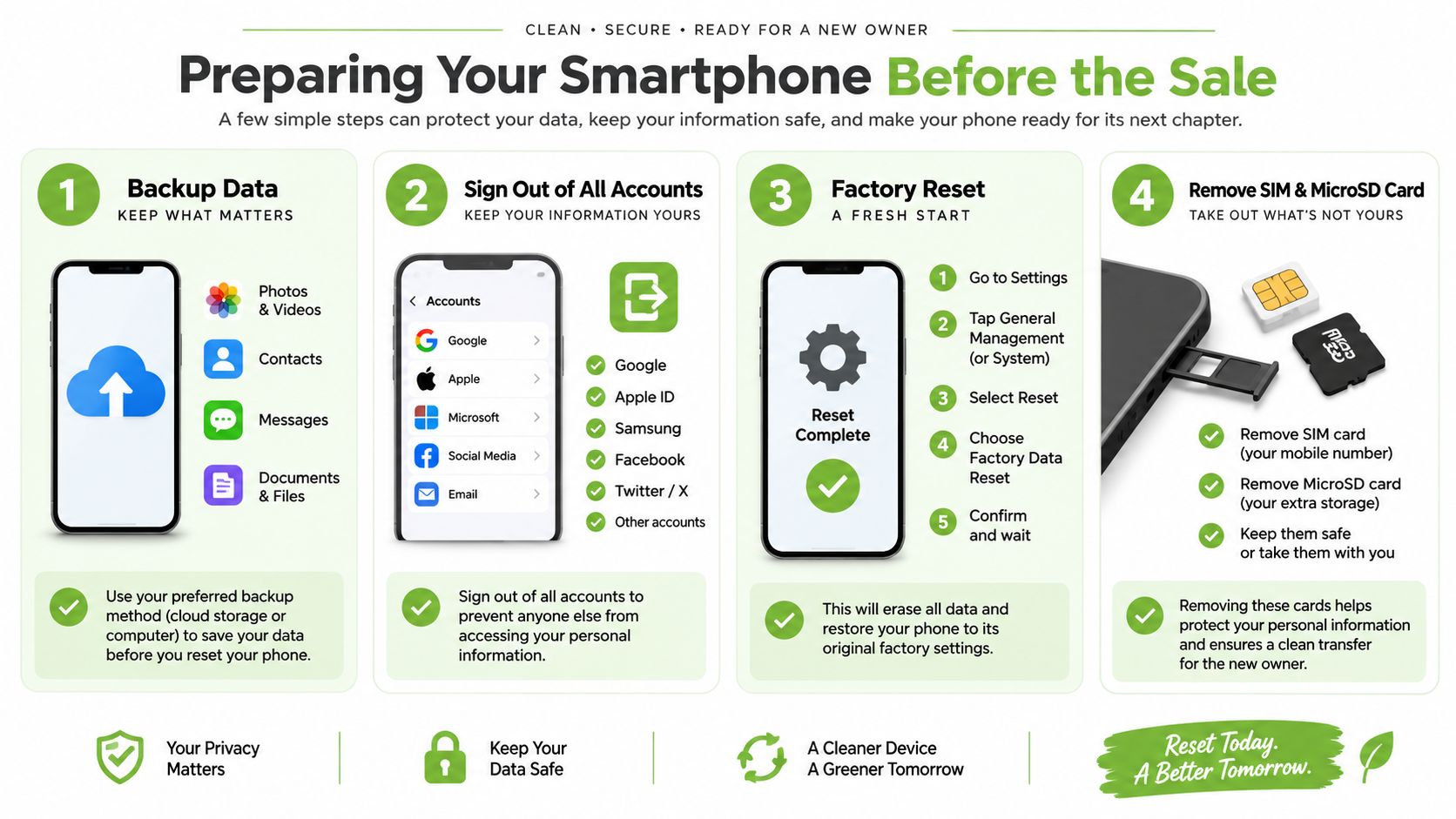
Start with your data, not the listing. Back up your photos, messages, contacts, and files first, because once you start signing out and wiping, recovery gets harder fast. The safest habit is to make sure your memories and documents exist in at least one other place before the handset changes hands.
Clean out the lock state, not just the screen
A factory reset alone is not enough if your accounts are still attached. You need to remove Apple ID or Google account access, turn off Find My iPhone or device-finding features, remove the SIM, and unlink any eSIM profile before handover. That matters because account locks can block reactivation, and a buyer who can't test the phone properly will often downgrade or reject it at inspection.
On Android, the reset path commonly used in consumer guidance is Settings > System > Reset options > Erase all data, then confirm the wipe. On iPhone, the key idea is the same, remove the account and device-finding link first, then erase the handset so it reaches the clean setup screen. A phone that still shows account prompts after reset is not ready for a proper cash buyback.
Practical rule: if the buyer can't get to the normal first-time setup screen without a password wall, the phone isn't sale-ready.
Don't forget the small things that cause big delays
Take out the SIM card, remove the microSD card if your phone has one, and check that any linked smartwatch, earbuds, or payment app sessions are cleared. If you've used the phone for work, log out of messaging and authenticator apps before wiping, because those often hold extra access you don't want lingering.
The safest habit is to do one final physical check before leaving home. Open the device, confirm the setup screen appears, and make sure there's no account lock, no forgotten SIM, and no missing step hidden in the process. A clean handover saves time, protects privacy, and stops avoidable deductions later.
Getting a Fair Valuation for Your Device
A fair quote starts with honest condition grading. Most buyback platforms price by exact model, variant, carrier status, and condition, then verify those details at inspection, so guessing in your favour usually backfires. If you underplay scratches, battery wear, or a weak charging port, the final offer often lands below the headline number.
Document the phone like a careful seller
Take clear photos of the front, back, corners, screen, and any visible flaws. Then test the essentials before you list it, camera, speaker, microphone, charging port, and buttons, so you know what a buyer will find. One guide to phone resale specifically recommends checking those core functions and comparing market value from 3+ sources before you accept any offer, which is a good standard for Singapore sellers too.
If you're comparing refurbished models and condition differences, this refurbished iPhone advice from Used Mobiles 4 U is worth reading because it shows how model choice and grading affect resale decisions in a practical way.
Good quote discipline: the first number is only useful if the inspection matches it.
Use comparison, not wishful thinking
A quick self-check before selling saves real money:
- Check model and variant carefully. A storage difference or different network version can change the quote.
- Assess physical condition thoroughly. Small scuffs matter less than hidden functional issues, but both will be checked.
- Verify carrier lock status. A locked phone narrows the buyer pool and can reduce value.
- Compare multiple quotes. Don't hand over the device on the first number you see.
For readers who've got a damaged device, the practical next question is whether it still has cash value at all. My internal guide on whether broken phones and tablets can still be sold is useful if your handset isn't in perfect shape.
Here's the part most sellers miss. The more accurately you describe the phone before inspection, the less chance there is of a nasty re-quote at the counter. Good photos, honest notes, and a full function test protect the number you were offered in the first place.
Choosing the Best Selling Channel in Singapore
The right channel depends on what you care about most, speed, transparency, privacy, or squeeze-every-last-dollar pricing. In Singapore, the practical choices usually come down to instant-quote trade-in services, in-store buyback counters, online marketplaces, and carrier trade-in programmes. Each one behaves differently once the phone reaches inspection.
Compare the channels before you commit
| Channel | Payment Speed | Price Transparency | Data Security | Convenience |
|---|---|---|---|---|
| Instant-quote trade-in | Fast after verification | High, if the quote is based on accurate condition details | Better when the operator offers a secure wipe process | High, especially with drop-off or pickup |
| In-store buyback counter | Fast in a single visit | Clear once the device is checked on the spot | Strong when staff handle the full handover process | High for people who want face-to-face confirmation |
| Online marketplace | Slower, depends on the buyer | Variable, because negotiation is common | Lower, because you manage the handover and risk | Medium, but it takes more effort |
| Carrier trade-in | Fast to moderate | Usually fixed by programme rules | Depends on the carrier process | Convenient if you're already upgrading |
If you want a straightforward flow, the trade-in Singapore guide from myhalo is a useful local reference because it reflects how a centralised quote-and-drop-off model works in practice.
Pick the channel that matches your tolerance for hassle
Online marketplaces can sometimes look attractive because they promise a higher number, but they also bring more back-and-forth, more no-shows, and more chances for the deal to fall apart. If you want the least friction, a counter-based or instant-quote model is easier because the valuation and the handover happen in one controlled process. That's especially helpful if you don't want to field lowball offers from strangers.
For seller age and identity, one phone-for-cash workflow requires the seller to be 18 or older and verify identity before payment is released, which is a sensible safety gate for any proper buyback process. The useful mindset here is simple, choose the route that protects your time and your device, not just the route that sounds like the biggest upfront number.
Protecting Your Data and Privacy During the Sale
This is the part too many “sell your phone” pages treat as an afterthought, and it shouldn't be. Your old phone may still contain banking apps, business chats, work tokens, photos, and saved passwords, so data handling matters as much as cash value. In Singapore, the privacy angle is real, because organisations are expected to make reasonable security arrangements under the PDPA, and IMDA guidance also points to proper disposal of electronic media that contains personal data.
Ask for proof, not just reassurance
A serious buyer should be able to explain what happens to your data after handover. If you want peace of mind, ask whether they provide a data erasure certificate or another written record of secure handling. That's the kind of proof that matters when you're letting go of a phone that has lived through years of messages, logins, and personal files.
If you want the backup side of the process done properly, myhalo's guide to backing up your data before selling your phone is a practical companion read before you erase anything.
My rule: if a buyer can't explain their wipe process in plain language, keep looking.
Security should beat the flashiest quote
A slightly lower offer from a channel with secure wiping, clear handover steps, and documented destruction is often the better deal. That's not being fussy, that's protecting yourself from account-lock delays, rejected devices, and privacy exposure. A phone sale should end with clean payment and clean records, not uncertainty about who can still access the device.
myhalo's ISO-aligned data handling and Safe Data approach are the sort of framework Singapore sellers should look for when privacy is essential. If you're selling a phone that has ever held work files or sensitive chats, treat documentation as part of the value, not an optional extra. The safest sale is the one where you can prove the device was handled properly after it left your hands.
Maximising Resale Value and Sustainability Impact
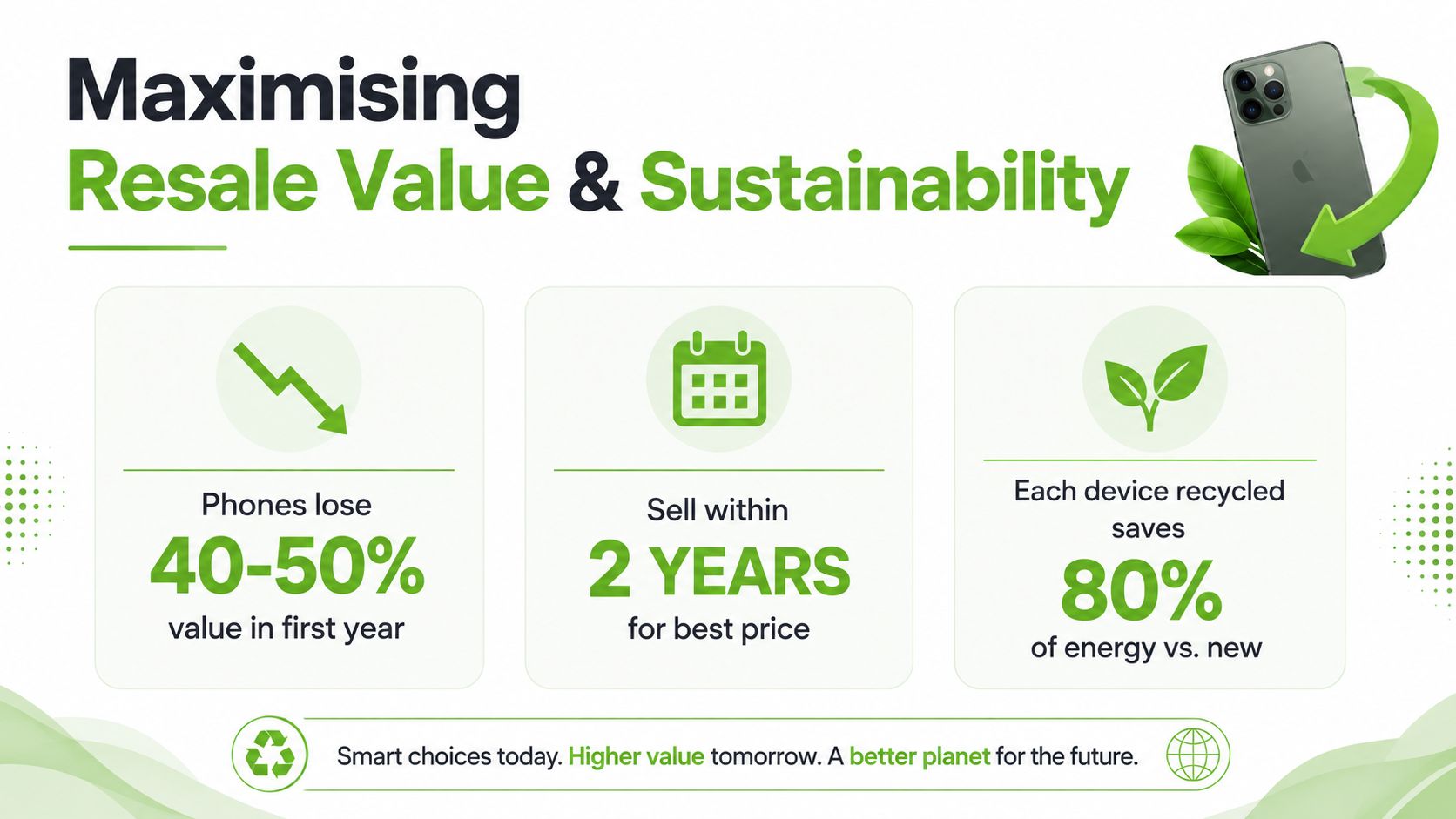
If your phone is still usable, waiting too long can cost you. Resale value moves down as the device gets older, battery health slips, and newer models take attention away from the old one. That's why the sensible move is usually to sell while the phone is still in decent working shape, not after it's become a drawer resident.
Timing matters, but condition still drives the quote
The Asia-Pacific secondary phone market kept expanding in 2024, with demand shifting toward certified refurbished and better-graded devices rather than the oldest handsets. That makes timing and condition work together. A phone that's clean, fully functional, and battery-healthy is much easier to place into reuse than one that needs extra repair or part harvesting.
Singapore's e-waste numbers show why this matters beyond your own pocket. The country's first national e-waste report found 60,000 tonnes of electrical and electronic waste generated in 2021, with ICT equipment the largest category at 12,500 tonnes, and the same report estimated total e-waste had risen to about 110,000 tonnes by 2023 (SellCell reference URL). That rising pool of end-of-life devices is exactly why resale, refurbishment, and parts recovery are worth doing properly.
Sell with purpose, not just speed
There's a sustainability win hidden inside a cash sale. When a phone gets repaired, resold, or harvested for usable parts, it stays out of the bin and stays useful longer. That's the logic behind a zero e-waste approach, and it's also why a certified buyback route is better than letting a working device die in a drawer.
For a local route into responsible disposal and reuse, myhalo's electronics recycling guide gives a useful view of how Singapore sellers can think beyond a one-time payout. Declutter your e-clutter should feel good, because you're clearing space, protecting the planet, and turning a dormant asset back into cash.
Ready to Turn Your Old Phone Into Cash
Selling your old phone should feel organised, not stressful. Back it up, wipe it properly, check the quote, and choose a channel that treats your data with care before it treats your handset as inventory. That's how you avoid inspection surprises and walk away with both money and peace of mind.
If you want a simple, local way to do it, myhalo offers instant-quote trade-in, in-store drop-off at Bugis Junction (#03-25/26) or Sim Lim Square (#03-40), and a Safe Data process that puts privacy first. It's a clean fit for anyone who wants to sell smartphone for cash without turning the whole thing into a headache.
Ready to feel lighter and do good? Let's clear out those old devices together. Visit myhalo to start your trade-in, protect your data, and join a more convenient zero e-waste routine today.