

A lot of people in Singapore have the same small secret. There’s a drawer, cabinet, or storage box filled with old phones, tangled charging cables, a tablet with a cracked screen, maybe a laptop that still turns on but hasn’t been touched in months. You meant to deal with it. You just didn’t want the hassle, and you definitely didn’t want your personal data ending up in the wrong hands.
That hesitation is completely understandable. Old tech isn’t like old paper or an empty bottle. A forgotten phone can still hold photos, banking app access, saved passwords, messages, and work files. So when you start looking for a recycle company in Singapore, you’re not only asking, “How do I clear this out?” You’re also asking, “Will this be safe, convenient, and actually responsible?”
That’s the heart of good e-waste recycling. It should feel simple. It should protect your privacy. And it should help your device get the best possible next life, whether that means repair, reuse, part harvesting, or secure recycling.
Table of Contents
- That Drawer of Old Gadgets Has a Bright Future
- Understanding Singapore’s E-Waste Challenge
- Your E-Waste Service Options Beyond the Bin
- How to Choose a Trustworthy E-Waste Partner
- Measuring Your Positive Environmental Impact
- Getting Started with myhalo in Singapore
- Join the Zero E-Waste Movement Today
That Drawer of Old Gadgets Has a Bright Future
A common weekend clean-up scene goes like this. You open a drawer looking for one cable, then find an old iPhone, a dead power bank, a pair of earbuds that only work on one side, and a laptop you replaced during your last upgrade. Suddenly the whole thing feels messy enough to close again and deal with “later”.
You’re not alone in that. myhalo’s research found that working Singaporean adults hold an average of 3.3 inactive small electronic devices at home, many of them partly working or not working at all, and many still contain important personal data, according to myhalo’s Declutter Your e-Clutter research page. That helps explain why so many homes have e-clutter sitting unused in corners.
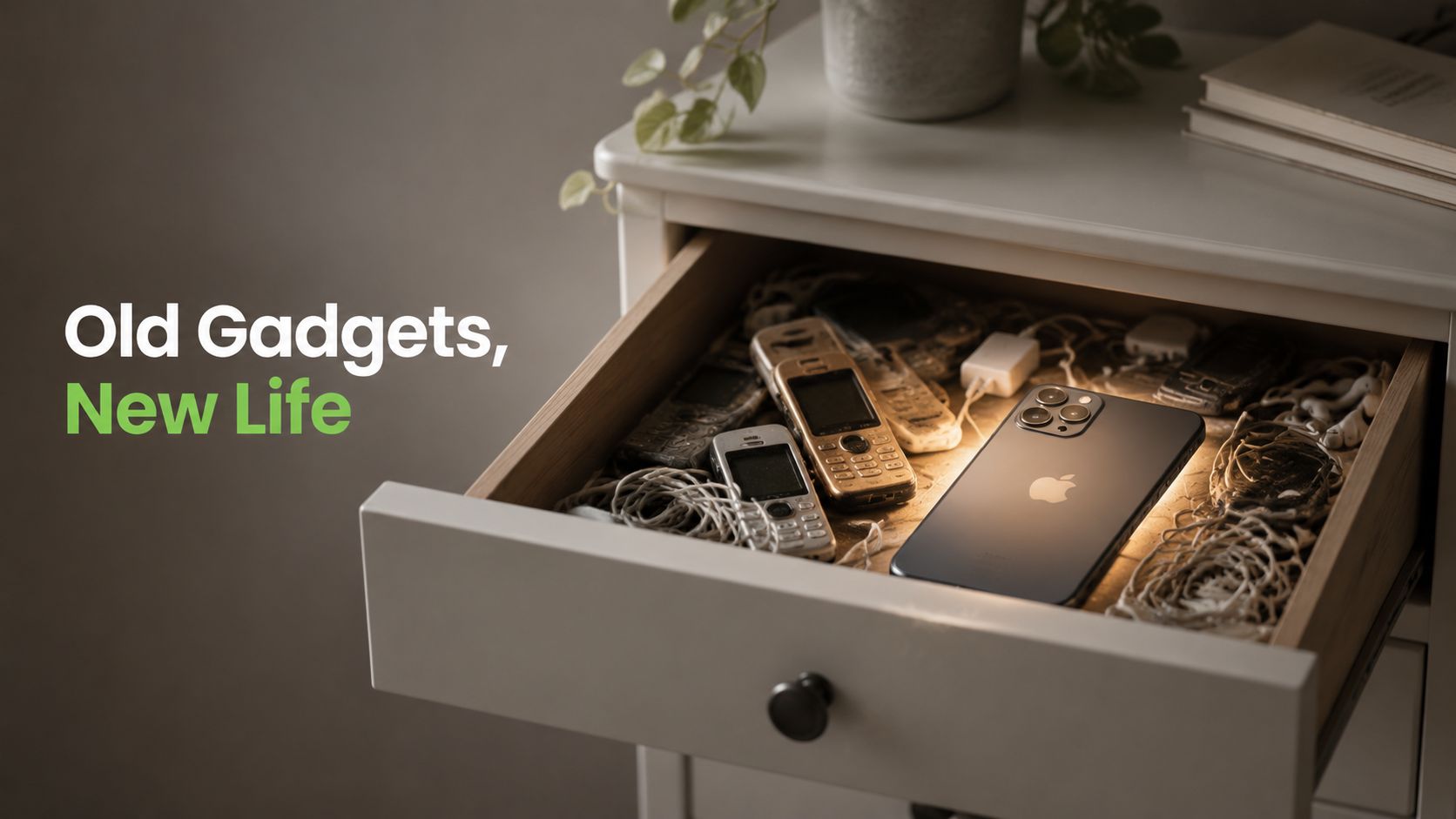
Why old gadgets stay stuck at home
For many, there are two blockers.
- Data worries: You might be fine giving away a dead charger. You probably won’t feel as calm about an old phone that once held family photos, Singpass logins, or work chats.
- Decision fatigue: Is the device still usable? Should you repair it, sell it, donate it, or recycle it? If the answer isn’t obvious, the drawer becomes the default holding place.
- Convenience issues: If recycling feels complicated, people postpone it. That’s normal.
Practical rule: If a device stores data or once connected to your personal accounts, treat it with the same care you’d give a wallet full of cards.
That’s why a helpful recycle company in Singapore shouldn’t only collect devices. It should make the next step feel lighter. Some items deserve repair. Some still have resale value. Some can support reuse through parts harvesting. Others need secure end-of-life handling.
If you’ve ever wondered whether home is turning into a tech dumping spot, this guide on why home isn’t the place to dump old devices gives a useful local perspective.
The brighter way to see e-clutter
That old drawer isn’t a pile of rubbish. It’s a queue of unresolved decisions.
One phone might be ready for secure trade-in. A damaged laptop might still yield recoverable files. A non-working tablet might still support another repair through usable parts. Once you see those possibilities, recycling stops feeling like loss and starts feeling like care. For your space, your privacy, and the wider community.
Understanding Singapore’s E-Waste Challenge
Singapore’s e-waste issue can sound technical, but the basic idea is simple. We use a lot of electronic devices, we upgrade them often, and every old device needs a responsible next step. If that step is delayed or mishandled, homes get cluttered and valuable materials are lost.
At national level, the issue is substantial. Singapore recycled about 3.55 million metric tons of waste in 2023, and that volume exceeded the amount of waste disposed of, according to Statista’s Singapore waste recycled data. The same source notes that the Singapore Waste Management Market was valued at USD 1.4 billion in 2026 and is projected to reach USD 1.73 billion by 2031 at a 4.35% CAGR. It also states that e-waste recycling in Singapore has risen by at least 50% over the past three years.
What counts as e-waste in daily life
E-waste means electronic items that are no longer wanted, working, or useful in their current state. In everyday life, that can include:
- Small personal tech: phones, tablets, earbuds, smartwatches
- Home and study devices: laptops, monitors, keyboards, routers
- Accessories and add-ons: chargers, cables, power banks, small peripherals
Some of these items can be repaired or reused. Others need safe recycling because they contain components that shouldn’t be treated like general household rubbish.
How Singapore is responding
Singapore hasn’t left this to chance. The National Environmental Agency has implemented an Extended Producer Responsibility system and mapped 500 e-waste recycling bins across Singapore, as noted in NEA’s public post on waste and recycling statistics.
That matters for two reasons. First, it shows e-waste management is a national priority. Second, it gives residents easier access points for proper disposal.
A bin is useful for collection. It isn’t the full answer for every device, especially if the item still has resale value, repair potential, or sensitive data inside.
If you want a clearer picture of why improper disposal can be harmful, this explanation of e-waste and its negative effects on the environment breaks it down in plain language.
Why this matters to households and businesses
For households, the challenge is mostly practical. What do you do with old gadgets safely?
For businesses, it adds compliance and confidentiality concerns. A retired laptop isn’t just a physical object. It may also hold customer details, internal documents, and account access. That’s why many people looking for a recycle company in Singapore are really looking for something more complete than a drop-off point. They need a service that understands device lifecycles, secure handling, and clear process visibility.
Your E-Waste Service Options Beyond the Bin
If you only think in two categories, keep or throw away, old tech becomes stressful fast. A better approach is to look at your device as something with several possible futures. That’s how you retain more value, reduce waste, and avoid unnecessary disposal.
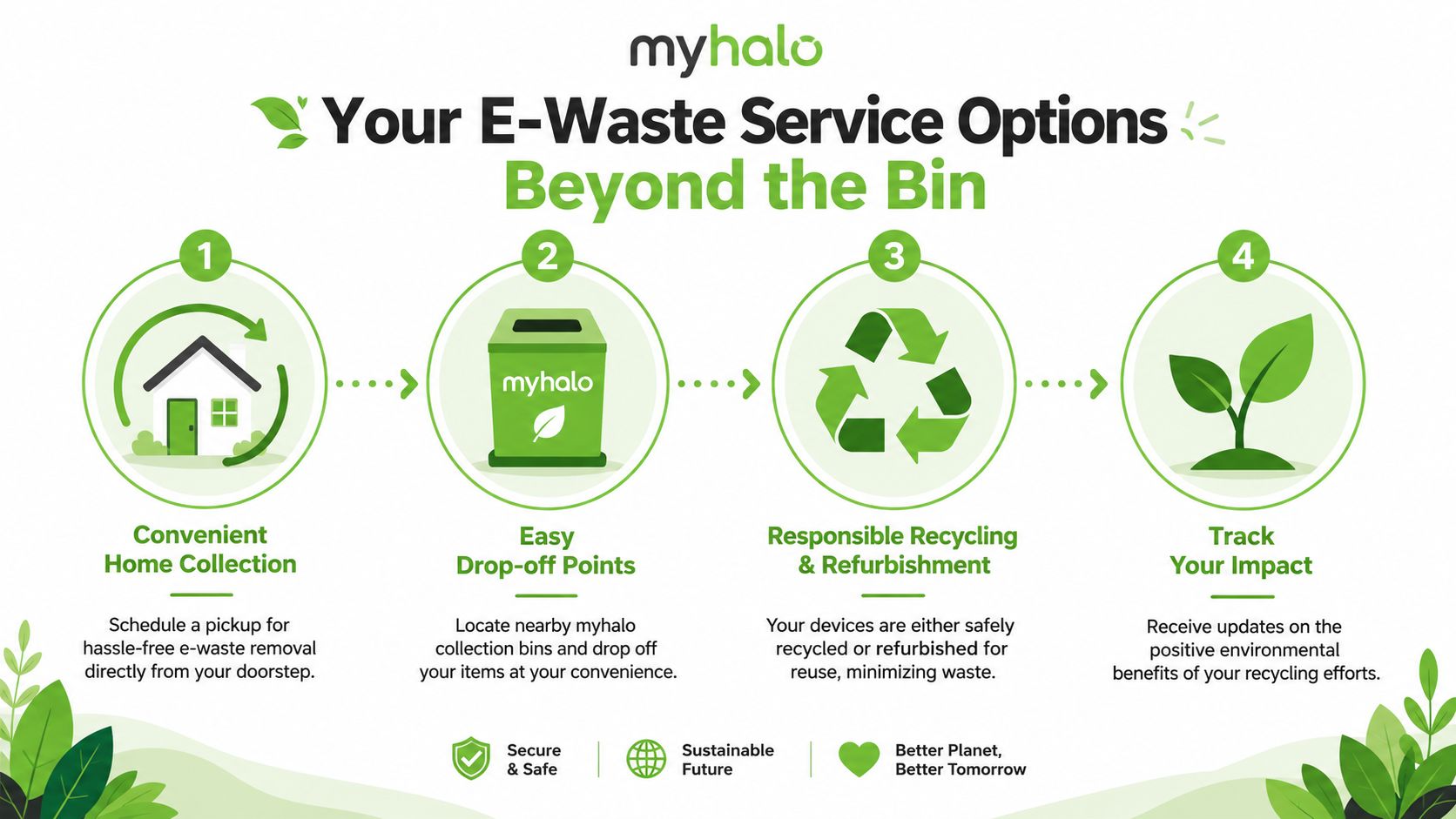
Not every old device is waste
A phone with a weak battery might still be worth repairing. A laptop with cosmetic scratches may still be useful to another buyer. A tablet that no longer boots might still contain working parts. In such cases, many people get confused. They assume “old” means “finished”.
It often doesn’t.
A zero e-waste mindset starts by asking one question. What is the highest-value next use for this device? In practice, that usually means moving through a simple order of preference: repair first, reuse next, then parts harvesting, and only then full recycling.
What a good service pathway looks like
Here are the most common pathways, explained in everyday terms.
-
Repair and rescue
If the device is broken but still repairable, fixing it is often the most efficient path. This works well for battery issues, charging problems, screen damage, or component faults. It also makes sense when the device contains important files you still need. -
Trade-in or buyback
If the device still works and you’ve upgraded, a trade-in or buyback route can turn idle tech into value. That’s helpful for smartphones, Apple devices, Samsung devices, gaming laptops, and other items with active resale demand. -
Certified refurbished resale
Some devices are suitable for a second life through refurbishment. myhalo states that all ReLoved devices go through a 30-point quality check covering items such as battery health, screen condition, and port functionality, with a standard 90-day warranty on hardware services, according to the ReLoved device FAQ. For buyers, that creates more confidence than buying a random second-hand device from a marketplace listing. -
Upcycling and part harvesting
A fully non-functional device may still have value through usable components. Screens, housings, cameras, and other parts can support repairs for other devices. This keeps materials in use for longer and reduces premature disposal. -
Secure erasure and recycling
When the device has reached true end of life, it should go through responsible handling with proper attention to data security. This is especially important for laptops, desktops, phones, and storage-bearing equipment.
The myhalo Promise: Joining the zero e-waste movement should feel good and effortless. Through Safe data, privacy is protected, while Declutter your e-clutter helps make old-device handling convenient, safe, and responsible.
People searching for a recycle company in Singapore often stop at the word “recycle”. But your best outcome may happen before recycling even starts. Repair, resale, or upcycling can be better for your wallet, your convenience, and the life of the device.
For readers trying to decide whether a power issue or worn battery means immediate disposal, this local guide on battery recycling and related next steps can help you sort that out.
A quick way to think about device value
Use this mental checklist before you give anything away:
- Still turns on: Consider trade-in, buyback, or resale.
- Doesn’t turn on but stores important files: Explore repair or data recovery.
- Not practical to fix: Ask whether parts can be harvested.
- Completely at end of life: Choose secure recycling.
That small pause changes everything. It helps you choose a pathway that matches the condition of the device, not just your desire to clear space quickly.
How to Choose a Trustworthy E-Waste Partner
A trustworthy recycle company in Singapore should do more than remove clutter from your sight. It should reduce your risk.
That sounds serious because it is. When people hand over a phone or laptop, they’re often handing over a piece of their digital life. Families worry about photos and messages. Small businesses worry about customer records and staff accounts. Schools and companies worry about compliance. If the process is vague, “recycling” can become a blind spot.
Questions worth asking before you hand anything over
Ask these before you commit:
- What happens to my data: Look for clear secure-erasure or destruction processes, especially for phones, laptops, desktops, and storage devices.
- Is there documentation available: Businesses often need proof of handling. Even individuals benefit from written confirmation of the process.
- Does the company prioritise reuse before disposal: A partner that understands repair, resale, refurbishment, and upcycling is usually managing devices more thoughtfully.
- Can they explain the chain of custody in plain language: If they can’t describe where your device goes next, that’s a warning sign.
- Are they built for continuity: You don’t want a provider that disappears halfway through a programme or leaves unclear accountability behind.
Choose the partner that makes safety visible, not assumed.
If you’re handling business devices or staff equipment, this guide to secure ITAD and certified asset disposition in Singapore is a useful checklist.
Why stability matters as much as convenience
Convenience is lovely. Stability is essential.
The collapse of recycling schemes like SG Recycle’s paper programme highlights a real risk. Relying on financially unstable third-party recyclers can lead to data leakage and compliance failure, according to Eco-Business reporting on SG Recycle’s closure. That point often gets missed in cheerful zero-waste conversations.
If a collection programme is fragile, the risk doesn’t stay theoretical. Devices still need handling. Data still needs protection. Clients still need accountability.
This is why a reliable, corporate-backed lifecycle model matters. One option in Singapore is myhalo, which supports repair, certified resale, buyback, upcycling, secure data management, and corporate ITAD within one device-lifecycle approach. That kind of model can be easier to trust because the service isn’t limited to a single narrow collection function.
Red flags you shouldn’t ignore
A few warning signs tend to show up early:
- Vague answers about data destruction
- No explanation of what happens after collection
- Pressure to hand over devices quickly without documentation
- A process that treats all devices as scrap from the start
A good partner should make you feel informed, not rushed. If they can explain the path clearly and answer practical privacy questions without dodging them, that’s a very good sign.
Measuring Your Positive Environmental Impact
Many people want to make greener choices, but the phrase “good for the environment” can feel blurry. It’s hard to stay motivated when the result is invisible.
That’s why impact becomes more meaningful when it’s tied to a device you held in your hand. Your old phone, your old laptop, your family’s unused tablet. Those aren’t abstract sustainability ideas. They’re real objects with a real footprint.
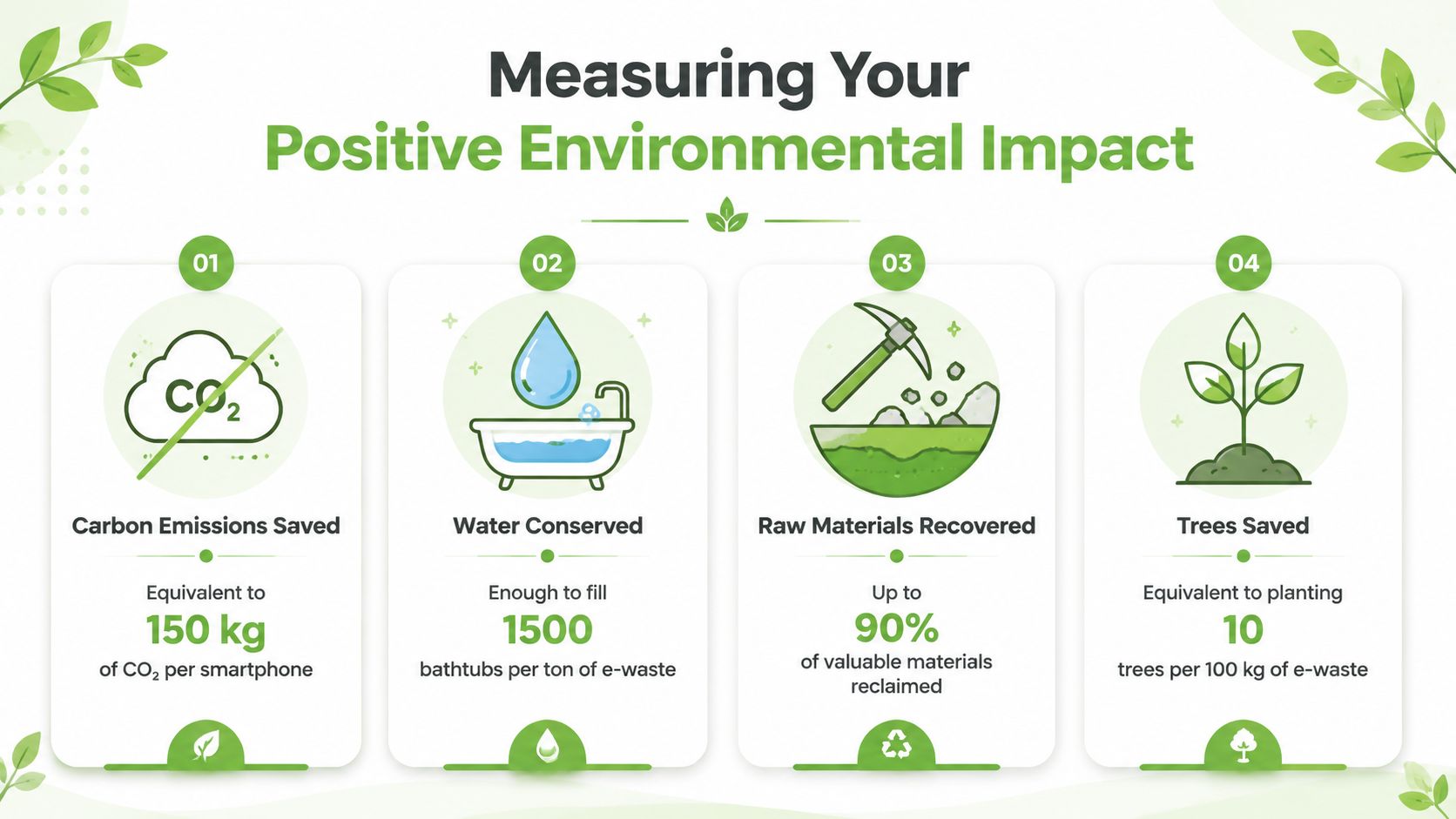
What carbon impact means in everyday language
A device carries environmental cost before you even switch it on. Materials have to be extracted, components manufactured, the device assembled, and the finished product transported. When a working device gets reused instead of replaced immediately, some of that new-production burden is avoided.
That’s the simple idea behind avoided emissions. Reuse helps prevent part of the impact tied to making a replacement device from scratch.
Reusing a single smartphone through myhalo’s ReLoved programme saves about 72.4kg of CO₂e emissions, according to myhalo’s quoted carbon impact reference. The same source links that kind of reuse to the company’s 2024 avoided emissions of over 2,020 MTCO₂e across smartphones, laptops, tablets, and desktops.
When you extend the life of one device, you’re not doing a symbolic act. You’re reducing the need for one more newly produced device to enter the system immediately.
Why transparent reporting matters
This is one of the most useful shifts in the recycling and reuse space. People don’t just want a green claim. They want something they can understand and verify.
That’s especially helpful for:
- Individuals who want to know whether repairing or trading in a phone made a difference
- SMEs that want clearer sustainability records without building a giant ESG department
- Schools and organisations that need a more visible story around responsible device handling
Transparent impact reporting also changes behaviour. If you can see that one smartphone reuse action carries measurable carbon value, the decision to repair, resell, or buy refurbished feels less like a compromise and more like a contribution.
For many readers, this is the moment e-waste stops feeling like a chore. It becomes a practical way to clear space, protect data, and leave a lighter footprint at the same time.
Getting Started with myhalo in Singapore
Getting started should be easy enough that you don’t push it to next month again. If the process feels confusing, that old drawer wins.
A practical route is to begin with your device condition, not with a label like “waste” or “junk”. Ask three questions. Does it still work? Does it still hold important data? Would you rather recover value, recover files, or clear it out safely?
A simple way to decide your next step
The service model is fairly straightforward. You can get a quote online, visit a physical counter, or bring the device in for assessment depending on what you need. For people who prefer an in-person option, the stated store locations include Bugis Junction (#03-25/26) and Sim Lim Square (#03-40).
Here’s a quick comparison to make the decision easier.
| Which Pathway Is Right for Your Device? | Best myhalo Pathway | What You Get |
|---|---|---|
| Still working and you’ve upgraded | Trade-in or buyback | A value-based next step and responsible reuse |
| Broken but likely fixable | Repair and Rescue | A chance to restore function and extend use |
| Not working but may contain important files | Save data | Help recovering precious memories, files, or work documents |
| Too old or damaged for practical repair | Upcycle or recycle | Responsible handling, part harvesting, or end-of-life processing |
What the process can look like
If you’re dealing with personal devices, start small. Pick one phone or laptop from the pile instead of trying to sort the whole house in one go. Check whether you still need the files. Remove obvious accessories like SIM cards if relevant. Then decide whether you want a quote, a repair assessment, or secure disposal support.
For organisations, the same principle applies at larger scale. Separate assets by status. Devices to redeploy. Devices to remarket. Devices for secure retirement. That makes conversations with a lifecycle partner much smoother.
A short visual walkthrough can also help if you prefer seeing the process before taking action.
Helpful reminder: The easiest first step is not sorting every device perfectly. It’s choosing one device and moving it into the right pathway.
A recycle company in Singapore becomes useful when it reduces friction. Online quoting helps with speed. Physical counters help when you want human support. Repair, trade-in, data recovery, and end-of-life handling all sit on the same continuum. That’s what makes the process feel manageable rather than overwhelming.
Join the Zero E-Waste Movement Today
That forgotten drawer doesn’t need to stay a source of guilt. It can become one of the easiest places to start doing something positive.
Old electronics carry memories, materials, and sometimes real financial value. They also carry risk if they’re ignored for too long, especially when data security is part of the picture. A thoughtful recycle company in Singapore helps you deal with all of that in one calm, organised way.
The most encouraging part is that sustainable action doesn’t have to be complicated. It can be as simple as checking one old phone, choosing the right pathway, and letting that device move into a safer next chapter. That’s how a zero e-waste lifestyle becomes real. One repaired laptop. One secure trade-in. One decluttered drawer at a time.
Convenient, safe, responsible. Those aren’t just nice words. They’re what make people comfortable enough to participate, and what helps a community keep going.
Ready to feel lighter and do good? Let’s clear out those old devices together. Visit myhalo to explore Declutter your e-clutter, Safe data, and Save data options that make device recycling, reuse, and recovery feel simple and secure.