
"Declutter Your Life & Help Our Planet!" If that drawer is overflowing with old phones, tangled chargers, earbuds that only work on one side, and a laptop that hasn't been turned on in years, you're in familiar company. The hard part isn't just letting go, it's knowing where to recycle electronics in a way that feels safe, simple, and worth doing.
In Singapore, that choice matters because e-waste should go through proper collection channels, not the general bin. The country's formal e-waste system now runs through regulated collection under the Extended Producer Responsibility framework, which gives residents real options beyond guesswork and supports safer recovery of materials (Singapore e-waste system overview). It also fits Singapore's bigger waste reality, with 6.86 million tonnes generated in 2022 and 3.54 million tonnes recycled, about 51.6% across all waste streams (same source).
If you're also worrying about data, that's completely normal. The myhalo promise is built around exactly that fear, with Safe data for secure handling and Declutter your e-clutter for the easy part of clearing space responsibly. For readers who want a fast starting point, this comparison includes the practical channels that work in Singapore today, from public bins to retailer take-back, repair-led reuse, and certified asset handling.
Table of Contents
- 1. myhalo
- 3. SK tes (TES) Singapore
- 4. Virogreen (Singapore) Pte Ltd
- 4. Virogreen (Singapore) Pte Ltd
- 5. KGS Singapore, including TakeBag
- 6. Shell-Metalo E-Waste Bins
- 7. Harvey Norman Singapore
- 8. Challenger Singapore
- 9. City Square Mall E-Waste Drop-Off
- 10. Apple Reuse & Recycling Program Singapore
- Top 10 Electronics Recycling Locations Compared
- Join the Zero E-Waste Movement Today!
1. myhalo
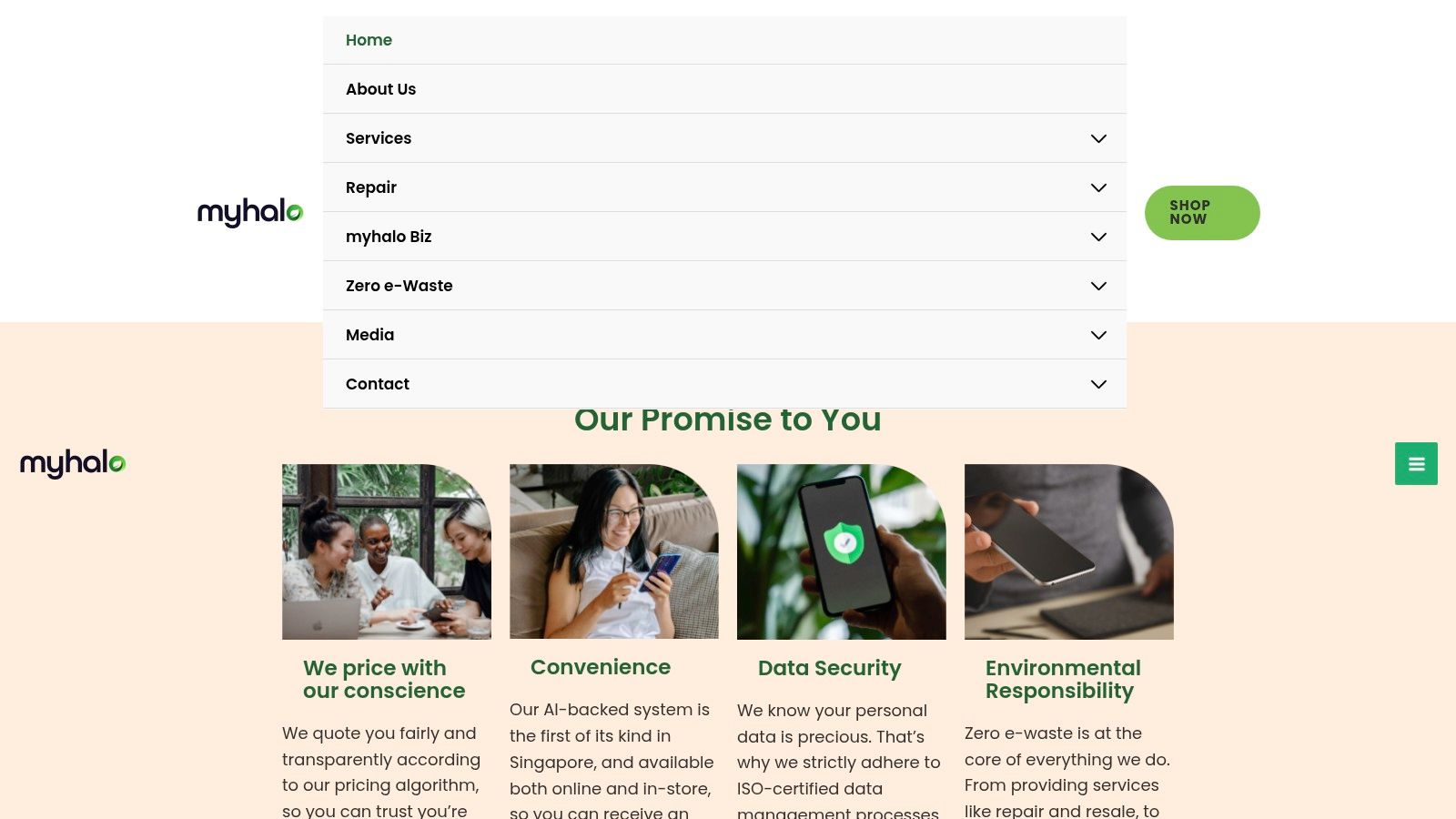
myhalo is a strong pick when you do not just want to discard an old device, but want to recover value, protect data, and keep devices in circulation for as long as possible. It is a Singapore-based platform and retail service that combines repair, certified resale, buyback, trade-in, upcycling, and corporate ITAD, so the same place can help with a dead laptop, a trade-in iPhone, or a stack of office assets that need documented handling. That mix matters because for many devices, recycling should come after reuse options have been considered.
The practical benefit is convenience. myhalo uses a hybrid model with online quotes and physical counters in central Singapore, and it relies on an AI-backed pricing algorithm to give fast, transparent offers before inspection. The brand also positions itself around ISO-aligned data handling and regulatory-compliant data destruction, with certificates available, which gives privacy-conscious users and corporate teams a calmer offboarding process. For people clearing old gear at home, the path from clutter to action stays short and clear.
Practical rule: If the device still has life left, start with reuse, repair, or trade-in before you default to recycling. That keeps more value in play, reduces waste, and usually costs less too.
myhalo's service range is broad enough to cover the messy reality of real devices. Its Repair & Rescue work, data recovery support, e-Xtender subscription, and Upcycle pathway all support the same zero-e-waste mindset, and the business reports about 2,020 MTCO2e avoided in 2024 across smartphones, laptops, tablets, and desktops. It also has strong social proof, including around 4.9 stars from 1,000+ Google reviews, which points to trust and day-to-day convenience. If you are also sorting out company assets, the guide on recycling a company in Singapore is a useful next read because it connects household habits with structured business disposal.
For security-focused readers, the internal guide on how myhalo wipes out your data before recycling your device is a smart next read. It fits neatly with the broader myhalo workflow, especially when you are deciding between resale, certified recycling, or secure destruction.
Best for
- Working devices with remaining value: Trade-in, resale, and buyback can turn old tech into usable value instead of waste.
- Damaged devices with recoverable parts: Repair, rescue, and upcycling keep usable components in circulation.
- Corporate IT teams: ITAD and documented data destruction fit organisations that need secure offboarding.
- Privacy-first households: Data handling is built into the workflow, not treated as an afterthought.
Trade-offs
- Singapore-focused service footprint: The physical presence is in Bugis Junction and Sim Lim Square, so it is not the right fit if you need overseas support.
- Inspection still matters: Final pricing and ReLoved availability depend on assessment, so initial quotes can change after checks.
3. SK tes (TES) Singapore
SK tes is a strong option for companies that need secure IT asset disposition and controlled downstream processing. It sits much closer to enterprise operations than a casual drop-off point, which is why IT teams often consider it when the brief includes compliance, data-bearing devices, and equipment that needs documented handling. For organisations, that is a different job from dropping a few items into a public bin.
The main strength is the mix of Singapore-based operations and global recovery capabilities. That combination matters because many corporate devices need more than collection, they need asset tracking, recorded disposal, and a responsible route for parts that cannot be reused. SK tes also handles lithium-ion battery processing, which is practical for modern device fleets where batteries often become the awkward part of the disposal process.
For households, the fit is narrower. This is not the easiest choice for someone clearing out a couple of old phones on a weekend. It works better for scheduled services, quote-based arrangements, and enterprise workflows where certainty matters more than convenience.
If you are sorting out workplace equipment, the guide on secure ITAD and certified asset disposition in Singapore is a useful companion read because it explains how secure disposal, traceability, and data protection fit together.
Practical rule: If the device came from a workplace, especially one that handled customer, employee, or company data, use an enterprise-grade channel rather than an informal drop-off.
Best fit
- Corporate ITAD: Useful for device retirement, compliant handling, and structured offboarding of office equipment.
- Data-sensitive assets: A better match for computers, drives, and phones that need secure treatment before recycling.
- Battery-heavy fleets: Helpful when lithium-ion batteries are part of the disposal mix.
- Organisations with process requirements: Suitable when the team needs records, accountability, and a clear downstream path.
4. Virogreen (Singapore) Pte Ltd
Virogreen suits people who want one recycler that can serve both consumer drop-off and corporate handling. Its NEA-licensed status gives it clear relevance for Singapore residents who want a local operator with e-waste and ITAD credentials, while its public collection network keeps it useful for day-to-day cleanouts too. That mix matters when your needs change from a household clear-out to a workplace refresh.
For homes, the partner drop-off setup for non-regulated e-waste is the practical draw. It works well for small appliances and peripherals, especially when you are trying to clear out stray cables, old mice, or accessories that no longer fit anything you use. For businesses, the collection and data destruction side adds the structure needed for office equipment and device retirement.
Virogreen also does outreach and facility tours, which gives it a community-facing side that fits Singapore's broader zero-waste culture. If you like seeing what happens after collection, that transparency can make the process feel more real. It is not only about getting items out of your way, it is also about understanding where they go next.
Why people choose it
- Dual-use model: Suitable for both consumers and businesses.
- Education-friendly approach: Facility tours and outreach help people understand the recycling process.
- Licensed local presence: Reassuring if you want a clearly regulated recycler.
4. Virogreen (Singapore) Pte Ltd
Virogreen fits people who want a recycler that can handle both consumer drop-off and corporate handling within the same service mix. Its NEA-licensed status makes it relevant for residents who want a Singapore-based operator with clear e-waste and ITAD credentials, while its public collection network still gives it day-to-day value for ordinary cleanouts. That combination helps when your needs shift from clearing a home drawer to retiring office devices.
For households, the partner drop-off setup for non-regulated e-waste is the practical advantage. It suits small appliances and peripherals, especially if you are trying to clear stray cables, old mice, or accessories that no longer match anything you use. For businesses, the corporate collection and data destruction side adds the structure needed for office equipment and device retirement.
Virogreen also runs outreach and facility tours, which gives it a community-facing side that fits Singapore's broader zero-waste culture. If you like seeing what happens after collection, that transparency can make the process feel more concrete. It is not only about getting items out of your way, it is also about understanding where they go next.
Why people choose it
- Dual-use model: Suitable for both consumers and businesses.
- Education-friendly approach: Facility tours and outreach help people understand the recycling process.
- Licensed local presence: Reassuring if you want a clearly regulated recycler.
Things to check first
- Drop-off lists can change: Partner bins and accepted items are not always static.
- Best to confirm the latest routing: Especially if you have mixed items or non-standard peripherals.
- Not every item fits the same channel: Confirm before you drive over.
If your home cleanout includes a mixed pile, Virogreen is worth considering as part of a broader decluttering plan. For a faster first pass at nearby options, the myhalo guide to finding a recycle bin near me can help you map out what is convenient before you head out.
5. KGS Singapore, including TakeBag
A desk drawer full of loose batteries, dead earbuds, and old chargers can feel oddly hard to clear. KGS makes small e-waste feel manageable, which is why it works so well for the items people keep meaning to sort out. Its public bins, dedicated battery collection, and TakeBag programme give you several ways to deal with the little things that pile up, like power banks, forgotten accessories, and compact devices.
The TakeBag workflow is the most convenient part. You order a free bag, fill it with eligible small e-waste, and drop it at a PICK! locker, so the process stays low-effort from start to finish. That matters if you want a habit that fits into daily life instead of becoming another task on the weekend list. Practical systems get used more often, and that is what keeps e-waste out of drawers.
KGS also fits well for lithium-ion batteries, especially when you want a clear route for items people often hesitate to throw away. These batteries are small, easy to misplace, and not always obviously covered by a generic recycling bin. A recycler with specific item lists reduces that uncertainty and makes the choice easier.
Practical rule: Keep batteries and small electronics separate until you know the accepted route. Mixed bags create confusion, and confusion is how good recycling intentions go sideways.
If you are sorting through a messy desk drawer, a box of cables, or a bundle of accessories from different devices, KGS gives you a tidy place to start. For a quick way to compare nearby drop-off points first, the myhalo guide to finding a recycle bin near me can help you map out what fits your route before you head out.
Best for
- Loose batteries and power banks: Strong category fit.
- Small electronics: Good for phones, earbuds, chargers, and compact peripherals.
- Convenient home decluttering: The TakeBag setup is built for low-effort cleanup.
Limitations
- Not for large items: Public bins and mailer-style bags have size limits.
- Doorstep collection may cost more: Paid pickup exists, but it isn't a free default.
If your goal is to clear a crowded drawer without turning it into a big project, KGS is one of the easiest options to work into your routine.
6. Shell-Metalo E-Waste Bins
Shell-Metalo bins work well for the kind of recycling that happens on the move. If you are already stopping for fuel or passing a participating station on your regular route, dropping off small non-regulated items takes very little extra effort. That convenience matters, because e-waste is easier to clear when the recycling point fits into errands you are already doing.
The setup suits accessories and compact devices that do not need a full collection service. For drivers, it can become a simple habit, a quick handoff during a petrol stop instead of a separate trip across town. That lower friction helps more households keep unwanted items moving out of drawers and into a proper channel.
The key limit is simple. These bins do not replace regulated PRS channels for items that belong in the formal national system. If you are unsure whether a device is covered, check first rather than guessing. That small pause avoids the common mistake of putting the right item into the wrong route.
For quick comparisons across Singapore, the internal guide on finding a recycle bin near you is useful before you head out.
Why it works
- Great for motorists: It fits naturally into refuelling and other errands.
- Useful for small items: It helps clear accessories and non-regulated e-waste.
- Convenient island-wide stops: Participating stations create more drop-off points.
What it doesn't do
- Not universal: Only selected Shell stations take part.
- Not for regulated items by default: Those still need the proper PRS route.
- Not ideal for bulk disposal: This is designed for small-item convenience.
If speed matters most, Shell-Metalo gives you an easy way to move e-waste out of the home and into the right channel.
7. Harvey Norman Singapore
Harvey Norman is a practical retail option because it folds recycling into a purchase you were already making. If you are replacing a fridge, washer, or another appliance, the 1-for-1 takeback arrangement can simplify the old-unit handoff a lot. That matters because it stops the usual “I'll deal with it later” delay from turning into long-term storage at home.
The in-store collection points for smaller electronics add another useful path. You can bring items along during a regular visit, which fits how many shoppers already plan their errands. A key benefit is timing, since disposal happens in the same trip instead of becoming a separate task you have to remember later.
Retailer drop-off works well because it sits close to the point of replacement. That is usually when households are most ready to act, and it is often the easiest moment to make a responsible choice. The collected waste still goes through the national EPR routing, so it continues into licensed channels rather than ending up in the wrong place.
For households that are also thinking about what still has value, this route pairs well with resale or trade-in decisions before recycling the rest. In practice, that can mean keeping usable devices in circulation, wiping personal data first, and sending only true end-of-life items into the recycling stream. It is a straightforward way to make a clean break without wasting anything that could still serve someone else.
Best when
- You are replacing a large appliance: The old unit can leave with the new one under the right conditions.
- You have small items to drop off: Store collection makes casual recycling easier.
- You want one-stop convenience: Shopping and disposal in the same trip can simplify life.
Limits to remember
- Takeback is tied to a new delivery: It is not a standalone bulky pickup service.
- Like-for-like rules apply: The old item has to match the delivery conditions.
- It is not the best fit for irregular disposal needs: For that, a dedicated recycler is often better.
For households that like practical, no-drama routines, Harvey Norman makes e-waste recycling feel like part of everyday purchasing instead of a separate project.
8. Challenger Singapore
Challenger gives shoppers a practical answer to where to recycle electronics without making a separate trip. Its in-store bins take consumer ICT items, portable batteries, and lamps, so it suits the small pieces that tend to build up in drawers, bags, and desk corners. That fit matters in Singapore, where a quick drop-off is often easier to stick with than a plan that needs extra time or transport.
For everyday use, the appeal is how ordinary it feels. You can clear out old cables, accessories, batteries, and lamps while you are already out shopping, then leave knowing the items are headed into a proper collection route. That kind of routine makes recycling easier to repeat, which is usually what turns good intentions into actual habit.
There are limits, though. Store space and acceptance can vary, and bulky household appliances do not belong here. This works well for small consumer tech, not for a full home clearout.
Practical rule: If you are already in the mall, use that momentum. Small, well-labeled collection points are often the easiest way to build a recycling habit that actually sticks.
Good for
- Consumer ICT: Small electronics, cables, and related items.
- Portable batteries: Handy for the things people often store for too long.
- Lamp recycling: Useful when you are replacing lighting and want a proper route.
Not ideal for
- Large appliances: These need a different collection channel.
- Uncertainty-heavy drop-offs: If you have mixed or unusual items, confirm before visiting.
Challenger works because it sits where people already shop. That makes it a natural drop-off choice for routine Singapore recycling.
9. City Square Mall E-Waste Drop-Off
City Square Mall's e-waste drop-off stands out because someone is there to help. That small difference matters when you are bringing in items that are awkward to sort, borderline cases, or hard to identify. A staff member can check what belongs, lower the chance of contamination, and give you a clear answer on the spot.
The location also makes the trip easy to fold into an ordinary day. A central mall stop pairs well with transit, errands, or a lunch break, and the dedicated Green & Social Good Space gives the programme a visible community feel. It is not just a bin in a corner. It is a public reminder that responsible disposal is part of daily life in Singapore.
That said, this is a planned drop-off, not a round-the-clock option. Size limits apply, and counter hours matter, so it suits people who can visit during operating times. For many households, that trade-off is worthwhile because it reduces confusion and cuts down on rejected items.
A staffed counter also helps when you are sorting a mix of devices. If one item is a little unusual, you can ask before leaving it behind, which saves time later and keeps the stream cleaner for everyone involved.
Why it stands out
- Staff-assisted intake: Helpful when you are unsure about acceptance.
- Transit-friendly location: Easy to fit into a normal day.
- Better for mixed confidence levels: Useful when you want a human check.
Where it falls short
- Size restrictions apply: Not for large appliances.
- Not always open: Counter hours matter.
- Not a bulk solution: Best for smaller, manageable items.
If clarity matters more than speed, City Square Mall is one of the more reassuring places to begin.
10. Apple Reuse & Recycling Program Singapore
Apple's program is a clean fit for people living inside the Apple ecosystem. If your device isn't eligible for trade-in, Apple still offers free recycling through mail-in kits or in-store drop-off, which makes the process easy for users who want to stay within one brand's workflow. That convenience is a major plus when the main goal is to get the device moving.
The strongest part is the built-in guidance. Apple points users toward device preparation and routes regulated e-waste to Singapore's licensed PRS operator, which keeps the process aligned with local requirements. For customers who want a familiar retail experience plus a proper recycling path, that combination is reassuring.
The main limitation is obvious too. This route is primarily for Apple products, so it's not the place for a mixed household pile of Samsung phones, random accessories, or office peripherals. It's specialised, which is good when you own Apple gear, less useful when you don't.
Why it's handy
- Simple for Apple users: Trade-in and recycling live in one familiar ecosystem.
- Mail-in or store drop-off: Multiple easy access points.
- Aligned with local rules: Regulated items are routed through the licensed channel.
What to keep in mind
- Mostly Apple-only: Third-party electronics may not be accepted.
- Trade-in and recycling are separate: Value and free disposal are handled differently.
- Best for brand-specific cleanouts: Not the broadest solution on the list.
If your drawer is full of Apple devices, this is one of the least complicated ways to clear them responsibly.
Top 10 Electronics Recycling Locations Compared
| Provider | Core services ✨ | Security & UX ★ | Sustainability & Value 💰 | Best for 👥 |
|---|---|---|---|---|
| 🏆 myhalo | ✨ Repair & Rescue; ReLoved sales; trade‑in/buyback; upcycle vouchers | ★ ISO‑aligned data handling; certified data destruction; ≈4.9★ reviews | 💰 AI instant quotes; vouchers; ≈2,020 MTCO2e avoided (2024) | 👥 Consumers & Corporates |
| ALBA E‑Waste Singapore | ✨ Nationwide PRS bins; LHA doorstep pickup; e‑drives | ★ PRS operator; licensed downstream recyclers | 💰 Free recycling for PRS items; widest coverage | 👥 General public & households |
| SK tes (TES) Singapore | ✨ Full ITAD; battery processing; enterprise recycling | ★ Enterprise‑grade certified data destruction & compliance | 💰 Contract/quote model; global responsible downstreams | 👥 Large enterprises & IT teams |
| Virogreen (SG) | ✨ NEA‑licensed recycling; corporate collections; tours | ★ Secure data destruction; NEA license; outreach | 💰 CSR drop‑offs; event‑driven collections | 👥 Organisations, schools, community groups |
| KGS Singapore (TakeBag) | ✨ Battery & small e‑waste bins; TakeBag mailer‑to‑locker | ★ Licensed battery recycler; clear guidance | 💰 Free TakeBag; paid doorstep pickup option | 👥 Households with batteries/small electronics |
| Shell–Metalo bins | ✨ Small non‑regulated e‑waste drop‑offs at Shell stations | ★ Convenient but limited site list; not PRS | 💰 Free local drop‑off; complements PRS channels | 👥 Motorists & quick‑drop users |
| Harvey Norman Singapore | ✨ In‑store small item drop‑off; 1‑for‑1 large appliance takeback | ★ Routed to PRS/licensed recyclers; tied to purchase | 💰 Free 1‑for‑1 with new delivery; not on‑demand | 👥 Appliance buyers replacing large items |
| Challenger Singapore | ✨ Mall e‑waste bins for ICT, batteries, lamps | ★ NEA‑aligned sorting guidance; mall convenience | 💰 Free in‑store drop‑off; size limits apply | 👥 Shoppers with small ICT & accessories |
| City Square Mall (manned) | ✨ Staff‑assisted intake; Green & Social Good Space | ★ Manned intake reduces contamination; limited hours | 💰 Free assisted drop‑off; transit‑friendly location | 👥 Public needing assisted/oversize small items |
| Apple Reuse & Recycling (SG) | ✨ Trade‑in; mail‑in or in‑store recycling for Apple devices | ★ Guidance on data wipe; routes to PRS when regulated | 💰 Free recycling; trade‑in values vary by device | 👥 Apple device owners |
Join the Zero E-Waste Movement Today!
From public bins to specialised services, there's a real recycling option for almost every kind of e-waste in Singapore. The best choice depends on what you own, whether it still works, and how much value or data is still sitting on the device. Once you look at it that way, where to recycle electronics stops being a stressful question and starts feeling like a simple, practical decision.
The strongest habit is to sort by outcome, not just by item. Working devices can often be reused, repaired, resold, or traded in. Broken devices may still have parts worth recovering, while privacy-sensitive assets need secure handling before anything else happens. That's why a community-minded approach matters, because it helps you avoid unnecessary waste while protecting what matters most to you.
myhalo fits into that bigger picture by making the path easy to follow. It brings together repair, certified resale, buyback, upcycling, data recovery, and compliant ITAD, so you can declutter your e-clutter without losing sleep over privacy or value. For households, that means less stuff in the drawer. For businesses, it means cleaner asset lifecycle management and a more responsible end-of-life process.
If you've been meaning to do something about old phones, laptops, tablets, or office gear, this is a great moment to start. Choose the route that matches your device, then make the drop-off, trade-in, or secure handover happen this week instead of “one day”.
Ready to feel lighter and do good? Let's clear out those old devices together! Check out our Declutter your e-clutter program today and see how convenient it is to make a positive splash for our environment.
myhalo makes it easy to move from clutter to action with repair, trade-in, certified resale, secure data handling, and responsible recycling for devices that have reached the end of the road. If you're ready to recycle electronics the safe, convenient way, visit myhalo and let our team help you choose the best path for your old devices.