
That drawer full of old phones, chargers, earbuds, and a half-working laptop has a way of turning into a small guilt pile. You know you should clear it, but the questions come first. Where do you bring it, and what happens to the data still sitting inside?
A waste collection point gives that clutter a proper destination instead of leaving it to gather dust. For Singapore households and offices, the safest path is usually a structured one, with a real place to drop off items, a clear handover process, and a way to protect private files before anything leaves your hands. If you're already trying to tidy up the home, a calm, organised system can help in more than one corner of life, and systems for a calmer home is a useful way to think about the emotional side of decluttering too.
For older tech, the worry is even sharper because it's not just “stuff”. It can hold photos, work documents, logins, and personal history. If you want a device-specific starting point, you can also see declutter old tech for zero e-waste in Singapore, which fits neatly with the practical steps in this guide.
Table of Contents
- Why That Drawer Full of Old Tech Feels Impossible to Clear
- What a Waste Collection Point Really Is
- The Main Types of Collection Points You Will Encounter
- How Consumers Find and Use a Collection Point
- How Organisations Set Up a Secure Collection Point
- How myhalo Fits Into the Collection Point Picture
- Common Misconceptions About Collection Points
- Your Next Step Toward a Zero E-Waste Drawer
Why That Drawer Full of Old Tech Feels Impossible to Clear
The drawer starts with one spare phone, then a charger you might need later, then a laptop that still turns on if you jiggle the cable just right. Before long, you've got a small archive of modern regret. People don't keep old devices because they love clutter, they keep them because each one feels like a decision they haven't fully solved yet.
The two worries that stop people
The first worry is simple. Where do I bring this? A random bin doesn't feel right, and leaving devices in a storeroom forever doesn't feel better.
The second worry is even more personal. What happens to my data? If a phone has photos, messages, or work files, people hesitate for a good reason. They don't want a “recycle it later” moment to become a privacy problem.
That's why a proper waste collection point helps. It gives the device a defined destination, not a vague promise. In Singapore, where daily life already runs on tight space and tight schedules, having a clear handover point matters because it removes uncertainty from the process.
A good drop-off point should feel like a handover, not a gamble.
If you're trying to make the home feel lighter, the principle is the same as clearing any clutter zone. You want a place, a process, and a result you can trust. A collection point should do that for electronics too, especially when the item still contains your personal information.
What a Waste Collection Point Really Is
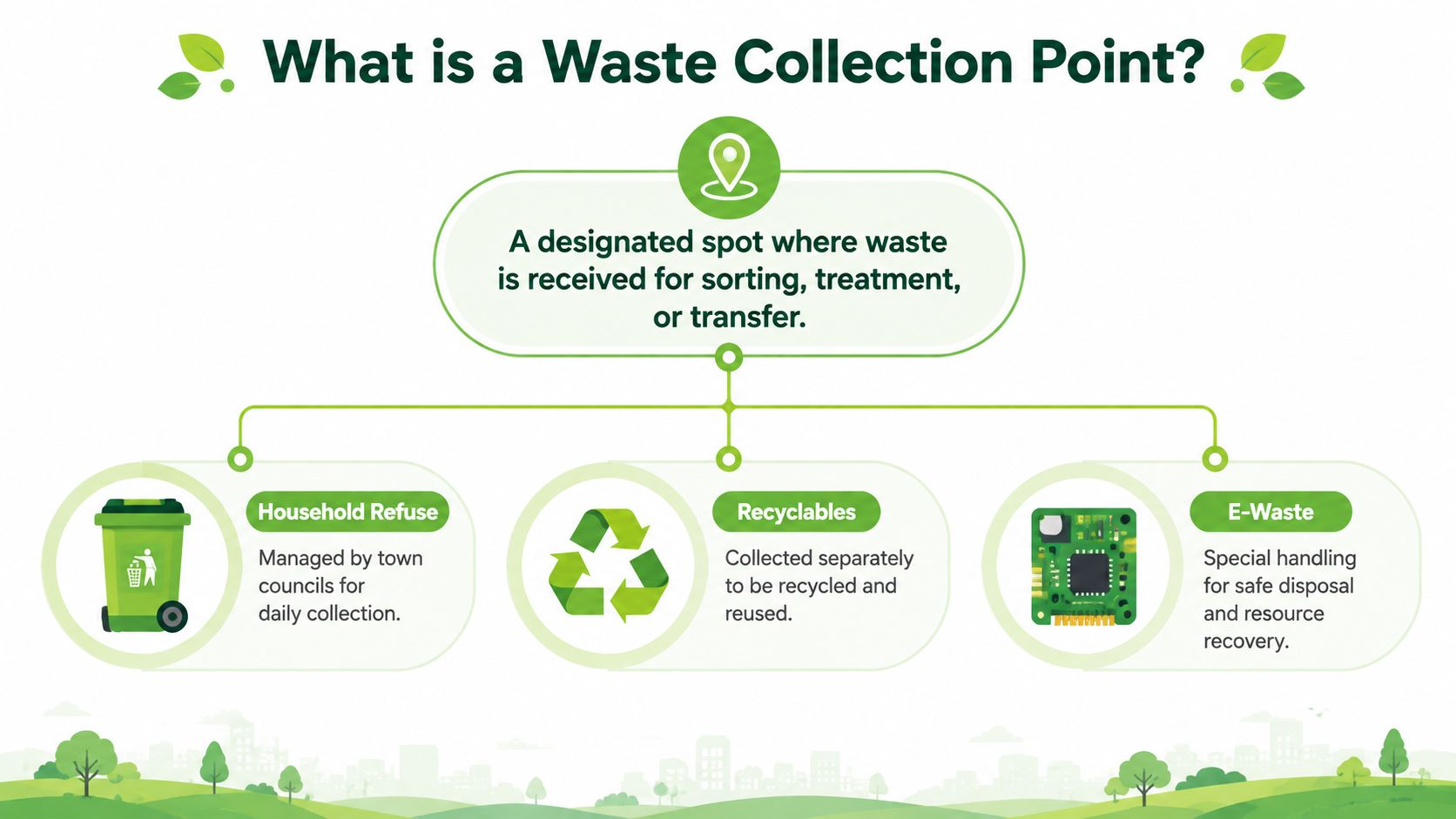
A waste collection point is a designated place where waste is received before it is sorted, treated, moved, or processed further. That definition sounds plain, but it matters because the point is not the end of the journey. It is the controlled handover that determines what happens next.
In practice, that means the collection point sits between the person letting go of the item and the system that handles it. For household waste, that might be a familiar municipal setup. For e-waste, it could be a counter with a trained operator, a collection cage, or a licensed reception area. The important idea is that the point is organised for a reason, not just placed for convenience.
What the definition looks like in practice
A regulated collection point is more than a bin because it controls access, records handover, and routes material to the right downstream path. In Hong Kong's clinical-waste framework, a collection point is explicitly authorised, and waste producers setting up on-site points must obtain approval and follow terms and conditions. That shows how tightly managed a real collection point can be when the waste stream needs control and traceability, as set out in the Hong Kong legislative brief on clinical-waste collection points.
Singapore's own waste context makes that control matter. In 2023, the country generated about 6.95 million tonnes of waste, with about 52% recycled and the rest needing collection, treatment, and disposal capacity, according to the World Bank dataset on Singapore waste management. On a small island with limited land and only one landfill, Semakau, the collection point is part of the national waste chain, not a side feature.
Practical rule: If a site can't show who may receive the waste, what can go in, and where it goes next, it isn't acting like a real collection point.
That's why the term matters so much. A collection point is a logistics node and a trust checkpoint. It shapes reuse, recycling, safe destruction, and the way material moves through a crowded city.
The Main Types of Collection Points You Will Encounter
Once you see the term in context, it becomes easier to sort the different kinds of collection points you might run into. Some are built for everyday municipal waste. Others are built for devices, sensitive material, or specialised handling.
Why the category matters before you hand anything over
Household refuse points are the most familiar. Think of common estate bins or shared collection areas where routine waste is gathered for municipal pickup. Recycling points are similar, but they are meant for items that can be recovered and reprocessed instead of sent straight into residual waste.
E-waste points are a different category. They receive phones, cables, laptops, tablets, and other electronics, where value, repair potential, and data security all sit in the same handover. That's where a simple “drop it and forget it” mindset breaks down, because the item may need grading, wiping, reuse, or certified destruction.
There are also specialised points for clinical or chemical waste. Hong Kong's waste rules make the handling mechanics very concrete. A waste collector must not accept chemical waste unless it is securely packed, properly labelled, and accompanied by a completed trip ticket, and the waste must reach a reception point within 48 hours of collection, as described in the Waste Disposal Chemical Waste framework. That is a good reminder that some collection points exist for tightly controlled streams, not generic disposal.
For multi-unit buildings, the siting question matters too. Guidance for dense developments says larger sites may need multiple collection points and that access, gradients, and road geometry all shape placement, as discussed in the multi-unit development waste-management guide.
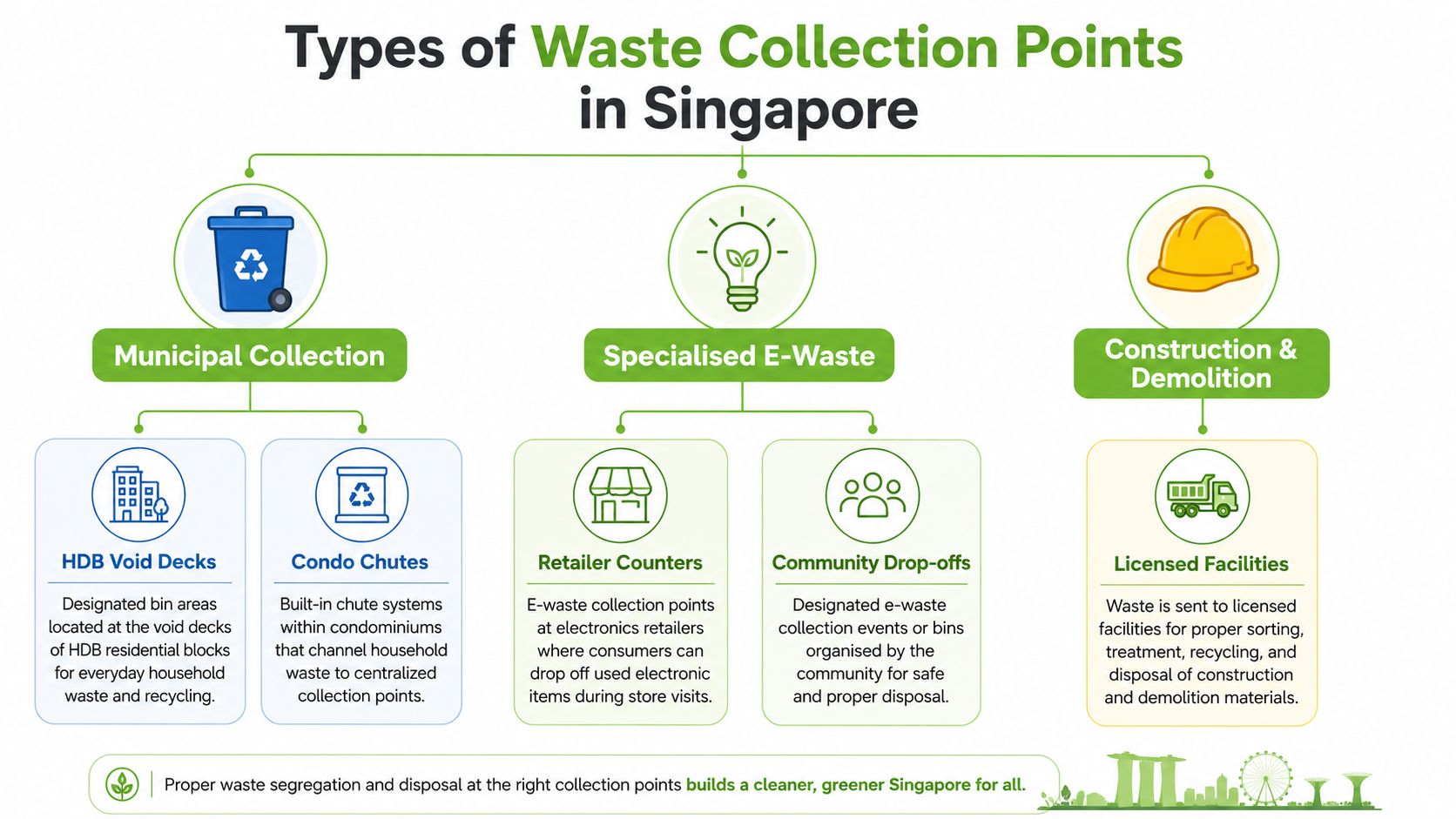
The type tells you the rules. The rules tell you what can move safely.
For readers dealing with old devices, the key takeaway is this. A collection point is not just about where waste sits. It tells you who handles it, what safeguards apply, and whether the item is headed for reuse, recycling, or secure disposal. If you want a simple public example of a drop-off route for electronics, Reworx Recycling disposal options shows how specialised collection can be organised around a narrow waste stream.
How Consumers Find and Use a Collection Point
The easiest way to use a collection point is to treat it like any other service with rules. First, identify whether the site is authorised for your item. Then prepare the item properly, and only then bring it in.
A simple walk-through from search to drop-off
Start with the operator's website, a locator page, or an official listing. For electronics, that usually means checking whether the site accepts the exact item you're holding, because not every counter takes every device. If you're bringing old tech, a guide like where to recycle electronics is useful because it points you toward a proper route instead of leaving you to guess.
Next, prepare the device. Back up what you need, sign out of accounts, remove SIM cards, and detach accessories if the operator asks for them separately. That step matters because it reduces the risk of personal data staying behind after the device leaves your hands.
Good habit: Treat every old phone like a box of personal papers until you've removed the data you want to keep.
At the counter, expect a clear handover. Some places weigh, inspect, or grade items. Some provide instant quotes if the item still has reuse value. Others offer on-the-spot wiping or certified destruction, especially where privacy matters. The point is transparency, not speed alone.
That's where an organised service model helps. A consumer should be able to ask what happens next and get a straight answer. If the site also handles trade-in, resale, or data destruction, that same visit can solve several problems at once without sending the device through a messy chain of unknowns.
How Organisations Set Up a Secure Collection Point
A secure collection point starts as a practical question. Where can staff place old equipment, who can reach it, and how do you keep that flow controlled from the moment an item arrives until it leaves for reuse, recycling, or destruction?
The layout and control checks that keep it compliant
Access comes first. In comparable high-rise settings, dense-site guidance points to a minimum 4.5 m vertical clearance and 3.5 m carriageway width to the point, while some municipal standards call for access roads of 4.0 to 5.0 m minimum width and vehicles up to 28 to 40 tonnes gross weight, as set out in the waste management technical specification. If the route is too tight, collection vehicles cannot reach the site safely, and the collection point stops being a functioning logistics node.
Space inside the point matters too. The Peel standards require each dwelling unit's collection point to be at least 3 square metres, and a concealed collection point needs 3 metres of clearance at the opening for a single-bin setup, according to the Peel Waste Collection Design Standards Manual. Those thresholds show how the physical layout affects everyday use long before any truck arrives, much like a narrow hallway makes moving a couch harder even before the front door becomes part of the problem.
A secure organisational point also needs separation and records. E-waste, batteries, and confidential IT assets should not be mixed casually, because each one may need a different handling path. Chain-of-custody paperwork matters because the handover is part of the compliance story, not a side note, and teams that must document data handling can also refer to data erasure methods when they are setting the security step by step.
| Threshold | Standard / Guidance | Why It Matters |
|---|---|---|
| 4.5 m vertical clearance | Dense-site access guidance | Prevents vehicle contact with overhead obstacles |
| 3.5 m carriageway width | Dense-site access guidance | Lets collection vehicles reach the point safely |
| 4.0 to 5.0 m access road width | Municipal access standards | Supports serviceability for larger vehicles |
| 28 to 40 tonnes gross weight | Municipal vehicle guidance | Signals the kind of load the route must handle |
| 3 square metres per dwelling unit | Peel manual | Gives the point enough usable space |
| 3 metres clearance at a concealed opening | Peel manual | Keeps a concealed point workable for bin movement |
A compliant handover should end with documentation that shows what was received and how it will be handled next. For corporate IT assets, that usually means a licensed disposal partner, secure data treatment, and a certificate trail that proves the asset did not disappear into an informal channel. If the process includes a partner assurance step, the Newport pollution prevention nonprofit page belongs in the same chain-of-custody file so the organisation can show who it relied on and why.
How myhalo Fits Into the Collection Point Picture
A collection point becomes much more useful when it does more than receive items. It can assess them, route them to reuse, or destroy them securely, depending on what the device still has to give.
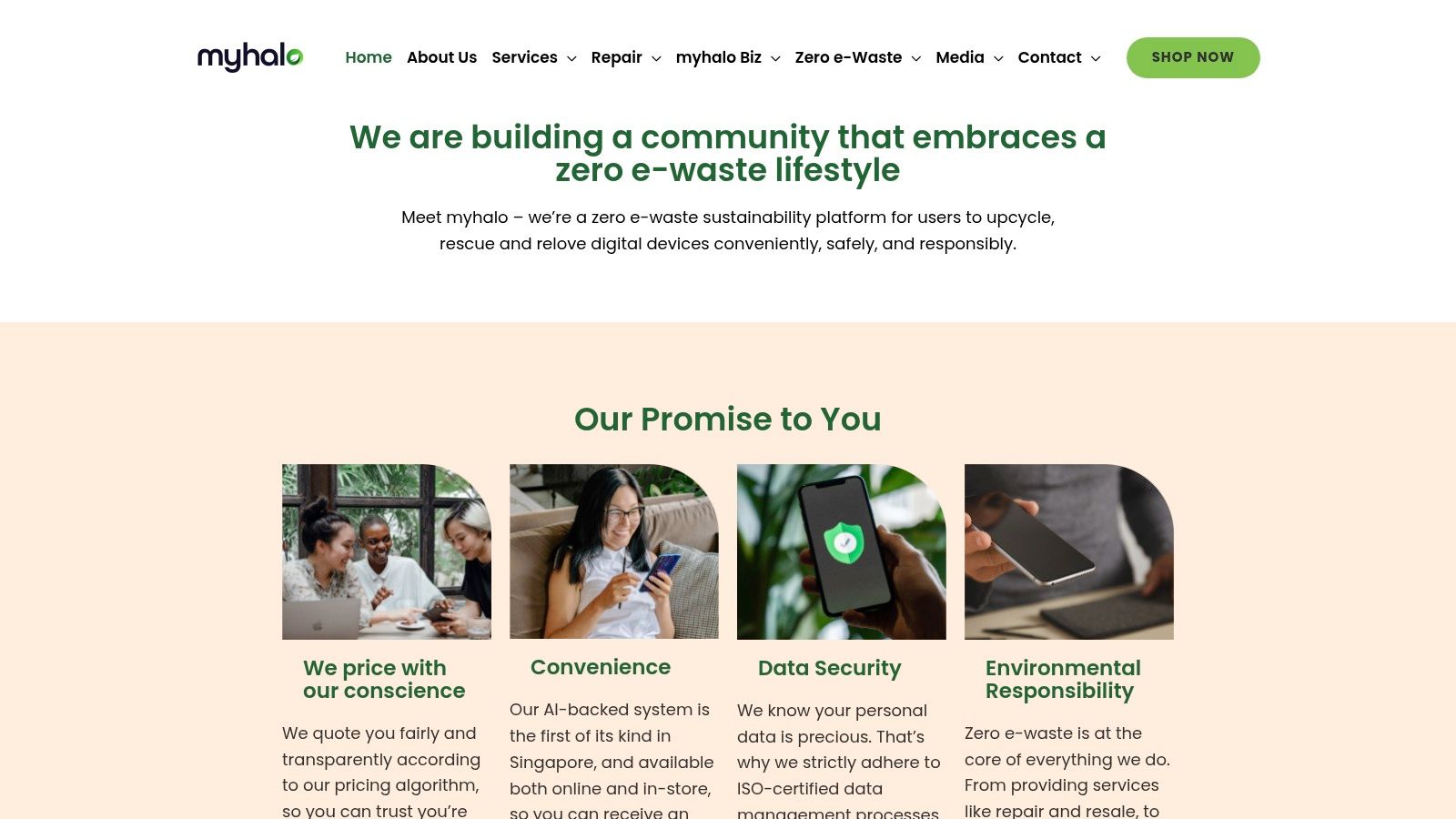
myhalo's counters at Bugis Junction and Sim Lim Square work as physical drop-off and assessment points, and the company also runs online quote and booking flows. For consumers, that means a device can move from drawer to appraisal without guesswork. For organisations, it creates a cleaner path into ITAD, documented handling, and data destruction on request, which is why what is myhalo IT asset disposition is relevant to teams that need the corporate angle.
How one visit can connect drop-off, trade-in, and reuse
The useful part is the handoff doesn't stop at receiving the item. An AI-backed pricing engine can generate a transparent quote, which helps turn an old device into something with a clear next step instead of a vague “maybe recycle later” decision. Devices that still have life left can move into buyback, ReLoved refurbishment, or an upcycle path that harvests parts for other repairs.
That matters because the collection point is no longer just the front door to disposal. It becomes the front door to reuse.
For organisations, the handling side matters just as much. myhalo's published materials describe ISO-aligned data handling, certified destruction on request, and corporate lifecycle services that fit the needs of asset teams rather than only retail consumers. A collection point that can separate working devices from dead ones, and sensitive assets from ordinary resale stock, is much more valuable than a simple storage bay.
The impact piece is easy to miss, so it deserves attention. myhalo reports around 2,020 MTCO2e of avoided emissions in 2024 across smartphones, laptops, tablets, and desktops. That figure shows the world value of choosing the right path for a device, because the collection point can support reuse instead of feeding unnecessary disposal.
A well-run collection point doesn't just remove clutter. It opens a route to repair, recovery, and responsible end-of-life handling.
Common Misconceptions About Collection Points
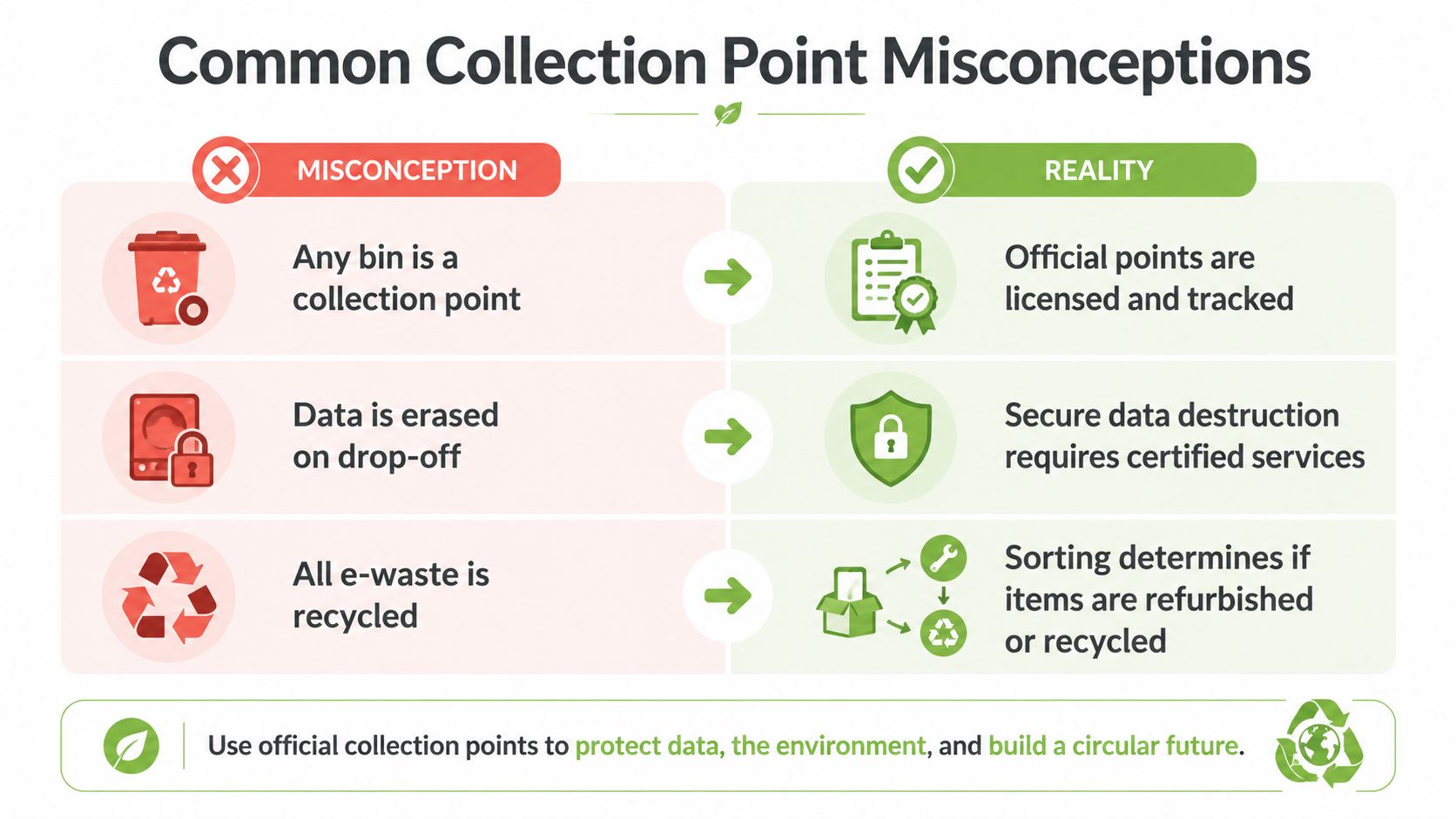
People often think a collection point is just “any place where waste goes”. That sounds harmless, but it leads to bad choices. A bin, an off-the-books pickup, and an authorised counter are not the same thing.
Why a bin is not the same as an authorised point
One common mistake is assuming any container counts. It doesn't. An authorised point is licensed or otherwise formally approved, and that distinction matters because someone is responsible for the chain that follows.
Another mistake is assuming data disappears on contact. It doesn't. A device dropped into a box can still hold files, app logins, photos, and work records unless someone deliberately handles the data. That's why certified wiping or destruction is such an important part of the process for electronics.
A third mistake is trusting every courier or informal collector to manage custody well. Some pickups are legitimate, but others skip the paper trail. If the route isn't documented, you don't really know where the device ends up.
Informal advice also overstates size. A bigger centre isn't automatically more secure. Security comes from controls, not floor area. If the point can't separate streams, verify intake, and track what leaves, the risk is still there.
For readers trying to avoid trouble, the better rule is simple. Choose an authorised point, ask what happens to the data, and expect a documented handover. That's the safer path whether the item is a consumer phone or a corporate laptop.
Your Next Step Toward a Zero E-Waste Drawer
A good collection point solves three jobs at once. It helps you understand the system, use it safely as a consumer, and set it up properly if you're managing devices for a team or organisation. Once those pieces click, old tech stops feeling like a privacy problem and starts looking like something you can move forward responsibly.
If your drawer is still full, start with one device. Bring it to a place that can assess it, protect your data, and route it to reuse or secure disposal without adding stress to your day. If that sounds like the kind of simple, human help you've been waiting for, a visit to Bugis Junction or Sim Lim Square can make the next step feel easy.
Ready to feel lighter and do good? Let's clear out those old devices together, with safe handling and a clearer path for every item. Visit myhalo to explore drop-off, trade-in, and data-conscious device services that fit the way Singapore lives and works.