
You know that tiny jolt of panic when your iPhone slips on a café table, a bus seat, or a tiled floor at home, then lands face-down with a sharp little click? In Singapore, that moment can turn into a real headache fast, because a cracked screen is not just inconvenient, it can also push a perfectly usable phone towards repair, replacement, or early retirement. A good screen protector iPhone setup is one of the simplest ways to keep the device feeling fresh, reduce waste, and delay the point where a phone becomes e-clutter instead of something you still enjoy using.
The smartest way to think about screen protection is not “glass or no glass”, it's “what am I protecting against, and how long do I want this phone to stay useful?” That's where a calm, practical choice helps. A protector that fits well, feels natural under your thumb, and works with your case can do a lot for everyday peace of mind, without making the phone harder to use.
| Protector type | Everyday feel | Main strength | Main trade-off | Good fit for |
|---|---|---|---|---|
| PET plastic | Thin and light | Basic scratch resistance | Limited impact protection | Light users and budget shoppers |
| TPU hydrogel | Soft and flexible | Better edge coverage | Less glass-like feel | Curved edges and flexible fit |
| Tempered glass | Familiar and smooth | Stronger scratch and impact defence | Thicker, can conflict with some cases | Most iPhone owners in Singapore |
| Privacy protector | Similar to glass or film | Narrows viewing angles | Can darken the screen slightly | Commuters and public-space use |
| Anti-glare matte | Textured, reduced reflections | Better visibility in bright light | Changes swipe feel | Outdoor use and bright environments |
Table of Contents
- Why Screen Protection Matters for iPhone Owners
- Understanding Screen Protector iPhone Types
- How Screen Protector Types Compare
- Installation Tips for Better Results
- Choosing the Right Fit and Compatibility
- When to Replace Your Screen Protector
Why Screen Protection Matters for iPhone Owners
A phone can leave your hand while stepping off the MRT, slide across a café table, or pick up grit inside a bag. The damage may be a small corner impact or a scratch that grows into a distracting line across the display. In Singapore, daily travel, shared workspaces, and sudden rain create plenty of ordinary moments where a screen protector iPhone setup can help. The right protector adds a buffer while keeping the screen readable, responsive, and easier to clean.
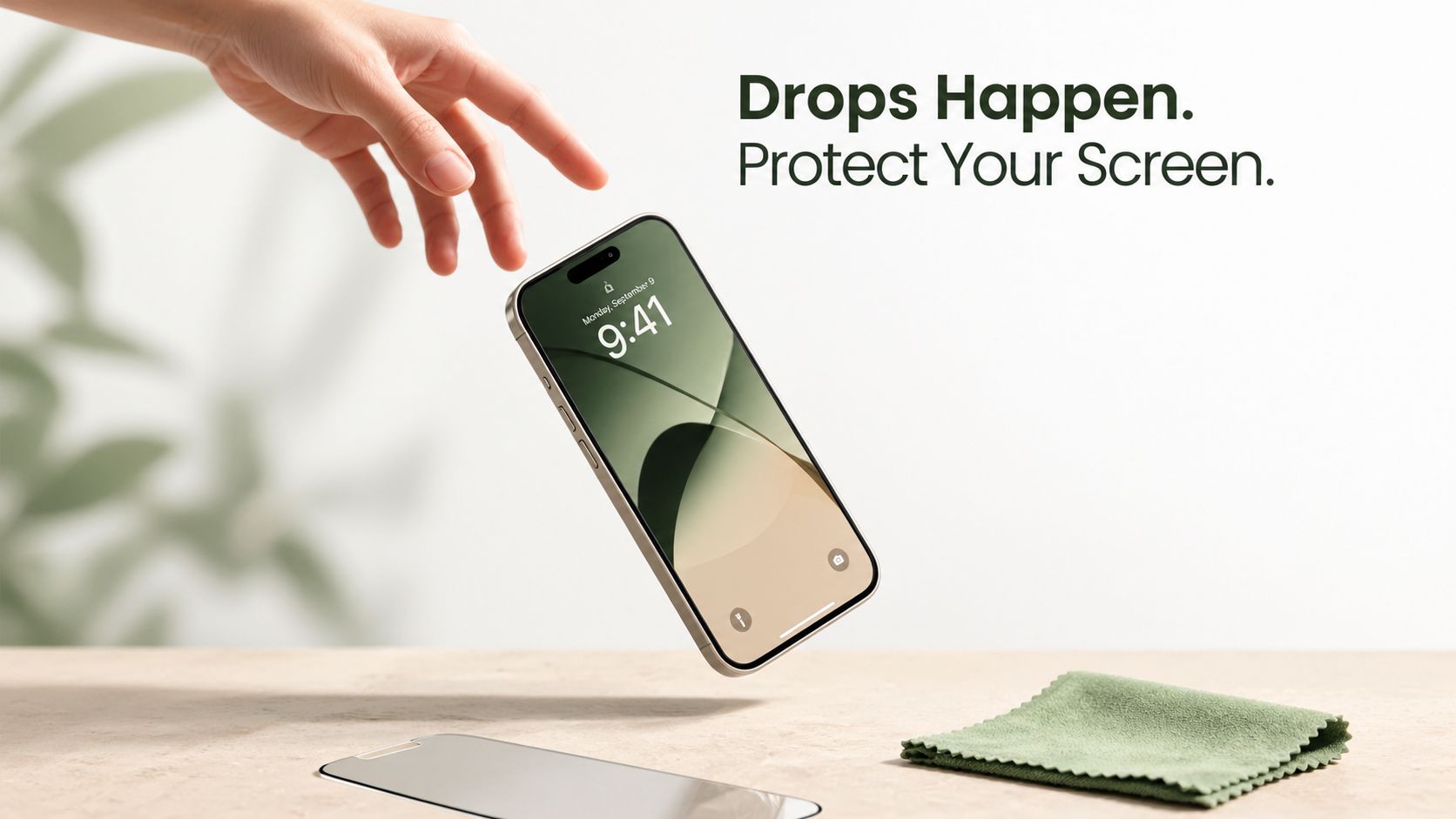
Screen protection supports a longer device life. A phone that remains comfortable to use is less likely to be replaced early, which fits myhalo's zero e-waste promise. It can also support a later resale, trade-in, or repair decision. A clear, intact display gives the next owner more reason to keep the device in use.
Learn what screen protectors actually do for daily durability, including the limits of the protection they provide.
Practical rule: if your phone is still worth caring for, it's worth protecting.
Singapore's buying activity shows that screen protection is a regular part of phone care. One 2025 study estimated the Singapore smartphone screen protector market at USD 221.72 million in 2024 and projected USD 400.63 million by 2033, with a 6.75% CAGR from 2025 to 2033 (Singapore smartphone screen protector market study). A separate Singapore-focused report valued the broader market at USD 0.18 billion in 2024 and projected USD 0.36 billion by 2033, with a 7.74% CAGR from 2025 to 2033 (Singapore screen protector market report).
The practical takeaway is simple. Choose protection that suits your touch preferences, case, and daily routine. Protecting the display first can delay repair or replacement, helping a usable iPhone stay in circulation longer.
Understanding Screen Protector iPhone Types
A protector can feel perfect in a shop and become irritating after a week of messages, maps, and one-handed scrolling. Material choice affects more than scratch resistance. It changes how the surface feels, how light reaches the display, how well edges stay down, and whether a case keeps pressing against it.
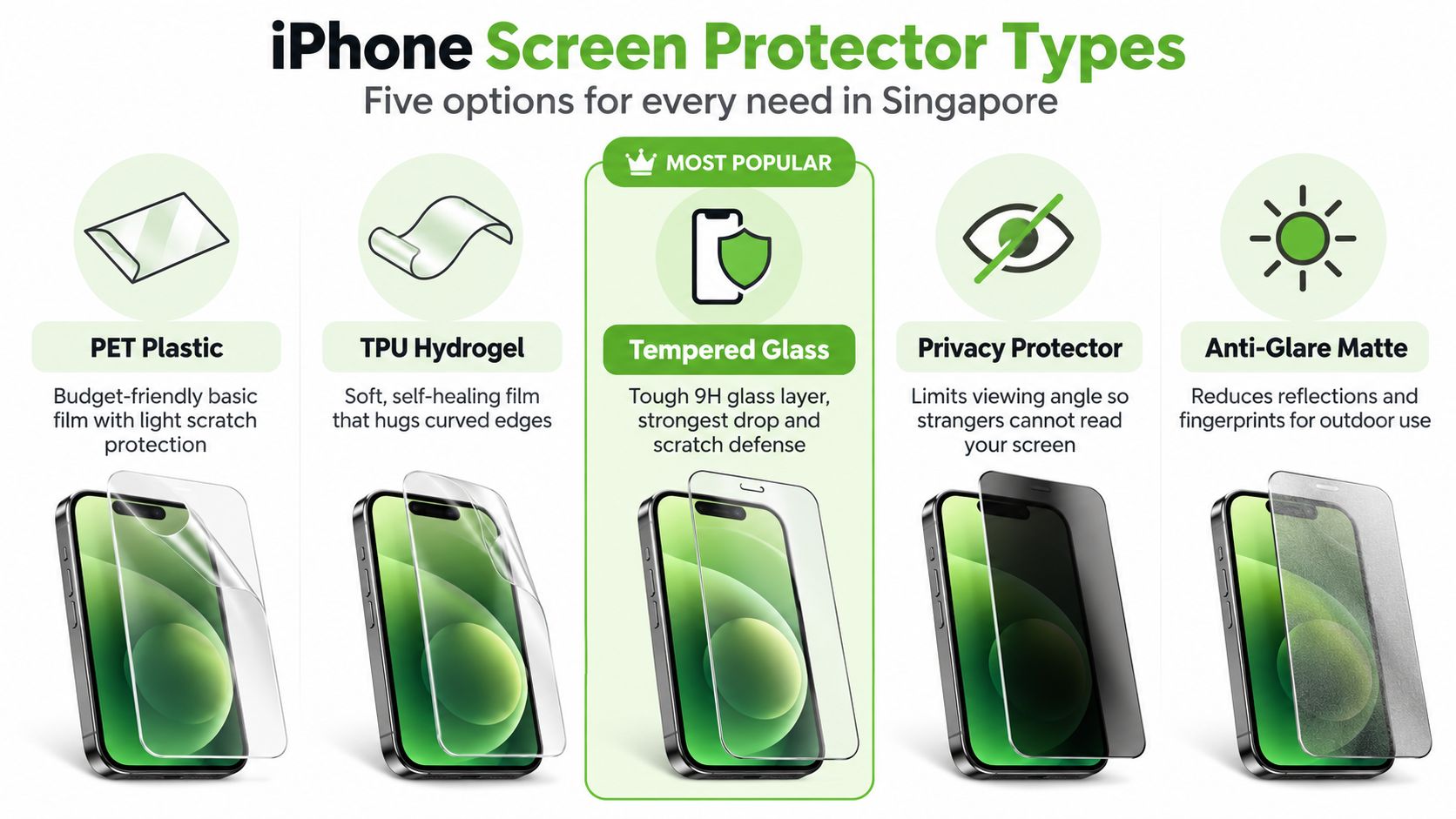
PET plastic is a thin, light film for basic scratch protection. It adds little bulk and keeps the original screen feel relatively close, making it suitable for careful users who mainly want to prevent marks from keys or grit. Its limited impact protection makes it a poor match for frequent drops.
TPU hydrogel uses a softer, flexible material that can follow edges more easily than a rigid sheet. That flexibility helps when an iPhone has curved areas or a case sits close to the display. The finger may feel more resistance than it would on glass, and small surface marks can be more visible. Flexible film options are often chosen for fit, as discussed in this myhalo hydrogel screen protector tag.
Tempered glass gives a harder, more glass-like surface and usually feels closest to the uncovered display. Its label needs careful reading, however. Belkin's Singapore buying guide describes a 9H rating on the pencil hardness scale and testing against low-carbon steel at 5H using ASTM D3363 (Belkin screen protector buying guide). ASTM D3363 is a scratch and hardness test. A 9H claim describes resistance in that test, not a promise that the protector will survive every drop.
Surface coatings also affect daily comfort. Belkin says its Singapore iPhone protectors use anti-fingerprint coating and anti-glare design (Belkin iPhone screen protectors). These features can reduce smudges and reflections, though the exact finish varies by product.
Privacy protectors use a viewing filter that limits what people beside you can see. That suits train journeys, lifts, and shared offices. The same filter can reduce apparent brightness or make the display feel less open, so check your comfort in dim and bright conditions.
Anti-glare matte protectors scatter reflected light and hide fingerprints well. They can make outdoor viewing easier, while their textured surface gives swipes a different feel from bare glass.
A useful second opinion on glass and film trade-offs is this guide to protecting your phone display. For a lower-waste choice, prioritise the material and fit you will keep using, rather than replacing a poorly matched protector soon after installation.
How Screen Protector Types Compare
A quick comparison is more useful than a long pile of feature claims, because most buyers are choosing between a few practical compromises, not between perfect products.
| Protector Type | Scratch Resistance | Impact Protection | Touch Feel | Privacy | Anti-Glare | Best For |
|---|---|---|---|---|---|---|
| PET Plastic | Basic | Low | Thin, light | Sometimes available | Limited | Budget-minded light users |
| TPU Hydrogel | Moderate | Low to moderate | Soft, flexible | Sometimes available | Some variants | Curved edges and flexible fit |
| Tempered Glass | Strong | Stronger than film options | Close to bare glass | Some models | Some models | Everyday iPhone use |
| Privacy Protector | Moderate to strong | Moderate | Usually good, sometimes slightly darker | Strong | Varies | Public transport and shared spaces |
| Anti-Glare Matte | Moderate | Moderate | Textured | Rare | Strong | Bright rooms and outdoor use |
The biggest trade-off is not “which one is strongest”, it's “which one still feels good after a week of normal use”. Tempered glass usually wins on touch feel and general confidence, which is why it remains so common in retail channels. Film-based options, especially TPU, usually win when the shape of the phone or the case makes edge fit more important than a rigid surface.
The second trade-off is what happens around the edges. A protector that looks perfect on paper can still lift, bubble, or clash with a case lip. That's why fit matters as much as material. A slightly less hard protector that stays put may be better than a stronger one that peels at the corners every time you slide the phone into a pocket.
Decision rule: choose the protector that stays clear, stays flat, and stays compatible with your case.
For many Singapore buyers, the choice comes down to environment. Commuters and office workers often prefer a smooth glass feel. People who want discretion in public spaces lean towards privacy options. Those who spend time outdoors or under harsh lighting usually get the most value from anti-glare protection. The right answer is the one that removes friction from daily use.
If you're comparing film and glass more closely, the myhalo hydrogel vs tempered glass tag is a handy local starting point for seeing where each type fits into real shopping decisions.
Installation Tips for Better Results
A rushed installation can turn a good protector into a daily irritation. Dust bubbles, crooked edges, and lifted corners catch your eye every time you power on the phone. In Singapore's humid weather, moisture and airborne dust can also affect how the adhesive settles, so the setup deserves a little care.
Clean the screen, wash and dry your hands, and choose a still room. A bathroom after a hot shower can help floating dust settle. After wiping the display, pause for about 30 seconds before opening the protector. This small delay gives loose particles time to clear, reducing the chance of trapping one beneath the glass or film.
Follow the alignment method supplied with your protector. A frame makes placement more repeatable, while guide stickers require slower handling. If the protector needs a single placement, line up the speaker, camera area, and edges before lowering it. Lifting and reapplying adhesive repeatedly can weaken the finish and create more dust problems.
Use these habits:
- Check case compatibility first: place the protector on the phone, then fit the case gently. A tight case lip can press against the edge and cause lifting within days. With a thicker option, such as 0.3mm glass, check that the lip still clears the perimeter.
- Remove dust before placement: inspect the screen under a bright light and use the supplied dust-removal sticker for any visible speck.
- Press from the centre outward: guide bubbles toward the edges with a clean finger or included card, using steady pressure.
- Leave the protector alone after application: give the adhesive time to settle before testing the edges or putting the phone into a tight pocket.
Belkin's 9H-rated tempered glass still depends on careful installation. A hard surface may resist scratches, but it cannot prevent bubbles or edge lift caused by poor alignment. Flexible options can be easier to place around awkward curves or a case that sits close to the display. The myhalo blog tag on hydrogel screen protectors offers further context on that type of protector.
If the protector looks clean but feels wrong under your thumb, check the installation before blaming the material.
A good result should disappear into normal use. Keeping the protector flat and comfortable for longer also avoids replacing it before it has reached the end of its useful life, supporting a lower-waste phone routine.
Choosing the Right Fit and Compatibility
Fit is where a lot of shoppers get surprised. A protector can be perfectly fine on its own, then become annoying the moment it meets a case, a sweaty commute, or a hand that swipes across the edges all day. That's why compatibility matters more than the marketing photos suggest.
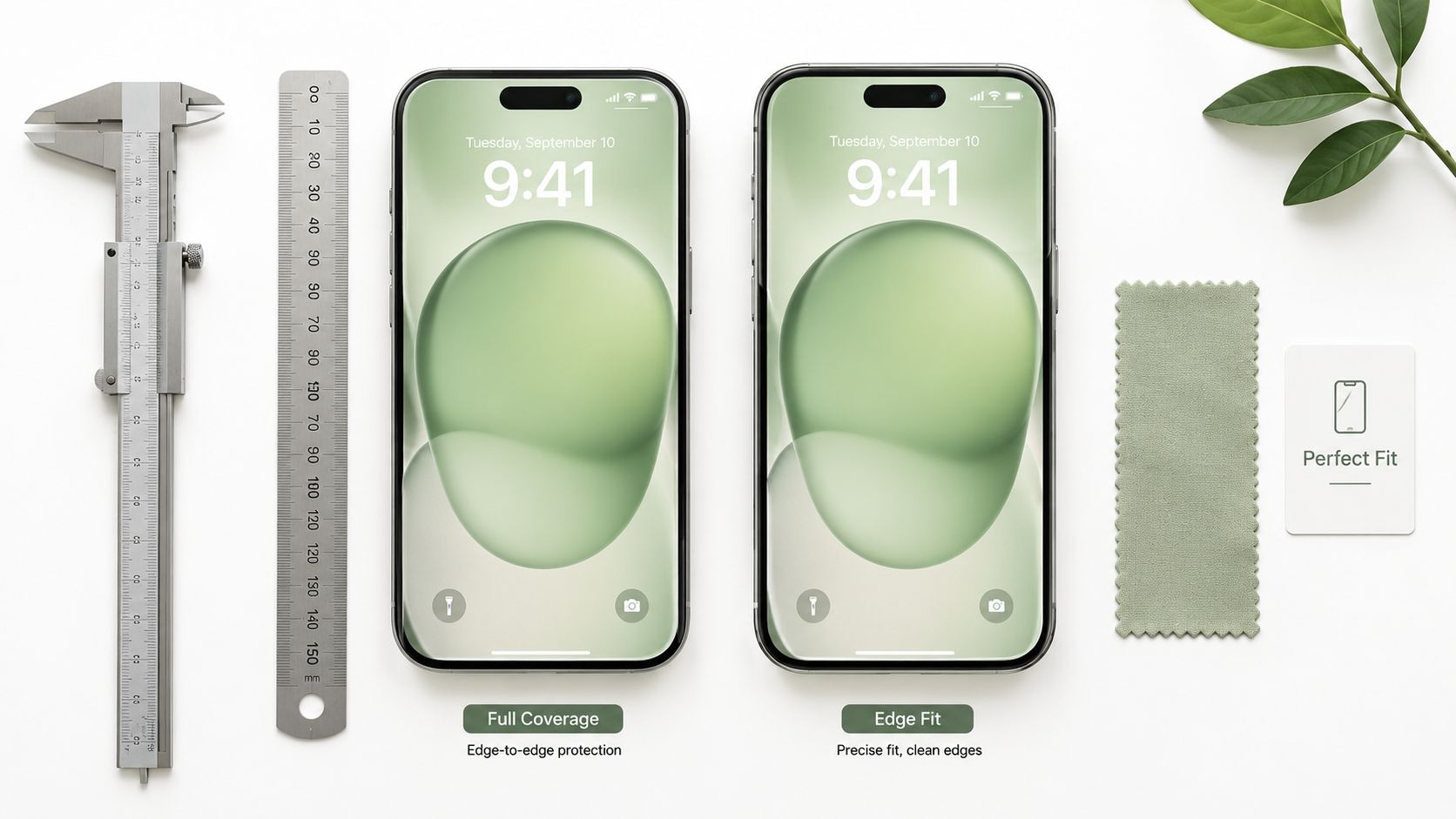
A full-coverage protector stretches closer to the edges and looks more complete. An edge-fit protector leaves a little more breathing room around the perimeter, which can reduce clashes with tighter cases. Neither is automatically better, because the right choice depends on how much bezel your case adds and how often you swap accessories.
Thickness matters too. A thicker protector can feel sturdier, but it can also be less forgiving when you use gestures near the edge or rely on Face ID in a hurry. That's why users who type a lot, swipe often, or use gesture navigation tend to notice the difference faster than people who mostly tap a few apps and put the phone away.
Singapore's conditions bring their own little annoyances. Rain, humidity, and sweaty palms can make the phone harder to hold, which increases the chance of small slips and repeated edge contact. A protector that lifts at the corner or collects fingerprints too quickly becomes a daily irritation, not a safety upgrade.
The newest iPhone generations also create a fit problem. Seller catalogues in Singapore now span iPhone 17, 16, 15, 14, 13, and even placeholder 18-series listings, but the conversation is usually product-led rather than use-case-led. That means shoppers often see many choices, yet little guidance on what works with cases, face recognition, privacy filters, or touch sensitivity in local conditions. The better way to shop is to decide first how you use the phone, then pick the protector that matches that pattern.
For some users, a case-friendly tempered glass protector is enough. For others, especially those who care more about edge coverage and flexibility, hydrogel makes more sense. And for people who often use their phone in public, privacy or anti-glare options can be the more thoughtful fit.
When to Replace Your Screen Protector
A screen protector is not a one-time decision. It wears out, gets scratched, loses clarity, and eventually starts making the phone feel worse than it should. Once that happens, replacing the protector is often the cleaner choice, because a damaged layer can undermine the whole point of having one.
Visible scratches are the most obvious sign. So are bubbling edges, a cloudy surface, or the feeling that your swipes no longer glide cleanly. If the protector has lost its smooth finish, or if touch response starts feeling unreliable at the edges, it's time to take it seriously. A protector that has reached that stage is no longer helping the user experience.
There's also a bigger lifecycle question here. If a phone is still healthy underneath, replacing a tired protector can postpone a repair and keep the device in use longer. If the screen itself is cracked, the decision becomes different. myhalo's article on whether you can put a screen protector on a cracked screen is a useful reality check for that situation, because not every crack should be covered and forgotten.
For a device-care mindset, the sequence matters:
- Protect early: use a protector before damage starts.
- Replace on wear: don't wait until the protector becomes the problem.
- Repair when needed: a damaged screen is a different issue from a worn accessory.
- Pass on responsibly: a cleaner, well-kept phone is easier to reuse, resell, or trade in.
That's the zero e-waste angle in practice. A good protector helps a phone stay useful longer, and a timely replacement keeps the display experience pleasant instead of frustrating. If the protector is cheap but the phone feels expensive to use, the accessory has stopped doing its job.
myhalo also offers device services that fit this mindset, including repair, trade-in, and certified resale, so a worn protector can be part of a much longer and more responsible device path rather than the start of unnecessary disposal.
If your iPhone's screen protector is scratched, lifting, or just not fitting the way it should, take a calm next step instead of putting up with the hassle. Visit myhalo to explore repair, trade-in, and reusable device options that help you keep your phone useful for longer while reducing e-waste.