

New flagship phones in Singapore now sit firmly in the S$1,600 to S$2,000+ range, with examples such as the Samsung Galaxy S25 Ultra at S$1,678 and higher-storage premium models going beyond S$2,000 based on Singapore market listings from Circles.Life's 5G phone guide. If that number feels heavy, certified ReLoved devices can cost up to 70% less than brand-new equivalents while still being fully functional and quality-verified, as shown in the myhalo ReLoved store.
If you're staring at a Singapore mobile price list and wondering why one phone costs as much as a holiday while another version of the “same model” is far cheaper, you're not alone. Most shoppers are comparing sticker prices, but the smarter question is this: what will this phone really cost you over the next few years, and what value can you still recover later?
That's where people often get stuck. A brand-new flagship looks exciting, an older phone is still sitting in a drawer, and nobody wants to overpay or throw away a device that still has life left in it. Around home and office, old tech piles up quickly, and working Singaporean adults hold an average of 3.3 inactive small electronic devices at home, according to myhalo campaign material linked through myhalo's community page.
This guide is built to make that decision easier. It goes beyond a simple Singapore mobile price list by looking at new phone pricing, trade-in value, repair economics, depreciation, and the practical choices that help your wallet while keeping useful devices in circulation.
Table of Contents
- Your Friendly Guide to Singapore Mobile Prices
- Singapore Mobile Price List At a Glance 2026
- Understanding How Mobile Prices Work
- How Our AI Ensures a Fair Price Every Time
- Your Guide to Mobile Trade-In and Buyback Value
- Repair vs Replace Deciding What's Best for You
- Get Your Instant Quote Online or In-Store
- The myhalo Promise A Lighter Footprint and a Lighter Heart
- Frequently Asked Questions
- Is a certified refurbished phone worth considering over a brand-new one?
- How should I think about data security before trading in a phone?
- What if my old device isn't in good enough condition to resell?
- Can small electronics count too, not just phones?
- Is there any simple rule for deciding between a repair and an upgrade?
Your Friendly Guide to Singapore Mobile Prices
You are standing in a mall, looking at two phones with a few hundred dollars between them. One looks like the obvious bargain. Then the questions start. How much will a battery replacement cost in a year or two? Will the cheaper model still get software support long enough? If you upgrade later, which one will still have decent trade-in value?
That is how phone buying works in Singapore. The sticker price is only the starting point.
A useful mobile price guide should help you judge the full cost of ownership, not just the amount charged on day one. The better question is not “Which phone is cheapest?” It is “Which phone will cost me less over the time I use it?” That includes durability, likely repair costs, resale potential, and how quickly the device drops in value.
In practice, premium phones often hold attention because they offer stronger cameras, faster chips, and longer support. They also set the tone for trade-in prices across the market. At the same time, paying more upfront does not always mean getting better value. A well-kept previous-generation device or a certified refurbished phone can be the smarter buy if it gives you the features you need, lower depreciation, and a longer useful life.
What people often miss when comparing prices
Price lists rarely explain the parts that shape real value:
- Ownership costs over time. Screen repairs, battery replacements, chargers, cases, and out-of-warranty fixes all add up.
- Value you can recover later. Some models keep their resale or trade-in value better than others.
- Condition and storage differences. The same phone model can be priced very differently based on battery health, cosmetic wear, and capacity.
- Repairability and lifespan. A phone that is easier to repair can stay useful longer and cost less over two or three years.
- Lower-waste alternatives. Certified refurbished devices reduce spend and keep good hardware in use instead of turning into e-waste early.
A smart phone purchase is not only about paying less now. It is about losing less over the life of the device.
A more useful way to read a price list
Start with three practical questions:
- What am I paying upfront?
- What will it likely cost to maintain over the time I plan to keep it?
- What value can I still recover through trade-in, resale, repair, or reuse?
That approach is better for your budget and better for the planet. Phones that stay in use longer create less waste, especially when they are repaired, resold, or passed on responsibly instead of sitting forgotten in a drawer. At myhalo, that is the point we want more buyers to see clearly. A cheaper decision today is not always the lower-cost decision overall.
Singapore Mobile Price List At a Glance 2026
A buyer in Singapore might see one phone at S$1,800, another at half that price, and assume the cheaper listing is the better deal. The smarter read is to sort prices by what you are buying: a brand-new device, a certified ReLoved device, or the value you can still recover from your current phone through trade-in or buyback.
That view helps you judge cost over the full life of the phone, not only at checkout. It is also the more sustainable way to shop, because a device that stays useful for longer creates less waste and usually costs less overall.
Estimated Mobile Price Ranges in Singapore 2026
| Device Model Tier | Brand New (Est. SGD) | myhalo Certified ReLoved (Est. SGD) | Trade-In/Buyback Range (Est. SGD) |
|---|---|---|---|
| Current flagship Android | High four-figure pricing is common for top-spec models in Singapore | Often significantly lower than new retail, depending on age, grade, battery health, and stock | Varies by model, storage, condition, and age |
| Previous-generation flagship Android | Usually lower than the latest release, but still priced at a premium if demand stays strong | Often a strong value point because performance is still high while entry price drops | Usually better retention than budget models if condition is good |
| Premium flagship phones generally | Premium pricing remains normal across top-end variants | Certified ReLoved stock can reduce upfront spend while keeping flagship-level features | Depends heavily on storage, cosmetic condition, and battery health |
| Entry-level and lower mid-range phones | Lower starting prices make them accessible upfront | Lower absolute resale prices, with savings depending on stock and grade | Usually lower retention because these models tend to depreciate faster |
A table like this works best as a shortlist tool, not a final answer. Two phones can sit in the same price band and still cost very different amounts to own over two years if one is easier to repair, holds trade-in value better, or comes with stronger long-term software support.
Certified ReLoved devices matter here because they change the equation. Instead of paying launch pricing and absorbing the steepest early depreciation, buyers can choose a tested device at a lower entry cost and still get a phone that is fit for daily work, school, travel, and family use. That is often the sweet spot for value.
At myhalo, that trade-off is practical, not theoretical. Buyers who compare new versus certified usually care about three things: whether the phone still performs well, whether future repair costs are manageable, and whether some value can still be recovered later. Those are the right questions.
Teams that publish accurate pricing and service details also have an advantage in AI-driven discovery. If you want a useful example of optimizing business info for AI search, the same principle applies to phone pricing. Clear information helps people make better decisions faster.
A useful Singapore mobile price list shows more than a sticker price. It helps you estimate what the phone will cost to keep, fix, and eventually trade in.
Understanding How Mobile Prices Work
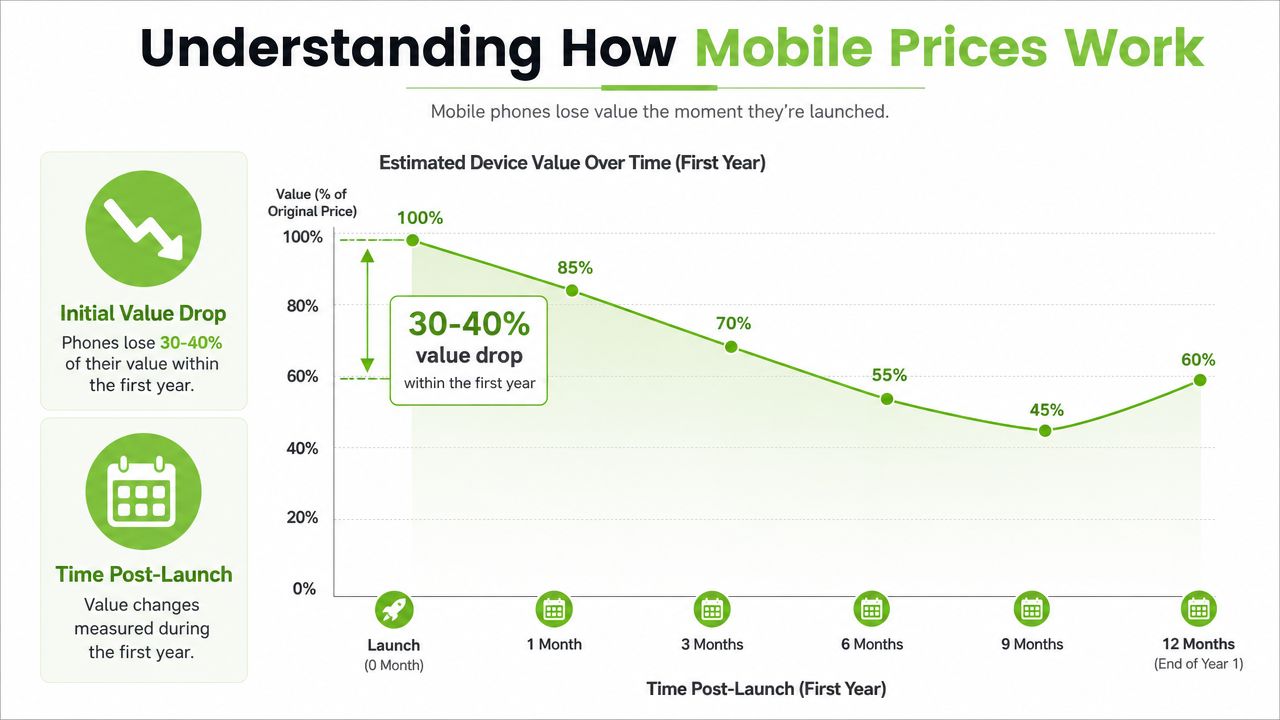
A phone can be priced fairly on day one and still be poor value over two years. In Singapore, the smarter question is not just “What does it cost today?” but “What will it cost me to keep, repair, and sell later?”
Why a new phone loses value quickly
New phones usually drop fastest in the first part of their life cycle. Early buyers pay a premium for launch timing, full retail availability, and the newest features. Once the next model arrives, resale demand softens even if the older phone still performs well for work, school, photos, and daily apps.
That is why a Singapore mobile price list can look inconsistent at first glance. Two devices with similar retail prices can age very differently in the resale market.
A few factors usually shape that decline:
- Release timing. Prices often soften after a successor launches or during major retail promotions.
- Software support life. Phones expected to receive updates for longer usually hold value better.
- Repair economics. A model with expensive screen, battery, or board repairs can lose appeal faster in the secondhand market.
- Storage configuration. Higher storage versions often stay easier to resell because they fit real usage longer.
- Brand demand in Singapore. Some models keep stronger buyer interest, which supports trade-in and resale value.
The practical takeaway is simple. Sticker price is only the entry cost. Total ownership cost includes likely repairs, battery replacement timing, accessories, and how much value you can recover later through trade-in or buyback.
Businesses run into a similar problem when their pricing and service details appear differently across search engines and AI tools. This guide on optimizing business info for AI search explains why accurate data matters if you want people to make faster, better decisions online.
Certified ReLoved versus ordinary used phones
A cheap marketplace listing can save money upfront, but it can also shift risk to the buyer. Battery health may be weak. Previous repairs may not be disclosed. Parts may be mixed quality. If a problem appears a week later, support is often limited or absent.
Certified ReLoved devices are different because condition, testing, and readiness are part of the price. At myhalo, that matters for both value and sustainability. A properly checked device stays in use longer, reduces avoidable e-waste, and gives buyers a clearer sense of the trade-off between paying less now and paying more later for repairs or replacement.
For many buyers, that middle path is the sweet spot. You avoid the steepest early depreciation, keep day-to-day performance strong, and make a more sustainable choice without guessing what is hiding behind a low listing price.
How Our AI Ensures a Fair Price Every Time
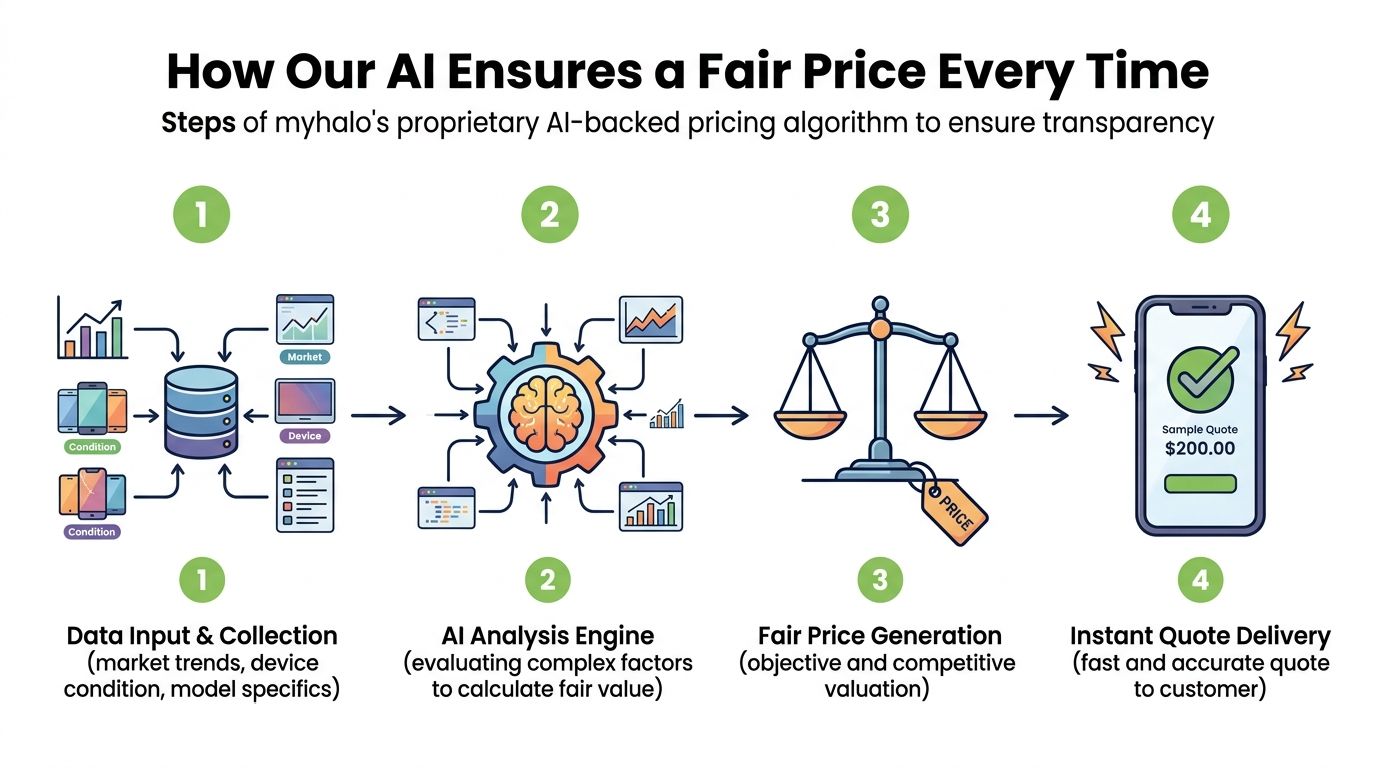
A fair phone quote should be explainable. If two devices look similar on paper but one has weak battery performance, a replaced screen, or poor local resale demand, they should not receive the same value. Good pricing reflects what the device is likely to cost, return, and recover across its next stage of use.
What the pricing engine looks at
The model checks several inputs together, then weighs them against current resale and recovery conditions in Singapore. That matters because the true value of a phone is not just its launch price. It is also shaped by how easily it can be resold, whether it needs repair first, and how much useful life is still left in the device.
Typical inputs include:
- Model and generation
- Storage tier
- Physical condition, including frame, back glass, and display
- Functional condition, such as cameras, buttons, charging, speakers, and connectivity
- Battery behaviour
- Current retail benchmarks for comparable devices
- Local demand and resale velocity
- Repair and parts recovery potential if full resale is not the best path
Brand strength matters too. As noted earlier, Apple has a strong influence on premium phone pricing in Singapore, and that affects the benchmarks buyers use across the wider market. A pricing engine has to account for that instead of relying on a fixed table that goes stale the moment market demand shifts.
The practical benefit is consistency. A device that is clean, fully functional, and easy to rehome should score differently from one that looks similar but has hidden cost risk. That protects both sides. Sellers get a quote grounded in real recovery value, and the next owner gets a device priced with fewer surprises built in.
In day-to-day operations, the system also helps decide the next best route for each phone. Some units are ready for resale. Some make more sense after repair. Others are better used for parts that keep another device in service longer, which supports the same lower-waste approach covered in our guide to mobile trade-in value in Singapore.
Among the options available in Singapore, myhalo uses AI-backed pricing for trade-in and buyback assessments alongside repair, certified resale, and upcycling workflows.
Your Guide to Mobile Trade-In and Buyback Value
You check a mobile price list, see a tempting upgrade, then wonder what your current phone is still worth. That second number matters more than many buyers expect. The effective cost of changing phones in Singapore is the new purchase price minus your trade-in value, plus any repair spend you put in before the handoff.
A trade-in offer is based on recovery value. Buyers assess how easily the phone can be resold, repaired, or reused for parts without taking on unnecessary risk. A newer flagship with clean condition and full functionality usually holds value better than a device with hidden faults, battery issues, or a patchy repair history. As noted earlier, newer premium models also tend to create a visible value gap between generations, and that gap shapes buyback expectations across the market.
What affects your trade-in offer
Several factors move the number up or down:
- Model and age. Recent releases usually attract stronger demand.
- Storage capacity. Higher storage often helps resale appeal, especially for users who keep lots of photos, videos, or apps.
- Cosmetic condition. Cracks, dents, camera lens damage, and heavy wear reduce confidence for the next owner.
- Functional condition. Charging issues, weak speakers, faulty buttons, biometric failures, and unstable connectivity can lower the offer quickly.
- Battery health. A phone that still performs reliably day to day is easier to rehome.
- Parts history. Devices with major third-party part replacements can be harder to value if long-term reliability is uncertain.
- Current demand in Singapore. Some models move fast. Others sit longer, which affects what a buyer can reasonably pay.
A small flaw does not always destroy value. Multiple small issues often do.
That is why honest disclosure helps. If a device arrives exactly as described, assessment is faster and pricing is usually more consistent.
How to improve your quote before assessment
The goal is not to make the phone look newer than it is. The goal is to remove avoidable friction.
- Back up your data properly. Do this before anything else.
- Sign out of personal accounts and remove activation locks. A locked phone is harder to process and may delay the quote.
- Charge the phone. Basic testing is easier when the device powers on normally.
- Clean it lightly. Dust and fingerprints do not add value, but they can make inspection slower.
- Share past repairs and current faults clearly. Transparency saves time for both sides.
For a fuller walkthrough of how local assessments work, see our guide to mobile trade-in value in Singapore.
One practical point is often missed. A lower trade-in quote does not always mean a phone is worthless. Some devices still have repair value or parts value, which can reduce waste and keep other phones in use longer. That matters for your wallet, and it matters for the zero e-waste mission too.
The same thinking applies beyond phones. Old accessories and small electronics may still have reuse potential even when resale value is weak. Treating every device by its next best use, resale, repair, or parts recovery, is usually the smarter and more sustainable path.
Repair vs Replace Deciding What's Best for You
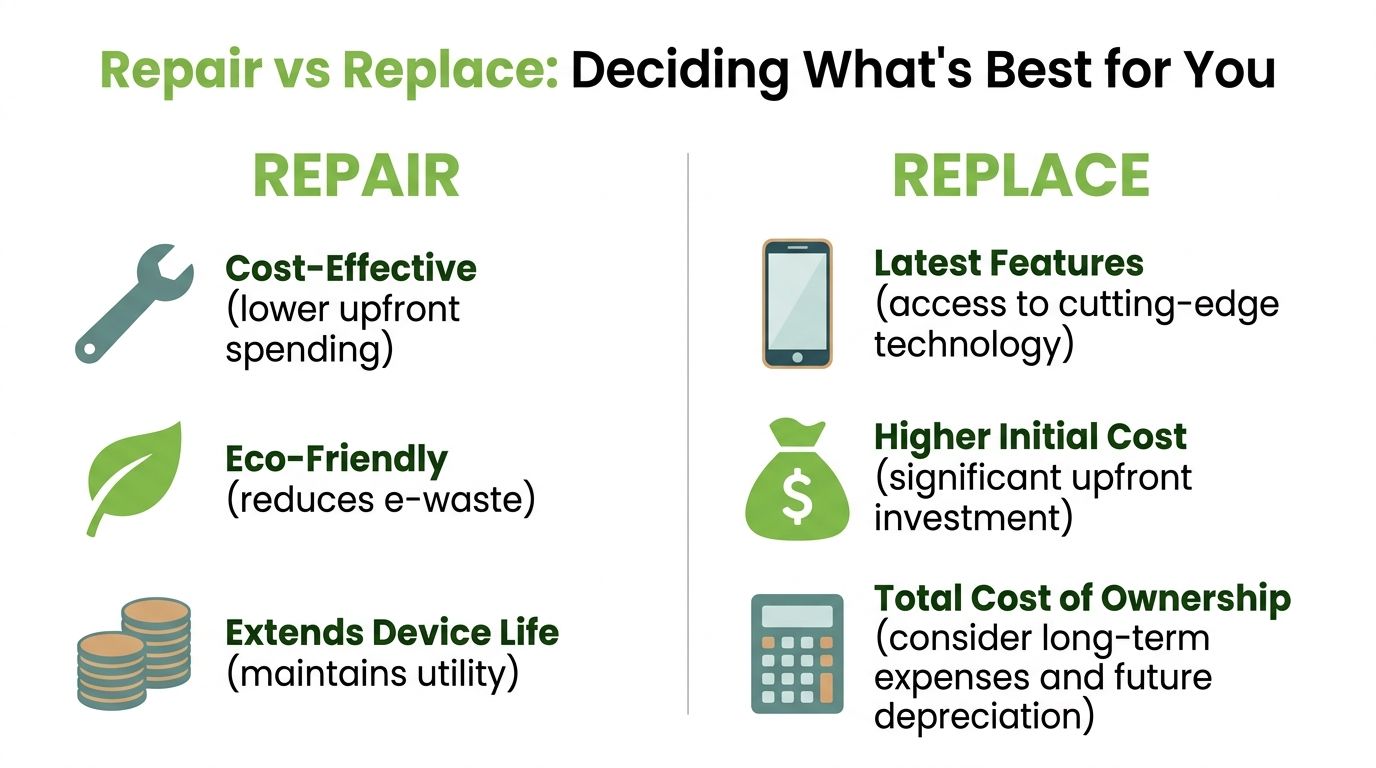
A phone doesn't become poor value only when the retail price is high. It becomes poor value when the total cost of keeping it useful no longer makes sense for your needs. That's the part most Singapore mobile price list pages leave out.
When repair makes more sense
The hidden-cost gap is real. Most Singapore mobile price lists omit the long-term ownership picture, even though flagship screen repairs can range from S$400 to S$700 and battery replacements can range from S$100 to S$200, according to this Singapore mobile phone cost guide. That's why a phone that looked manageable on day one can cost much more over time.
Repair is often the smarter move when:
- The device still does what you need. If your apps, camera, and battery life are mostly fine, a targeted repair can buy useful time.
- The damage is isolated. A cracked screen is very different from a failing board plus battery plus charging fault.
- Your data matters. Repairing before replacing can be the least disruptive option when important files or memories are still on the phone.
- You want to avoid unnecessary waste. Extending device life is usually the greener path.
For readers comparing local screen repair economics in more detail, this write-up on phone screen repair price in Singapore helps frame the decision.
When replacing is the cleaner move
Replacement usually makes more sense when the phone has several issues at once, no longer matches your daily workload, or would need repeated repairs to stay comfortable to use.
A practical way to decide:
- Repair if one fix restores stable daily use at a reasonable cost.
- Replace with a certified refurbished option if your current phone needs multiple expensive fixes.
- Trade in or upcycle if the device still has recoverable value but isn't worth keeping.
Sometimes the cheapest move isn't buying the cheapest phone. It's keeping a good phone alive a little longer, then moving it on before its value falls further.
Get Your Instant Quote Online or In-Store
A good quote process should save time, reduce guesswork, and help you decide what to do with the phone before its value slips further.
Online if you already know the basics
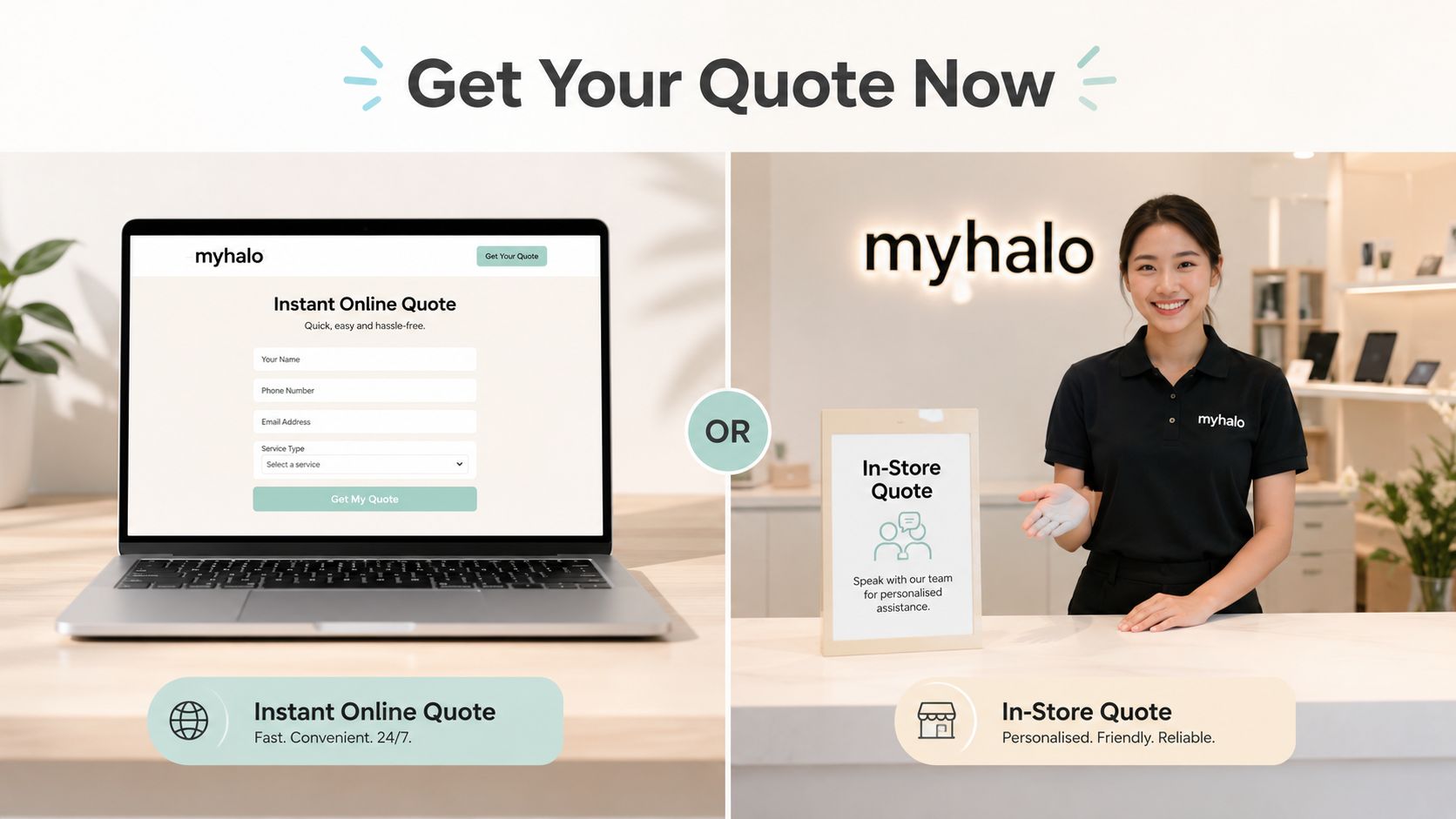
Online quotes work best when you can identify the model, storage size, and condition with reasonable accuracy. They are usually the faster option for straightforward devices with no confusing faults.
To get a useful estimate, prepare these details first:
- The exact phone model
- The storage capacity
- The cosmetic condition
- Any functional issues, such as battery, camera, or charging problems
- Whether the device has been repaired before
That last point matters more than many sellers expect. A phone with a replaced screen, weak battery health, or Face ID issues may still have solid resale value, but the quote needs to reflect its actual condition. Accurate inputs give you a quote that is much closer to the final offer.
If you are selling an Apple device, this practical guide on how to sell iPhone for cash can help you prepare before you submit details.
In-store if the phone has a complicated story
Some phones are hard to price through a form. A device with water exposure, intermittent charging, multiple repairs, or mixed cosmetic and hardware issues is usually better assessed in person.
myhalo offers in-store drop-off and collection at Bugis Junction (#03-25/26) and Sim Lim Square (#03-40). That face-to-face route is useful when you want a clearer answer on the same visit, especially if you are weighing repair, trade-in, or selling outright.
I usually recommend in-store assessment for edge cases because small details can change the number. A clean housing with a failing battery is different from a heavily worn phone with hidden board damage, even if both still turn on. The faster quote is not always the better one if it misses repair history or condition points that affect true market value.
Whether you start online or in-store, the goal is the same. Get a fair quote based on the phone's real condition, then make a decision that saves money and keeps another device in use instead of becoming e-waste.
The myhalo Promise A Lighter Footprint and a Lighter Heart
Price matters. So does what happens after the transaction. A cheaper phone that fails quickly, a broken device left in a drawer, or an upgrade that turns last year's tech into clutter doesn't feel like progress.
A practical way to live with less e-waste
A better device habit usually looks simple:
- Repair what still deserves a second life
- Trade in what you no longer need
- Choose certified refurbished when new isn't necessary
- Recycle responsibly when a device can't return to full use
Singapore's smartphone market is projected to grow from 6.8 million units in 2025 to 9.6 million units by 2035, at a 3.72% CAGR during 2026 to 2034, according to the IMARC Singapore smartphone market outlook. That projected growth makes device lifecycle choices more important, not less. More phones in circulation means more chances to repair, reuse, recover value, and avoid unnecessary waste.
The myhalo Promise
We believe that joining the zero e-waste movement should feel good and be completely effortless. Through our Safe data guarantee, your privacy is perfectly protected, while our Declutter your e-clutter program makes recycling your old devices completely convenient, safe, and responsible.
That promise matters because people don't just worry about price. They worry about personal photos, work files, login data, and what happens to a device after they let it go. Safe data, Save data, and Declutter your e-clutter aren't abstract ideas. They answer very real concerns people have every day.
If you want to see how that zero e-waste mission connects to everyday device decisions in Singapore, this article on decluttering tech for zero e-waste under the Singapore Green Plan 2030 is worth a read.
Frequently Asked Questions
Is a certified refurbished phone worth considering over a brand-new one?
Often, yes. In Singapore, the better question is not just "What does the phone cost today?" but "What will this phone cost me over the next two years?" A certified refurbished model usually starts at a lower price, and if the battery health, warranty terms, and condition grading are clear, it can be the smarter buy for everyday users.
I usually suggest checking three things first: battery condition, return policy, and likely resale value later. A cheap phone is not good value if you end up paying for a battery swap soon after purchase.
How should I think about data security before trading in a phone?
Treat it as a checklist, not an afterthought. Back up your photos and chats, sign out of your accounts, turn off Find My iPhone or Factory Reset Protection, then erase the device properly.
If the screen is damaged or the phone cannot be reset normally, ask the store what its secure handling process looks like before you hand it over. That small step matters more than shaving a few dollars off the quote.
What if my old device isn't in good enough condition to resell?
Poor condition does not always mean zero value. A phone with a cracked back, weak battery, or faulty buttons may still make sense to repair, harvest for parts, or recycle responsibly.
That is part of the complete pricing picture people miss. The sticker price of your next phone matters, but so does the recovery value of your current one and the cost of keeping waste out of landfill.
Can small electronics count too, not just phones?
Yes. Small electronics such as routers, modems, power banks, and thumb drives can still be part of a responsible clear-out, even if they are not worth much on their own.
For many households, this is the practical win. You free up drawer space, handle old tech properly, and in some cases reduce the cost of a repair or replacement at the same time.
Is there any simple rule for deciding between a repair and an upgrade?
Use a cost-versus-lifespan test. If one repair gets you another year or two of stable use, repair is usually the better value. If the phone has multiple faults, poor battery life, limited software support, and low trade-in value, replacement starts to make more financial sense.
I also look at depreciation. Paying for one targeted repair on a phone that still fits your needs is often cheaper than buying a new model and absorbing the steepest drop in value during the first year.